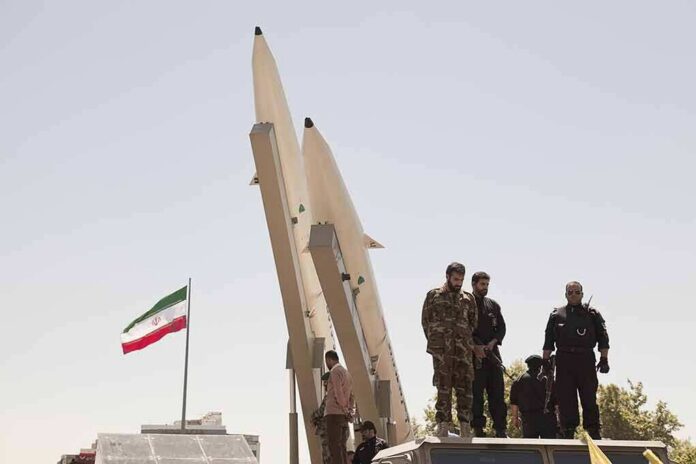
Iran’s top army general publicly offered $30,000 for the killing or capture of an American service member, sharpening a dangerous flashpoint between two countries already on edge.
Story Highlights
- Iran’s army chief announced a $30,000 reward tied to “aggressor” U.S. troops.
- Reports say the money is from “the Iranian people,” not a formal state budget.
- Some outlets say the offer applies to troops attacking Iranian territory.
- The move followed recent U.S. troop deaths and vows of payback by President Trump.
What Was Said And By Whom
Iran’s Army Commander-in-Chief, Major General Amir Hatami, was quoted promising a cash reward for killing or capturing an “aggressor” American service member. Reports place the comments at a Journalists’ Day ceremony in Tehran on August 16. Multiple outlets carried the same figure, 5 billion tomans, about $30,000, and attributed it to Iranian state-linked reporting. Some coverage also noted a doubled payout if a woman carried out the act.
Several international outlets repeated the core claim and amount. One report quoted the language “any individual who kills an American aggressor force,” matching the tone of official messaging. Another report framed the reward as applying to a U.S. service member attacking Iranian territory, which narrows the scope compared with “any U.S. soldier” language seen elsewhere. This gap shows a translation and context problem that often follows fast-moving state media quotes.
Who Would Pay And How
Coverage differs on funding. One outlet said the reward would come from “the Iranian people,” suggesting private or popular contributions rather than a direct government line item. That framing can signal national mobilization while avoiding details on legal authority or payment systems. No report presented a formal decree, a budget order, or a clear process to verify or deliver payments to any claimant at this stage.
A lack of visible mechanisms matters in practice. Without a named fund, escrow, or formal directive, it is hard to confirm whether the offer is enforceable policy or wartime rhetoric for home audiences. Analysts have seen similar patterns before: blunt promises get headlines, but proof of payments often remains opaque. The split between nationalistic language and missing logistics keeps risk high while facts about execution stay thin.
Why This Escalates Risk
The announcement landed during a tense period. In July, President Trump warned that Iran would “pay” after U.S. soldiers were killed over a weekend, raising the stakes for both sides. A public cash offer, even if conditional or symbolic, can embolden lone actors or proxy groups. It also pressures commanders to harden defenses around U.S. forces and diplomats across the region, which can spark tit-for-tat incidents.
Mixed wording about targets adds danger. If “aggressor” means troops in combat inside Iran, the scope is narrow. If people read it as any U.S. troop anywhere, the risk map expands fast. The more the message spreads without precise limits, the more likely someone will act on the broadest version. That gray zone raises the threat to Americans who already operate in volatile areas.
How To Read The Messaging
Some coverage interprets the bounty as domestic propaganda meant to rally support, not proof of a planned fight with U.S. ground troops. That view points to the emphasis on “the Iranian people” as funders and to conditions that reference attacks on Iranian soil. Yet even if the aim is political theater, public threats can take on a life of their own once amplified on television and social feeds, especially during crises.
Iran announced an official bounty of $30,000 for killing or capturing any American troops, double to $60,000 if a woman completes it . The IRGC is offering this to Iranian citizens as a cash reward for targeting US soldiers. It's a clear message.
— Fatima Boone (@FBoonenice) August 17, 2026
For Americans across the spectrum, this episode touches shared worries. People see officials trading threats while basic questions go unanswered: What is the exact rule, who pays, and who is accountable if someone tries to collect? When power centers use loud signals instead of clear policies, everyday troops and families bear the cost. This is why transparent facts, not slogans, should guide responses on both sides.
What To Watch Next
Watch for an official English transcript or video from the Tehran event to lock down wording and conditions. Look for any formal order or budget notice that creates a payment channel. Monitor whether Iranian civilian leaders endorse, narrow, or disavow the offer. Track regional security alerts around U.S. sites, partner bases, and shipping lanes. Finally, watch Washington for measured steps that protect U.S. personnel without feeding a cycle of headline threats.
Sources:
nypost.com, presstv.co.uk, kvia.com, hamerintel.com, youtube.com