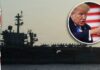
President Trump defies Iran’s blockade of the Strait of Hormuz by launching ‘Project Freedom,’ vowing forceful response to any interference threatening global energy security and American interests.
Story Snapshot
- Trump announces U.S. military operation to guide neutral commercial ships safely out of the Strait of Hormuz starting May 4, 2026.
- CENTCOM deploys 15,000 troops, over 100 aircraft, destroyers, and unmanned systems amid Iran’s warnings.
- Framed as humanitarian aid for trapped crews facing shortages, separate from Iran talks but signaling U.S. resolve.
- Secures 20% of global oil flow, countering threats to economic stability and freedom of navigation.
Trump Launches Project Freedom
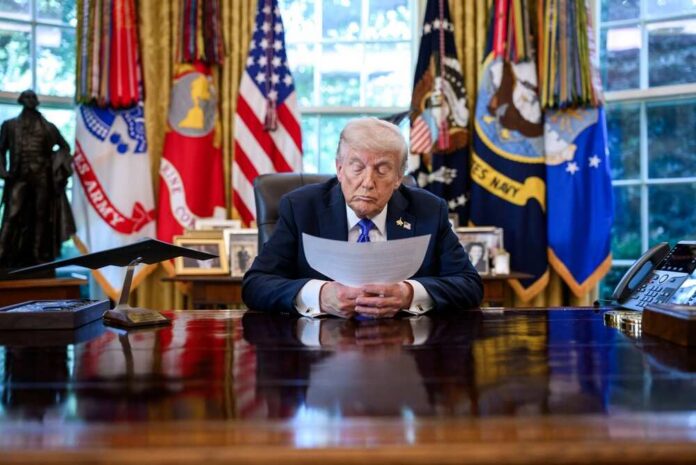
President Donald Trump announced Project Freedom on Truth Social Sunday, directing U.S. forces to guide neutral commercial ships—those from nations uninvolved in Middle East conflicts—out of the Strait of Hormuz. These vessels face shortages after Iran restricted navigation. Trump emphasized the humanitarian purpose, addressing crew welfare following requests from neutral countries. He warned that any interference would meet forceful U.S. response, underscoring commitment to safe passage.
CENTCOM Deploys Massive Force
U.S. Central Command confirmed the operation overnight into Monday, May 4, deploying 15,000 troops, more than 100 aircraft, guided-missile destroyers, and unmanned platforms. Forces provide safe-lane guidance rather than direct escorts, positioning nearby for immediate intervention if needed. This approach avoids provocation while ensuring protection. Iran warned against uncoordinated navigation, demanding all ships coordinate with its forces and asserting full control over the strait.
Historical Flashpoint and Stakes
The Strait of Hormuz, a 21-mile-wide chokepoint, handles about 20% of global oil trade and has sparked tensions since the 1980s Iran-Iraq Tanker War. Iran has repeatedly threatened closures during conflicts, echoing past incidents like 1987’s Operation Earnest Will and 2019 tanker seizures. Current hostilities, including implied Israel-Iran dynamics, stranded ships near the Gulf of Oman, as shown in May 1 Emirati imagery. Project Freedom prioritizes neutral bystander vessels, pledging no return until safe.
Neutral ship owners and crews suffer food and supply shortages, disrupting global commerce. U.S. action eases fears of oil price spikes, stabilizes energy markets, and reduces maritime insurance costs. Politically, it bolsters American leadership, tests deterrence against Iranian aggression, and complements ongoing diplomacy Trump described as “very positive.”
BREAKING: President Trump announced that the U.S. military will begin escorting neutral ships safely out of the Strait of Hormuz starting Monday to alleviate the ongoing navigation crisis pic.twitter.com/GQSSdyXxuv
— Outspoken_T_From_Tha_Lou (@TRUMPGIRL_STL) May 4, 2026
Potential Risks and Broader Impacts
U.S. officials clarified the non-direct role to Israeli media, focusing on avoiding mined lanes without escalating. Sources describe the move as calibrated: humanitarian cover for freedom-of-navigation operations, similar to historical precedents. Short-term risks include naval standoffs; long-term outcomes could normalize shipping or spark conflict if Iran interferes. Affected Gulf states like the UAE watch closely amid proximity threats. No incidents reported as operations began Monday morning Middle East time.
Both conservatives and liberals share frustration with government failures, yet Project Freedom exemplifies decisive action against elite-driven globalist vulnerabilities. It protects American energy independence and individual prosperity threatened by foreign blockades, aligning with founding principles of liberty and self-reliance over endless foreign entanglements.
Sources:
Trump says US will escort neutral ships from Strait of Hormuz amid Iran talks
Project Freedom: Trump says escorting neutral ships out of Strait of Hormuz starts Monday