

A single drone strike on a luxury Moscow high-rise punctured the Kremlin’s “safe homeland” narrative just days before Victory Day.
Story Snapshot
- A drone hit the Mosfilmovskaya residential tower in central Moscow’s so-called “Hollywood” district, with debris filmed on streets and emergency crews responding.
- Russian officials reported no injuries in the incident, underscoring how psychological impact—not casualties—can be the point of urban strikes.
- The strike came ahead of Russia’s May 9 Victory Day parade, a moment Moscow uses to project strength and control.
- The attack fits a broader pattern: Ukrainian long-range drones increasingly reach deeper into Russia, forcing costly air-defense responses.
Strike on a Prestige Tower Signals a New Kind of Pressure
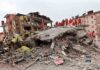
Russian officials said a Ukrainian drone struck a luxury high-rise apartment building in central Moscow, identified in reports as the Mosfilmovskaya tower, in an overnight attack early Monday. Videos posted to social media showed debris scattered near the building and emergency crews at the scene. Authorities reported no injuries. Ukraine did not publicly claim responsibility, leaving Russia’s attribution unconfirmed by an official Ukrainian statement.
Even without casualties, a direct hit in a wealthy, symbolic district lands differently than intercepted drones over the outskirts. Moscow has spent years projecting that its capital is insulated from the war’s daily reality. When damage appears on a recognizable skyline, it becomes harder for any government to reassure citizens that distance and air defenses guarantee security. That effect can be amplified when the target is residential rather than strictly military infrastructure.
Timing Before Victory Day Raises the Stakes for Moscow’s Security Apparatus
The timing matters because the incident occurred days before Russia’s May 9 Victory Day parade, one of the Kremlin’s biggest annual displays of national unity and military strength. Large-scale security preparations typically accompany the event, especially in the capital. A drone strike so close to that date forces officials to reemphasize defensive success while simultaneously explaining visible damage—two messages that can sit uneasily together when video circulates widely online.
Moscow Mayor Sergei Sobyanin has previously reported drones being intercepted as they approached the city, reflecting the official emphasis on air defenses and containment. Russia’s Defense Ministry has also described large overnight waves in past incidents, presenting downed-drone totals as proof the system is working. The challenge for the government is that even a small number of impacts can dominate headlines, while interception claims are harder for ordinary viewers to verify.
Drone Warfare Expands the Battlefield With Lower-Cost Tools
The Moscow high-rise strike sits within a longer trend that accelerated after Russia’s 2022 invasion of Ukraine: Kyiv’s growing use of relatively inexpensive drones to impose costs inside Russia. By late 2024 and 2025, reported attacks in the Moscow region became more frequent, suggesting improved range and coordination. For Ukraine, drones can bypass some of Russia’s traditional air advantages while forcing Russia to spend more on air defense, patrols, and rapid response.
A key precedent came in October 2025, when a drone hit an apartment in Krasnogorsk, a Moscow suburb, injuring five people including a child, according to reporting at the time. That episode was tied to a broader overnight barrage Russia said involved more than 100 drones across multiple regions. Together, these incidents highlight a risk that many civilians understand instinctively: once drones can reach dense housing, the margin for error shrinks fast.
What This Means for Americans Watching a Fractured Global Order
Americans are not just watching a distant conflict; they are watching a demonstration of how modern states use technology, media, and symbolism to shape public morale. The same drones that can pressure Moscow also underscore how vulnerable major cities can be when low-cost systems penetrate expensive defenses. For U.S. taxpayers already angry about waste, inflation, and elite mismanagement, the lesson is straightforward: security failures are rarely “cheap,” and prevention costs less than panic-driven reactions.
Ukraine’s lack of comment means outside observers cannot confirm intent or target selection from Kyiv’s side, and official Russian accounts understandably prioritize defense narratives. What is clear is that urban Moscow is no longer treated as off-limits by the war’s evolving tactics. That reality will likely drive tighter security around major events—and more resources diverted into counter-drone measures.
Sources:
Ukrainian Drone Attack on Moscow Suburb Injures 5 as Russia Reports Overnight Barrage
RFE/RL: Ukraine drone attack on Moscow apartment (report)