
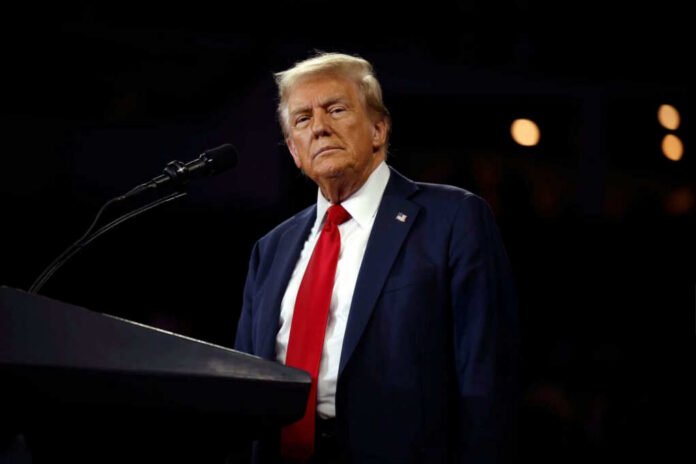
Trump’s blunt claim that Democrats are “America’s greatest enemy” is lighting up Washington just as a real-world Iran crisis threatens U.S. wallets and national security.
Quick Take
- President Trump posted on Truth Social that Iran faces “death” and argued the “Radical Left” Democratic Party is America’s “greatest enemy.”
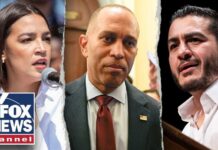
- House Minority Leader Hakeem Jeffries responded on CNN by telling Trump to “keep his reckless mouth shut,” tying the rhetoric to the Iran war and rising gas prices.
- The dispute is unfolding during an active U.S.-Iran confrontation centered on the Strait of Hormuz, a key global oil chokepoint.
- Congress is simultaneously debating war authorities and funding, including reports of major additional Pentagon requests tied to the operation.
Trump’s Truth Social posts collide with an Iran deadline
President Donald Trump’s weekend posts escalated two fights at once: a foreign standoff with Tehran and a domestic political brawl with Democrats. Reports say Trump issued an ultimatum tied to the Strait of Hormuz, warning Iran to keep the route open or face U.S. strikes on power infrastructure. Soon after, he declared “the death of Iran” and pivoted to attacking Democrats, calling them the country’s top enemy.
Several outlets also reported Trump took aim at specific Democrats, including Texas figures James Talarico and Jasmine Crockett, and California Gov. Gavin Newsom, while referencing former Vice President Kamala Harris. The immediate context matters because the Hormuz threat is not abstract; Iran has signaled it could respond by closing or disrupting the strait if the U.S. attacks key assets. Any shipping disruption there can quickly move energy markets.
Jeffries’ rebuttal focuses on war costs and gas prices
House Minority Leader Hakeem Jeffries answered Trump’s posts on CNN’s “State of the Union,” telling the president to “keep his reckless mouth shut.” Jeffries tied the rhetoric to what he described as a “reckless war of choice” and argued the conflict is already hitting Americans through higher gas prices. He cited reported costs exceeding $30 billion and pointed to pain at the pump as tensions around Hormuz intensify and markets price in risk.
Jeffries’ framing fits a familiar Democratic line: blame Trump’s language and strategy for economic fallout. What’s less established in the is a clear, documented causal chain between any one post and gas-price moves in real time, since oil markets respond to a mix of military developments, shipping insurance, refinery constraints, and expectations. Still, the Hormuz angle is straightforward: when a chokepoint that handles significant global oil transit is threatened, consumers often see price volatility fast.
War powers and spending debates return to the center stage
The political clash is happening while Congress wrestles with the limits of presidential war-making authority. Reporting indicates House lawmakers have moved a War Powers Resolution intended to constrain or scrutinize U.S. action in Iran. That process matters to constitutional conservatives because it forces a public accounting: objectives, timelines, and the legal basis for a prolonged operation. It also tests whether Washington can debate war without slipping into reflexive “party-first” positioning.
At the same time, coverage notes the Pentagon is seeking a substantial additional funding request connected to the operation. When lawmakers weigh new billions—or more—voters will inevitably ask what the mission’s measurable goals are and how long the commitment lasts. Fiscal restraint isn’t just a campaign slogan for many Americans burned by years of inflation and debt; it’s a demand for discipline, especially when Washington signals open-ended spending during global instability.
Domestic rhetoric vs. national unity: what’s factual—and what’s hyperbole
Trump’s “death of Iran” language was widely described as hyperbolic given ongoing threats, active operations, and continued funding discussions. Some coverage emphasized the jarring nature of claiming decisive victory while warning of additional strikes and seeking more resources. That tension doesn’t prove deception, but it does show how modern political messaging often compresses complex military realities into dramatic slogans designed for maximum attention and base mobilization.
@POTUS @HouseGOP @HouseDemocrats
Jeffries tells Trump to keep his 'reckless mouth shut' after president calls Democratic Party 'greatest enemy'Most of America agrees , so Jefferies how about "you shut your mouth"
— NotBorg (@MagaDplorable) March 23, 2026
The deeper issue is how quickly foreign conflict becomes a tool in America’s internal political war. Trump’s posts framed Democrats as a greater threat than a hostile foreign regime, while Jeffries argued Trump’s words are reckless and economically damaging. The facts in reporting confirm the quotes and the timing; what remains unclear is how either side intends to lower temperatures while protecting U.S. interests. For voters focused on constitutional limits, border security, and family budgets, the next concrete test will be congressional votes on war authority and funding.
Sources:
The Jerusalem Post — American Politics (article-890823)
Trump: “The Greatest Enemy America Has Is The Radical Left,” Targets Talarico And Newsom
Trump labels Democrats ‘greatest enemy’ in Truth Social post