
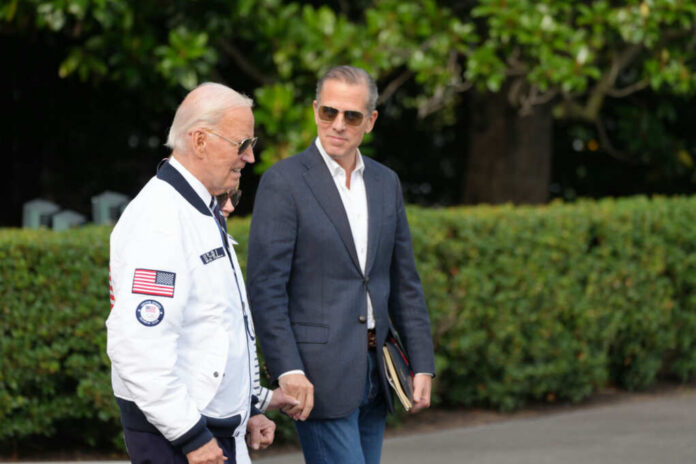
Hunter Biden’s on-camera admission of past crack cocaine abuse is now fueling fresh questions about accountability, narrative control, and how partisan media frames a “confession.”
Story Highlights
- Hunter Biden is quoted in Candace Owens’ trailer saying “I was a crackhead,” reigniting scrutiny of past conduct [2].
- The clip features Owens tying his admission to the infamous laptop narrative, claiming it “proved” his addiction [2].
- Coverage notes Hunter also blasted corruption in Washington and discussed political elites [2][1].
- Most public evidence is a trailer and commentary clips, not a full authenticated transcript [2][3][4].
Hunter Biden’s Admission Appears In Owens’ Trailer, Not A Full Transcript
Candace Owens released a trailer promoting her sit-down with Hunter Biden that includes the quote, “I was a crackhead,” paired with his description of a “really, really dark cycle” after his marriage collapsed [2]. The trailer, not a full published transcript, is driving headlines, with commentary channels elevating its reach ahead of broader release [3][4]. Because the strongest claims rest on edited promotional footage rather than a complete interview record, the public is weighing a compressed artifact, not the full conversation [2][3][4].
Owens’ framing in the trailer links Hunter’s admission to the laptop, asserting the material “proved” his addiction [2]. That claim intersects with years of reporting and debate about the device’s contents, but within the clip, the focus is biographical self-disclosure, not documentary forensics. For conservative audiences, the direct language is notable. Yet the central evidence remains a teaser that sets a narrative tone without providing full, continuous context for his words or the interview’s sequencing [2].
What Hunter Reportedly Said About Corruption And Elites
Trailer and summary descriptions credit Hunter Biden with saying “DC is corrupt. Politics is corrupt,” and describing how the “DC elite of the left” disfavored his father for not being “part of that club” [2]. An international outlet likewise reported the interview included political commentary, underscoring that the conversation spanned addiction and policy views [1]. These attributions suggest Hunter cast blame on a broader political culture, while also acknowledging personal failings—again, presented through excerpts rather than a full transcript [1][2].
For readers wary of Washington’s insider machinery, the reported anti-elite remarks echo long-standing conservative critiques about permanent-class power. However, without an authenticated, complete recording to parse tone and follow-ups, it is difficult to determine whether Hunter’s statements were contrition, deflection, or both. The difference matters: one reading emphasizes personal responsibility; another implies the system’s rot overshadowed individual choices. The fuller context would clarify which interpretation holds [1][2].
Gun Case References And The Pardon Claim In The Clip Framing
Summaries of the trailer indicate the segment referenced Hunter Biden’s conviction on three felony gun charges and included a claim that President Joe Biden later pardoned him, presented in the clip as a contradiction or reversal [2]. The trailer’s presentation shapes a narrative where past conduct and alleged leniency converge. Because this point is embedded in promotional framing rather than an official court or White House document, verifying the exact assertions requires consulting the full interview or public records beyond the teaser [2].
The legal references intensify the accountability debate, but the limitations of a trailer-first conversation persist. Viewers encountering these claims through clips risk conflating the editor’s rhetoric with the subject’s verbatim statements. Conservative readers should insist on primary documentation—final rulings, formal clemency records, and complete interview footage—before drawing firm conclusions about legal outcomes or executive actions that carry constitutional and rule-of-law implications [2].
Media Ecosystem Risks: Sensational Clips Versus Verifiable Context
Commentary channels amplified the Owens–Biden exchange prior to widespread access to a complete recording, rewarding dramatic framing such as “confession” and “explosive” interview [3][4]. This distribution pattern, common in today’s news cycle, privileges short-form narratives that can overshadow nuance and sequence. Conservative audiences who value truth over spin should treat trailer-driven discourse as provisional, pending full-context publication, authenticated transcripts, or corroborating records that separate headline heat from evidentiary light [2][3][4].
'I Was a Crackhead': Hunter Biden Drops Bombshell Drug-Use Confession in Explosive Interview With Conservative Mouthpiece Candace Owens #HunterBiden #JoeBidenhttps://t.co/to6nnVXWEL
— Richard Bacon (@rckbcn03) May 20, 2026
The path forward is straightforward. First, secure the unedited video or an authoritative transcript to confirm whether “I was a crackhead” stands alone or sits within a broader timeline of recovery, responsibility, and policy commentary [2]. Second, compare the trailer’s claims about the laptop, corruption, and gun matters against primary documents and court records. Third, assess whether the interview advances new facts or largely reiterates previously known admissions. These steps put evidence ahead of hype and protect readers from narrative manipulation [1][2][3][4].
Sources:
[1] Web – Hunter Biden claims Netanyahu pushed Trump into Iran war
[2] Web – Hunter Biden Returns. The Whit … – Candace – Apple Podcasts
[3] Web – 5-18-26 Afternoon Rush – Candace Owens Will Interview Hunter …
[4] YouTube – Candace Owens Interviewing Hunter Biden Achieves NOTHING