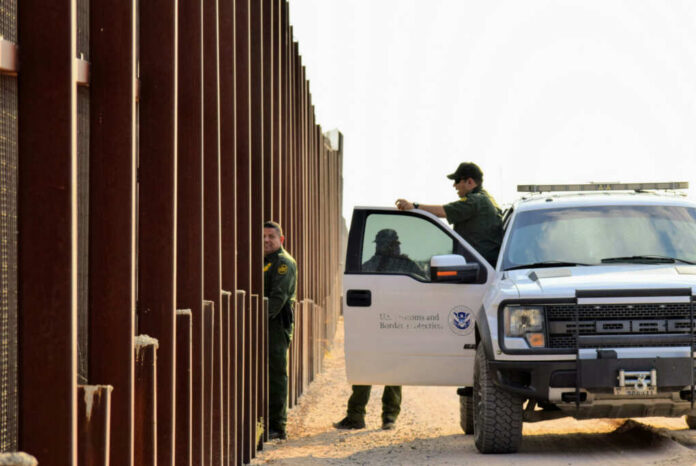
Federal officials say this year’s border fentanyl seizures could kill over 100 million people, underscoring both the scale of the crisis and the stakes of getting border security right.
Story Snapshot
- Border agents have already seized thousands of pounds of fentanyl in fiscal year 2026, with January–March alone topping 2,900 pounds at United States borders.
- Customs and Border Protection (CBP) reports that more than 90 percent of illicit drugs, including fentanyl, are intercepted at official ports of entry, not open desert crossings.
- Trump-era pressure on cartels is producing record interdictions, but experts warn seizures alone do not prove total trafficking or overdose deaths are falling.
- Advocates’ “enough to kill 100 million Americans” framing is rhetorically powerful but rests on simplified dose math and incomplete public data.
Border Fentanyl Seizures in 2026: What the Numbers Actually Show
United States border data compiled by USAFacts from Customs and Border Protection records shows that between January and March 2026, authorities seized about 2,900 pounds of fentanyl at United States borders, including roughly 613 pounds in March alone. OpenImmigration’s tally of Customs and Border Protection drug data reports 4,183 pounds of fentanyl seized so far in fiscal year 2026, following 12,027 pounds in fiscal year 2025, 21,889 pounds in fiscal year 2024, and 27,023 pounds in fiscal year 2023.[1] Those figures confirm that, under stricter Trump-era enforcement, frontline agents are still interdicting fentanyl in the tens of thousands of pounds over just a few years.
Customs and Border Protection’s own budget testimony, relayed through a National Treasury Employees Union summary, emphasizes that the agency seized nearly 22,000 pounds of fentanyl in 2024 and is “on track to seize as much, if not more” in 2025, while already surpassing 7,000 pounds that year when the testimony was prepared.[2] Officials stress that these seizures, in their words, “permanently removed these drugs from the illicit supply chain, kept them out of our communities, and denied drug trafficking organizations profits and critical operating capital.”[2] That language reflects a law-and-order focus consistent with conservative expectations that the federal government’s first job at the border is to protect American families.
Where Fentanyl Is Crossing: Ports of Entry Versus Open Border
Customs and Border Protection and Department of Homeland Security-linked analyses consistently indicate that most fentanyl is being intercepted at official ports of entry rather than between them. The National Treasury Employees Union testimony quoting Customs and Border Protection states that “over 90 percent of illicit drugs seized, including fentanyl, enter through the ports of entry.”[2] USAFacts’ breakdown of 2026 border data also concludes that fentanyl is primarily seized at official ports of entry along the southwest border, not on remote trails. That means the fight is centered on checkpoints, vehicle inspections, cargo, and airport screening, challenging simplistic rhetoric that only physical wall gaps drive the crisis.
For conservatives, this pattern matters because it points toward enforcement tools beyond just additional fencing: more officers, more inspection lanes, better scanners, and tougher screening of cars and trucks that cartels use as Trojan horses. OpenImmigration’s broader dataset notes that from fiscal year 2023 through fiscal year 2026, Customs and Border Protection seized 1.9 million pounds of drugs in 183,003 seizure events, including more than 65,000 pounds of fentanyl.[1] That scale underlines how deeply entrenched cartel smuggling has become. At the same time, United States Attorney’s Office reporting from San Diego shows how concentrated some of these efforts are: in the first nine months of fiscal year 2022, the San Diego sector alone seized 5,091 pounds of fentanyl, accounting for about 60 percent of the 8,425 pounds seized nationwide. Targeted pressure at key choke points can therefore disrupt a huge share of the national flow.
“Enough to Kill 100 Million” and the Limits of Seizure-Driven Storylines
The viral claim that Customs and Border Protection has seized enough fentanyl this fiscal year to kill 100 million Americans rests on converting seizure weight into hypothetical lethal doses, a method highlighted by some advocates who estimate “billions” of potential deaths from tens of thousands of pounds seized.[1] While this framing captures the horror of a drug measured in grains, the available sources do not provide the toxicology assumptions behind those math exercises, such as purity or route of exposure, nor do they show that Customs and Border Protection itself endorses a specific death-equivalent figure.[1] As a result, “100 million” should be treated as a rough rhetorical warning, not a precise scientific conclusion.
Drug-policy analysts caution that seizure totals alone do not prove whether overall trafficking or overdose deaths are rising or falling. USAFacts acknowledges that Department of Homeland Security estimates suggest border drug seizure statistics significantly undercount the true flow, noting that in one study officials believed they intercepted only about 3 percent of cocaine trafficked through official ports. The same logic likely applies to fentanyl. Larger seizures might reflect better targeting, larger shipment sizes, or both. For Trump-supporting readers, that means celebrating aggressive interdiction while still demanding deeper accountability: full release of underlying Customs and Border Protection datasets, clear evidence on overdose trends, and relentless pressure on both cartels and any remaining bureaucratic resistance to real border control.
Sources:
[1] Web – Drug Seizures at the U.S. Border – OpenImmigration
[2] Web – Fiscal Year 2026 Budget Request for the U.S. Customs and Border …