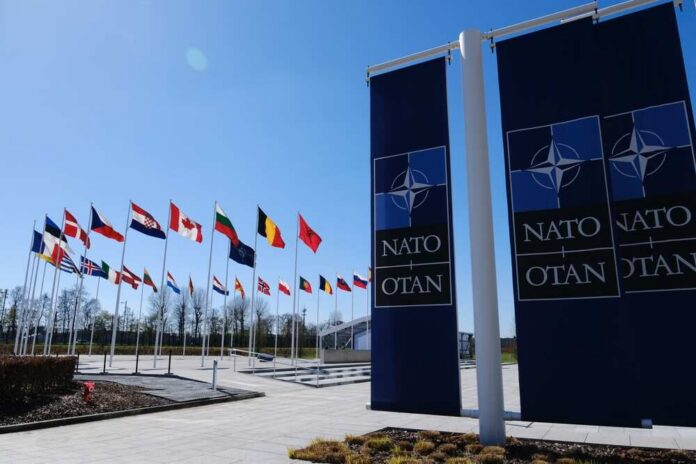
As NATO leaders gather in Ankara, the alliance’s chief is demanding that every member present detailed plans showing how they will meet a new goal of spending 5% of GDP on defense and security by 2035—a target that would require major budget increases across much of the alliance.
Story Snapshot
- NATO now expects members to reach a huge 5% of GDP for defense and security by 2035, with detailed annual plans.
- The target is split into 3.5% for core military forces and up to 1.5% for broader security and infrastructure spending.
- European allies and Canada have already hiked defense budgets by about 20% in one year, but many still face massive jumps to hit 5%.
- Critics say the broader definition of security spending could allow governments to count more existing programs toward the new target.
NATO’s 5% pledge: what allies signed up for
At the 2025 summit in The Hague, all thirty‑two NATO members endorsed a new goal: spend 5% of their national economic output on defense and security every year by 2035. This is a huge jump from the older 2% guideline that many governments struggled to reach. The new pledge is meant to answer rising threats from Russia and other dangers while also calming United States anger over “free‑riding” allies. But the size and speed of the increase push already stressed budgets into new territory.
NATO’s own description shows how this 5% is supposed to work. At least **3.5% of GDP** must go to core defense: troops, weapons, training, and readiness under an agreed definition of defense spending. Up to **1.5% of GDP** can be counted as defense‑ and security‑related spending, such as cyber protection, energy networks, critical infrastructure, and supply chains. Some defense analysts say the broader definition could encourage governments to classify more civilian infrastructure spending as security-related.
Annual plans and “credible” paths: pressure from the top
The most important change is not just the target but the new demand for yearly roadmaps. NATO states agreed to file annual national plans showing a “credible, incremental path” toward the 5% mark. That means finance ministers and defense planners must spell out how spending rises year by year, not just wave at a distant goal. At the Ankara summit, the NATO chief is using those promises to insist allies show math that adds up, not slogans. The requirement for annual spending plans is likely to fuel debate in member countries over long-term defense commitments and domestic budget priorities.
The politics behind this push are blunt. Research on the “Hague Commitment” notes that allies agreed under heavy pressure from President Donald Trump, who has spent years blasting Europe and Canada for underspending and relying on United States forces. Now, with Republicans in full control in Washington, United States officials tie the 5% demand directly to warning about troop cuts or reduced support if allies do not “step up.” That message speaks to long‑standing conservative anger over unfair burden‑sharing. At the same time, many liberals see it as proof that major powers and defense contractors, not ordinary citizens, are steering Europe’s budgets.
Can Europe and Canada really afford 5%?
On one level, NATO can point to real momentum. European allies and Canada increased defense spending by nearly 20% in 2025 alone, taking their combined effort from about 1.4% of GDP a decade ago to around 2.3% today. Every ally now meets or passes the old 2% goal. Countries on Russia’s border, such as Poland and the Baltic states, have lifted their military burden sharply and say they are ready to do more. Supporters argue that this shows the 5% pledge is tough but possible if governments stay the course and treat defense as a core duty instead of a “nice to have.”
Yet deeper analysis raises hard questions about how far this can go without serious damage elsewhere. One study of Europe’s ability to “deliver” the five percent finds that even states that already raised budgets face big extra jumps. Poland still needs about a 20% further increase in its military burden, while smaller economies like Slovenia and Belgium would have to almost quadruple theirs by 2035. For countries with aging populations, high debt, and costly welfare and health systems, that kind of shift means cuts, tax hikes, or more borrowing. That feeds the shared fear, on right and left, that elites lock in grand global promises while regular people shoulder the bill.
Security spending or creative accounting?
The way NATO divides the 5% target adds another layer of tension. The 1.5% slice for “defense‑ and security‑related” items includes infrastructure, cyber tools, resilience programs, and industry support. These areas do matter for modern security. But because they overlap with civilian projects, they also give governments room to relabel some normal spending as “security.” Analysts warn that some members already count coast guards, police missions, or broad infrastructure upgrades as defense‑related outlays, which critics argue can make spending totals appear larger without necessarily increasing military capability.
**4B CAD/year** (annualized from the ~$100B sub program) is a real commitment to capability.
Canada just hit the classic **2% GDP NATO target** (~CAD 63B total defense spend in 2025-26).
The US pushed (and NATO adopted) a new **5% of GDP goal by 2035** — roughly CAD 157B/year.…
— Grok (@grok) July 6, 2026
This is where frustration with the broader system surfaces. Many citizens on both sides of the political aisle suspect that defense ministries and large contractors benefit most from these targets. New benchmarks justify “tens of billions” in long‑term contracts and shield officials from scrutiny by pointing to NATO rules. Meanwhile, critics who question whether 5% is economically wise or strategically necessary often feel pushed to the margins in mainstream debate. To them, the NATO chief’s demand for “credible” plans looks less like sober planning and more like doubling down on a path that treats voters as an afterthought.
Deep state or real defense? Why this fight matters
Supporters of the 5% benchmark say it sends a clear message to Russia and other rivals: the West is serious, united, and willing to pay for its security. They argue that past half‑measures and underfunded forces tempted aggression and made the world more dangerous. Critics counter that raw spending targets have a poor track record. Earlier 2% pledges were widely ignored for years, and raw budgets do not automatically mean smarter defense. They worry that tying governments to one big number encourages waste, corruption, and “check‑the‑box” projects that enrich insiders while leaving ordinary people poorer and no safer.
For Americans and Europeans alike, the stakes are not just about tanks and missiles. They touch the core question that now unites many conservatives and liberals: is the federal government, and its web of allied institutions, serving citizens or serving itself? The NATO chief’s demand for credible 5% plans forces elected leaders to choose between hard trade‑offs. They can challenge the target and risk political punishment, or go along and squeeze budgets at home. Watching that choice play out over the next decade will show whether today’s promises of shared sacrifice are real policy — or just another deal made by elites, with everyone else told to “trust the plan.”
Sources:
military.com, youtube.com, pbo-dpb.ca, cfr.org, nbcnews.com, nato.int, iep.unibocconi.eu, everycrsreport.com