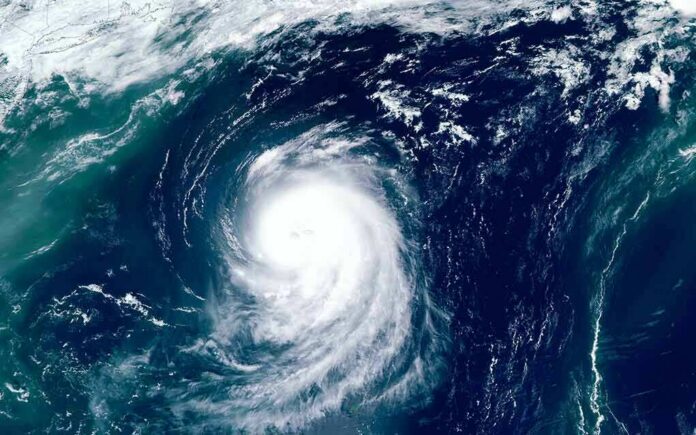
Typhoon Dolphin slammed into China’s eastern coast and set off a fast chain of evacuations, flight cuts, and flood warnings.
Quick Take
- Reuters said Typhoon Dolphin made landfall near Yuhuan in eastern Zhejiang province around 5:30 p.m. local time.
- China’s meteorological authorities put the storm’s peak landfall wind speed at 42 meters per second, or 151 kilometers per hour.
- News reports said more than 1 million people were evacuated, while airports and rail services faced major disruption.
- Reporters and official forecasts broadly agreed on the same threat zone, but they used different place names and totals.
Landfall Hits the Eastern Coast
Typhoon Dolphin made landfall on Sunday along China’s eastern coast, with Reuters reporting the first strike near Yuhuan in Zhejiang province at about 5:30 p.m. local time. Reuters said the storm brought strong winds, heavy rain, and warnings for flooding and landslides. Bloomberg described two landfalls in eastern Zhejiang, including one near Taizhou and another near Wenzhou, showing how fast-moving storm coverage can use slightly different place labels.
The core event was not in dispute across the public record. Reuters, Bloomberg, Al Jazeera, and Xinhua all reported that the typhoon reached eastern China and caused immediate disruption. That kind of broad agreement matters because disaster coverage often changes in the details, not in the basic fact of the storm’s arrival. Here, the main differences were about exact timing, the first point of contact, and whether reporters described one landfall or two.
Evacuations and Travel Disruption
The storm’s impact spread quickly across the coast. Reuters reported more than 1 million evacuations, while Al Jazeera said more than 1,600 flights were canceled and about 500,000 people were moved. Bloomberg reported more than 1,000 canceled flights and some rail service suspensions. Firstpost’s live report added that Wenzhou relocated more than 900,000 residents and Shanghai canceled around 1,500 flights, which shows the scale of the disruption but also the range of public totals in circulation.
Those numbers reflect a common pattern in fast-breaking weather coverage. Agencies and broadcasters often publish counts before all local reports are fully updated, so totals can shift within hours. Even with that variation, the direction of travel is clear: officials moved large numbers of people, shut down parts of transport networks, and warned of dangerous weather after the storm reached land.
Why Officials Raised the Alarm
China’s meteorological authorities said the storm packed maximum sustained winds of 42 meters per second, which Reuters equated to 151 kilometers per hour and Category 1 hurricane strength. Bloomberg gave the same wind figure through the China Meteorological Administration and reported a second landfall around 6:40 p.m. in Wenzhou, which helps explain why the warnings stayed so high after the first coastal hit. Al Jazeera said the storm could still bring very heavy rain as it moved inland.
Typhoon Dolphin intensified rapidly before hitting China, forcing over 1M evacuations. With it now making landfall, will the storm cause catastrophic damage, or will China’s preparations limit the impact? https://t.co/5m3pzeUnYy
— Vɪᴄᴛᴏʀ (@iamversatile) August 10, 2026
Forecasts before landfall had already pointed to the same broad danger zone. China’s National Meteorological Center said the typhoon could hit between Shanghai and Fujian, while a United States Embassy weather alert said eastern and southeastern provinces, including Zhejiang, Jiangsu, Fujian, Anhui, and Shanghai, should prepare. That forecast-to-impact match supports the main story: the landfall was expected, it arrived, and the damage risk came from wind, rain, and the storm’s slow inland move.
What the Mixed Place Names Mean
The different place names in the reports do not change the central fact that Typhoon Dolphin made landfall in eastern China. They do show how storm reporting can blur the first-contact point when a coastline has many bays, inlets, and nearby cities. Reuters used Yuhuan, Bloomberg used Taizhou and Wenzhou, Xinhua said Yueqing, and Telegraph India described a wider Sanmen-to-Fuding stretch. In practice, that means readers should trust the larger picture first and treat the precise shoreline label as the part most likely to shift.
Sources:
youtube.com, bloomberg.com, reuters.com, aljazeera.com, english.news.cn, facebook.com