China-linked companies allegedly handed Iran the satellite images it needed to kill three American troops in Jordan, according to U.S. officials cited by the Wall Street Journal.
Quick Take
- U.S. officials say Iran got high-resolution satellite images of Muwaffaq Salti Air Base from Chinese entities before a July 17 strike that killed three American troops.
- The State Department already sanctioned four Chinese-linked companies in May for supplying imagery that “enables Iran’s military strikes against U.S. forces.”
- Senior U.S. officials confronted Chinese counterparts directly. Beijing denied wrongdoing and demanded proof.
- Officials have not named which company supplied the specific imagery used in the Jordan attack, and no public documents show the transfer.
- Experts say Chinese imagery was likely just one piece of Iran’s targeting picture, alongside its own satellites and help from Russia.
What U.S. Officials Are Saying
Before Iran struck the Jordan base, Tehran bought high-resolution satellite pictures of the site from Chinese companies, U.S. officials told the Wall Street Journal. Three American service members died in the July 17 attack. The officials spoke on condition they not be named, and they say the imagery gave Iran a detailed look at the base before missiles hit it.
Three days after the strike, Iran released its own high-resolution photos showing damage spread across more than 20 buildings at the base. Analysts point to those images as a sign Tehran had access to sharp overhead intelligence, even though the photos alone don’t prove where that intelligence came from.
Sanctions Came Months Before the Report
The allegation lines up with action the State Department already took. In May 2026, the agency sanctioned four companies, saying they gave Iran “satellite imagery that enables Iran’s military strikes against U.S. forces in the Middle East”. The named firms included Meentropy Technology, also known as MizarVision, along with The Earth Eye and Chang Guang Satellite Technology.
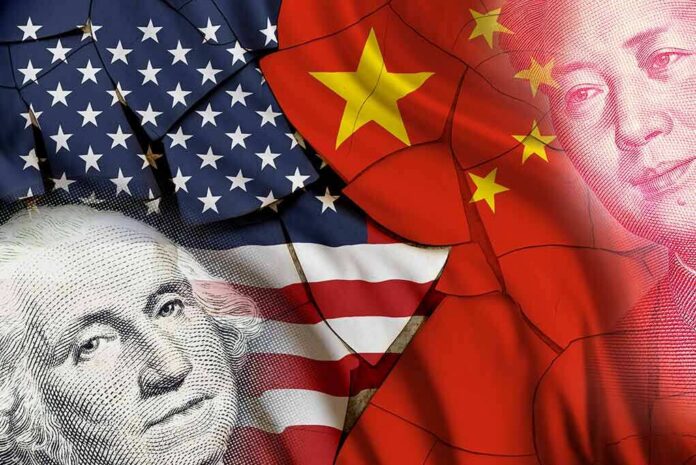
Those sanctions came just days before President Trump was set to meet Chinese leader Xi Jinping, adding a layer of trade and diplomatic tension to the dispute. The timing suggests Washington saw the imagery issue as serious enough to use as leverage heading into high-level talks, not just as a minor technical complaint.
China Denies Direct Involvement
Senior U.S. officials raised the imagery issue directly with Chinese counterparts. Beijing rejected the claims and demanded evidence. Notably, the U.S. officials did not accuse the Chinese government itself of ordering the imagery transfer, and they declined to name which specific company supplied the pictures used in the Jordan strike.
That gap matters. Without a named company or public paper trail, China can keep dismissing the story as unproven. Beijing’s Foreign Ministry has called similar reports “untrue” and accused unnamed critics of trying to “fabricate rumours” linking China to the war. No Chinese company has published its own detailed rebuttal.
Three American soldiers were killed in their sleep by an Iranian missile. US officials say China provided the satellite images that helped Iran find them.
The July 17 strike on Muwaffaq Salti Air Base in Jordan killed Army 1st Lt. Tyler Feehan, Pvt. Isabella Gonzales, and Sgt.… https://t.co/lALl6AlpPl
— UnveiledChina (@Unveiled_ChinaX) September 13, 2026
A Bigger Pattern, Not a Single Photo
Analysts caution against treating the Chinese imagery as the sole reason the strike succeeded. Reporting indicates Iran also used its own satellites, spies on the ground, and support from Russia to plan the attack. That means Chinese-sourced pictures may have added detail, but they likely weren’t the only piece of the targeting puzzle.
Commercial satellite imagery has become a global business, and companies that sell it can’t always control who buys it or how it gets used. That creates a hard problem: the same photo a farmer might use to check crops can end up guiding a missile. Governments are increasingly treating that commercial data as part of military targeting, not just harmless business.
Why This Story Still Matters
Three American families lost loved ones in an attack tied, at least in part, to imagery sold by companies operating in a country the U.S. calls a strategic rival. Even without a fully documented paper trail, the pattern is hard to ignore. It raises tough questions about how far the U.S. can trust Chinese commercial technology firms, and whether current sanctions are enough to stop the flow of sensitive imagery to hostile forces overseas.
Sources:
thegatewaypundit.com, wsj.com, ground.news, nypost.com, politico.com, iranintl.com, bloomberg.com, middleeasteye.net