
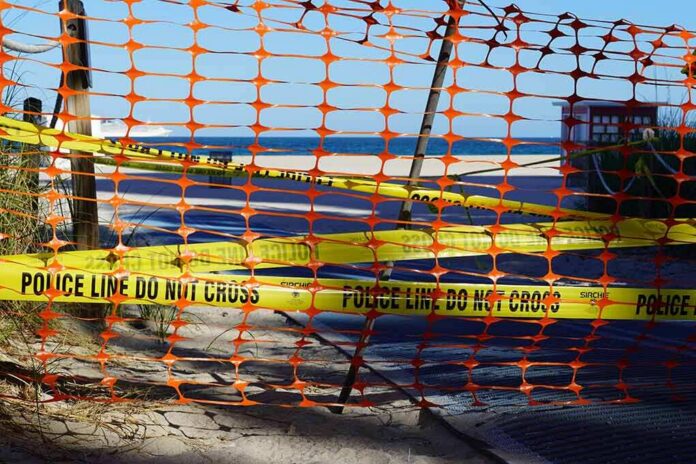
As powerful surf chewed away Tamarack State Beach, officials cordoned off parts of the crumbling parking lot to keep Labor Day crowds safe.
Story Snapshot
- High waves and tides stripped most sand from Tamarack State Beach in Carlsbad.
- State Parks blocked off damaged sections of the beachside parking lot.
- Lifeguard towers were moved and access is tighter as engineers assess fixes.
- Closures echo a wider pattern of erosion forcing emergency steps along the coast.
What Happened at Tamarack State Beach
California State Parks restricted vehicle access at Tamarack State Beach after heavy surf and high tides damaged parts of the beachside parking lot. The loss of sand exposed and shifted large shoreline boulders, known as riprap, which now sit in unstable spots near the lot and on the beach surface. Photos and local reports show steep drop-offs where sand once met the lot, prompting officials to cordon off the most threatened areas and move several lifeguard towers farther inland for safety.
California State Parks said the combination of sand loss, waves, and tides caused the riprap to slide west toward the ocean, undermining the edge of the lot and creating tripping and collapse hazards. The agency said it is consulting coastal engineers and coordinating with the California Coastal Commission on next steps to reopen the lot to vehicles once safety can be assured. For now, partial closures remain in place, and signs and barriers direct drivers away from the compromised sections.
How the Closures Affect Beachgoers
Labor Day weekend crowds faced fewer parking options at one of North County’s most popular shorelines, with blocked spaces and narrowed access points near the waterline. City officials said beaches remain open, but some ocean entries may be unsafe during strong surf, and people should follow lifeguard guidance on where to enter and exit. The reduced parking increases foot traffic from nearby streets and neighborhoods, adding time and frustration for families who expected easy shore access during the holiday rush.
Shifting sand and exposed rock also change basic safety on the beach. Where the lot once met a gentle slope, visitors now find sharp edges and large, unstable stones. Lifeguards urge people to avoid climbing on the riprap or walking close to the undermined lot edge. Parents with strollers and people using mobility devices face tougher paths from remaining spaces to the tideline. These near-term impacts will last until engineers can stabilize the area or reroute access safely.
Why This Fits a Larger Coastal Pattern
Similar closures and emergency measures have happened up and down the California coast when storms and tides carve away sand and undermine roads, lots, and restrooms near the water. The California Coastal Commission often allows emergency work to protect existing structures, but it also reviews whether those fixes increase erosion or block public access in the long run. In nearby counties, agencies have closed parking, moved facilities, or added rock barriers during heavy surf seasons to prevent injuries and property loss.
Severe erosion from waves hits Tamarack State Beach
Waves driven by tropical disturbances in the South Pacific have kept larger-than-normal sets rolling in week after week, and that heavy action, while an absolute delight for surfers, has been hard on sea-level infrastructure.… pic.twitter.com/Rq4acr7odl
— Water Mark 🚰 (@OtayMark) September 4, 2026
In Carlsbad, this is not the first time waves have forced a reset. Reports show the Tamarack corridor gained hundreds of thousands of cubic yards of sand from dredging in early 2025, yet recent swells still stripped much of it away, exposing the rocky base and stressing nearby infrastructure. That boom-and-bust cycle fuels public anger at what feels like rinse-and-repeat management: tax dollars go to short-term fixes, then nature wipes them out, and access gets squeezed again during peak demand.
What Officials Are Likely to Do Next
State Parks and engineers will assess whether the existing riprap can be reset, buried, or redesigned to protect the lot without worsening erosion. They will also weigh temporary measures, such as shifting more parking away from the edge, adding fencing, and improving footpaths for safer access. Any longer-term action that changes the shoreline protection will likely need Coastal Commission review to balance safety, public access, and the risks of pushing erosion down the coast.
Beachgoers should expect a staged timeline. First comes site stabilization and clear signage to cut injury risks. Next comes a permit path for repairs that may last through winter surf. If repairs are approved, crews could close more spaces during construction windows, then reopen in phases. That process aims to keep the public safe while maintaining access, but it also reflects the hard truth: sea-driven damage will continue to test coastal infrastructure, budgets, and patience.
Why This Matters Beyond One Beach
When a beach parking lot fails on a holiday weekend, it spotlights a larger strain between public access promises and on-the-ground maintenance. People pay taxes and fees for open, safe beaches. Yet the system often delivers late closures, detours, and temporary fixes that seem to repeat every season. Residents across the political spectrum see the pattern and ask why basic services break down when they are needed most, and why agencies cannot stay ahead of obvious risks.
Tamarack’s erosion is a natural event, but the response is a policy choice. Transparent timelines, simple safety steps, and clear goals can rebuild trust. Regular beach users want to know when they can park, how they can reach the water, and what is being done to avoid the same scramble next time. That is not partisan. It is practical. Officials who deliver those basics, and show their math, will earn patience the next time the surf rises.
Sources:
nypost.com, sandiegouniontribune.com, sfgate.com, aol.com, 10news.com, parks.ca.gov, nbclosangeles.com, latimes.com, carlsbadca.gov