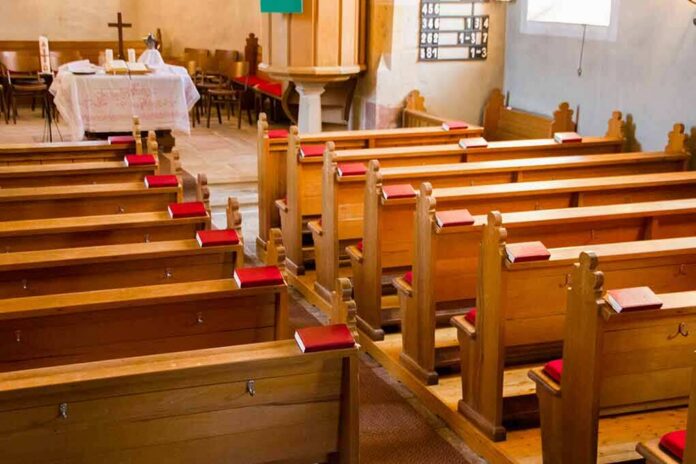
An undercover video and a resurfaced interview place a Texas church at the center of a years-long “sanctuary” dispute that could test federal harboring laws.
Story Highlights
- A minister called the church a “sanctuary church” and described housing an undocumented man who “worked here for 8 years.”
- A 2023 interview quoted James Talarico saying the church housed an undocumented mother and son near deportation.
- Civil-liberties guidance says sanctuary has no special legal shield under federal law.
- Legal analysis says harboring hinges on shelter plus knowledge of unlawful status.
What the video and past remarks show
Texas Scorecard reported that an undercover video shows a minister at St. Andrew’s describing it as a “sanctuary church.” The minister reportedly says a man from Guatemala lived in the church and “worked here for 8 years.” The report places Democratic Senate nominee James Talarico’s home church in the spotlight. It also adds to prior backlash over a 2023 interview in which Talarico said the church housed an undocumented family facing deportation by federal immigration officers.
In that resurfaced interview, Talarico framed the housing decision as part of the church’s public witness. He listed earlier activism and then said the church “stirred some controversy” by sheltering a mother and son near removal. The clip ignited criticism from Republicans and drew defenses from his campaign. The campaign has said he supports law enforcement while favoring targeted action against violent offenders, not broad crackdowns. The original full recording context has not been released in full in this package.
What federal law says about ‘sanctuary’ and harboring
American Civil Liberties Union guidance explains that the idea of religious “sanctuary” has no special legal protection under federal immigration law. The guidance says harboring means sheltering an undocumented person and helping that person remain in the country unlawfully. It also says prosecutors must prove the person doing the sheltering knew, or recklessly ignored, the person’s unlawful status. These points shape how both supporters and critics read the church’s past and present statements.
Legal commentary from scholars and past Department of Justice writings has long said housing undocumented people in a church can fall within the harboring statute. But real-world cases often turn on details, like intent to evade detection, duration, and any steps to conceal. The public claims here describe shelter and awareness, but they do not by themselves settle every legal element. That gap is why advocates on each side argue over what conduct crosses the line from charity into unlawful harboring.
What remains unclear and why it matters
The available reporting does not identify the individual allegedly living and working at the church by name or case number. There are no internal church records or a sworn statement in this record that clarifies who approved the arrangement, when it began, and for what purpose. Without those facts, the public is left with on-camera comments and media descriptions. That leaves room for spin on both sides while key facts about identity, dates, and legal intent remain incomplete.
Pastor at James Talerico's 'Sanctuary Church' Admits to Harboring Illegal Alien for 8 Years, Says 'We're Not a Belief-Based Church' (Video) https://t.co/uYk2iuB4RR
— Terry Sater (@sater_terry) September 22, 2026
This story lands in a wider national divide. Many conservatives see a clear breach of the rule of law and years of lax enforcement. Many liberals see faith-based care for people in danger and a system that often fails families. A growing share of Americans in both camps see institutions talking past them. They fear leaders protect their own power while avoiding the hard work of fixing immigration, labor markets, and trust in law. This case taps those shared frustrations.
How to read the stakes beyond the headlines
Church sanctuary fights have recurred for decades. Federal law does not grant a safe zone in a church, yet prosecutions for shelter alone have been rare. That mix breeds confusion and outrage. If investigators verify long-term housing with knowledge of unlawful status, the case could test current enforcement priorities. If fuller records show short-term aid tied to legal counsel or pending relief, it could look more like pastoral care. The law cares about facts, not labels.
Sources:
thegatewaypundit.com, texasscorecard.com, libertysons.org, crbcnews.com, foxnews.com, mnynaz.com