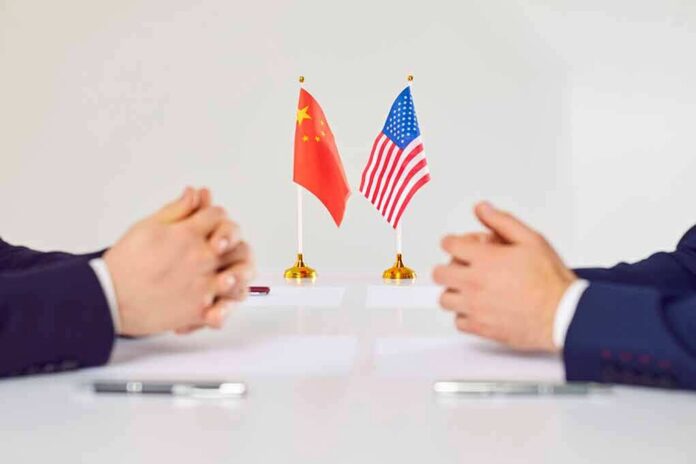
President Trump and China’s Xi Jinping agreed to keep a fragile trade truce alive for two more months, trading escalation for short-term stability.
Story Snapshot
- The United States and China extended their trade truce to January 10, keeping lower tariffs in place.
- The White House framed the move as protecting American workers, farmers, and businesses.
- Officials said the pause helps avoid new trade restrictions while talks continue.
- Analysts called the arrangement temporary, with no major breakthroughs announced.
What Changed: A Short Extension, Not a New Deal
Treasury Secretary Scott Bessent said the United States and China agreed to extend their current trade truce by two months, moving the deadline to January 10. The announcement came as President Trump hosted China’s President Xi Jinping in Washington. The pause keeps existing tariff relief intact and holds off on new trade limits while talks continue. News reports described the move as a way to lock in calm rather than risk new shocks to prices and supply chains.
Coverage stressed the limited scope. Outlets reported no major breakthroughs tied to the extension. Both sides framed the result as a way to steady ties and manage sharp differences. The truce aims to avoid a return to higher tariffs that would raise costs for families and businesses. Officials positioned the step as buying time for more talks without triggering fresh pain in markets that ripple to jobs and wages.
Why It Matters: Farm Country, Factories, and Family Budgets
The White House said the trade framework is designed to protect American workers, farmers, and businesses. That framing signals a focus on jobs, export access, and inputs that feed U.S. factories. Farm-state voices have watched China’s purchases closely during each pause in the tariff fight. The administration tied the broader U.S.–China track to both economic and national security interests, linking trade calm to space for policy leverage on issues that affect everyday costs and safety.
Reports around the summit noted that past truces often included pledges on farm sales and checks on export controls. Those steps can help soybean, pork, and beef exporters, and help manufacturers that rely on critical minerals. Still, the most recent extension stands on its own terms as a short pause, not a fresh package of new concessions. That makes it valuable for near-term planning, but it does not claim to settle core disputes or guarantee follow-through beyond January.
The Limits: A Fragile Pause With Open Questions
Public accounts of the extension did not list new Chinese commitments on issues like Iran, Russia, or drug trafficking as part of this two-month pause. Reporting also noted earlier concerns about whether China had fully met some purchase or supply pledges, which is why officials sought more regular check-ins in past talks. The extension’s brief window underscores that this is a stopgap. The result is breathing room rather than a durable fix.
This pattern fits a familiar cycle in U.S.–China trade politics. Leaders announce a pause, markets exhale, and each side claims a win. Then the hard parts return: compliance checks, farm shipment volumes, and sensitive tech or minerals. Analysts describe this as “managed conflict,” where both sides keep pressure on but try to avoid a break. That shared incentive explains why a short truce can still matter for prices, paychecks, and planning, even as deeper risks remain.
What to Watch Next: Signals Between Now and January
Watch for concrete purchase data for U.S. farm goods and any official notices on tariff schedules. Those are early signs of real impact. Also watch for readouts on critical mineral exports, which affect defense, autos, and electronics. Any shift there can hit jobs and costs across the country. If both sides hold fire through the holidays, families and small firms could see steadier prices. If talks stall, tariffs can snap back fast, and the hit will land on consumers first.
Sources:
youtube.com, globalnews.ca, cbc.ca, wbaltv.com, cnbc.com, scmp.com, whitehouse.gov, icis.com, arabnews.com