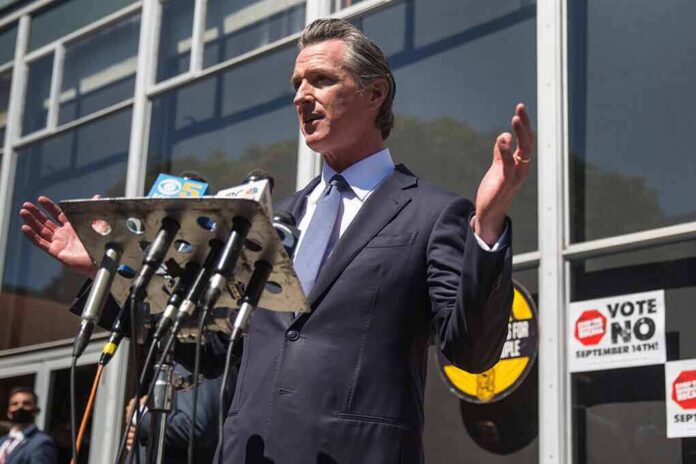
California just made it easier to charge repeat drunk drivers with felonies—and even murder—after deadly crashes.
Story Snapshot
- Governor Gavin Newsom signed four laws targeting repeat driving under the influence offenders, including “Braun’s Law.”
- The package lengthens license revocations, expands ignition interlock mandates, and raises Department of Motor Vehicles points for deadly crashes.
- Supporters say the laws close loopholes and respond to rising roadway deaths; critics warn harsher penalties hit low-income residents hardest.
- The final package is smaller than the original 17-bill push after organized opposition.
What Changed In California’s DUI Penalties
Governor Gavin Newsom signed four bills to toughen penalties on repeat driving under the influence offenders. The package includes longer license revocations, wider use of ignition interlock devices, and more severe charges when crashes kill someone. It also raises Department of Motor Vehicles violation points for vehicular manslaughter while intoxicated. State officials framed the move as a safety push to keep high-risk drivers off the road and deter repeat offenses.
The most prominent measure is Senate Bill 907, known as “Braun’s Law,” named for 18-year-old Braun Levi, who was killed by a suspected repeat drunk driver. The law ensures judges warn defendants who plead down DUI charges that a future impaired crash could bring murder charges. Supporters say this notice closes a gap and backs prosecutors when seeking stronger counts after a fatal repeat offense. Newsom’s office highlighted the goal of stopping repeat offenders before another tragedy.
How Prosecutors And Courts May Use The New Tools
Assembly Bill 1546 allows prosecutors to treat a third DUI within ten years as a felony, tightening a system that often required four priors before a felony. The package also expands ignition interlock mandates for repeat offenders and extends the time the Department of Motor Vehicles can revoke a license when a driver racks up multiple qualifying convictions in a decade. Together, these steps aim to deter repeat behavior and incapacitate those who keep driving impaired.
The state also raised Department of Motor Vehicles violation points for vehicular manslaughter and gross vehicular manslaughter while intoxicated. That change can trigger tougher insurance costs and license actions for the worst offenses. Supporters argue the higher stakes match the harm caused. They say the structure now better warns drivers, backs court orders, and gives police and prosecutors clearer grounds for stronger charges after prior convictions and serious crashes.
Why Lawmakers Say Repeat Offenders Need Tougher Rules
California’s own data show drivers with prior DUI convictions pose higher risks than first-time offenders. State dashboards track recidivism and crash rates across offender groups and time. Policymakers often turn to longer suspensions, ignition interlock devices, and felony charging rules for repeat offenders because risk climbs with each prior case. This package follows that pattern by targeting a small but dangerous group who account for a large share of severe roadway harm.
California Governor Gavin Newsom signed Braun’s Law to crack down on repeat DUI offenders, closing legal loopholes to ensure drunk drivers who kill face murder charges. https://t.co/G2N4IpItt2
— FOX 11 Los Angeles (@FOXLA) September 25, 2026
Advocates also cited a rise in DUI-related deaths and a past system that let many repeat offenders return to the road too fast. Investigations noted California’s threshold for felony charges was high compared with other states, which limited deterrence and leverage in court. By allowing earlier felony filing and clearer murder exposure after warnings, backers argue prosecutors can intervene sooner and prevent future deaths that stem from repeat impaired driving.
The Pushback: Fairness, Cost, And Real-World Impact
Progressive groups opposed parts of the original plan, warning that stiffer penalties would fall hardest on low-income and marginalized residents. They argued enforcement-heavy steps do not fix root causes like addiction, access to treatment, or safer transit. That pressure helped cut the package down from an initial 17 bills to four. Critics want broader prevention, better compliance support, and policies that reduce impaired trips before police and courts get involved.
Public safety advocates counter that treatment and support work best when courts can enforce them. They point to research showing sanctions combined with treatment reduce repeat offenses more than treatment alone. Even so, the strength of these new laws will hinge on careful enforcement, court capacity, and access to ignition interlock devices and programs. Without even-handed application, the system can look like it protects the powerful and punishes the poor, feeding distrust on both left and right.
What Drivers In California Should Expect Now
Drivers with prior DUI convictions face higher stakes in the next ten years after each case. Courts can order longer license revocations. Ignition interlock devices will be required more often. A third DUI within a decade can bring a felony filing. If a repeat impaired driver causes a death after a court warning, prosecutors can pursue a murder charge. These changes aim to send a clear message: repeat impaired driving will carry sharper and faster consequences.
For families who lost loved ones, “Braun’s Law” is a sign the system heard them. For many others, it is another reminder that policy often follows headlines but struggles to fix deep problems. People across the spectrum see a government quick to write new penalties but slow to build fair, working systems. The true test will be fewer funerals, fewer repeat offenders, and a justice process that is tough, even-handed, and worthy of public trust.
Sources:
nypost.com, latimes.com, gov.ca.gov