

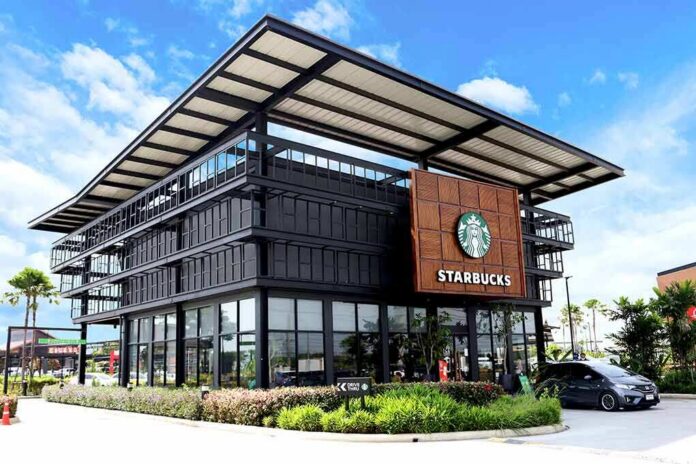
Starbucks will close 250 North American coffeehouses, a rare move that signals painful cuts even for a market leader.
Story Highlights
- Starbucks plans to shut 250 underperforming stores, about 1% of its North American footprint.
- Leaders cite weak unit results and stores that cannot meet customer and worker experience standards.
- The company booked about $300 million in restructuring charges tied to the closures.
- Workers will be offered transfers where possible, or severance if not available.
What Starbucks Announced and When
Starbucks said on September 24, 2026, that it will close 250 underperforming coffeehouses in the United States and Canada. The company described the move as about 1% of its roughly 18,000 North American stores. The decision is part of an ongoing turnaround plan under Chief Executive Officer Brian Niccol, who has pushed for stricter cost control and store discipline. The filing placed the closures within the current fiscal year plans and tied them to measured, portfolio-wide changes.
Chief Operating Officer Mike Grams told employees that the targeted locations either are not delivering acceptable financial results or cannot provide the experience Starbucks wants for customers and employees. The memo framed the step as a portfolio review under the “Back to Starbucks” strategy, with store decisions based on consistent standards. Starbucks did not publish a store-by-store list in its announcement, which means local details will arrive in phases through regional updates and landlord notices.
How the Closures Fit Starbucks’ Strategy
Reuters reported Starbucks logged about $300 million in restructuring charges linked to the closures. Those costs often include lease exits, equipment write-downs, and employee support. Large chains use selective closures to remove weak units and refocus capital on better sites, formats, and drive-through locations. Starbucks tied this wave to its wider reset after an earlier round of closures, stressing that it is pruning to improve long-term performance rather than pulling back from the market overall.
Starbucks said it aims to protect workers by offering transfers when nearby openings exist and severance when they do not. That plan signals the company expects to keep hiring in healthier stores while trimming locations without a clear path to profit or service goals. Store-level metrics that drive these calls can include sales, labor, rent, and traffic trends, but Starbucks did not release the specific thresholds it used. Public reporting remains limited to high-level reasons and cost estimates.
What This Means for Communities and Workers
Shutting a neighborhood coffeehouse changes daily routines, from morning commutes to after-school study spots. Some towns may lose a steady employer and a reliable third place to meet. Starbucks said many affected employees will have a chance to move to nearby stores, which could reduce job losses in dense markets. In spread-out areas, transfers may be harder. Timing matters too. Local outlets described short notice in past rounds, which can heighten stress and disruption.
starbucks is closing around 250 stores across north america.
sounds bearish.
until you look at the numbers.at the end of q3, starbucks had 16,933 stores in the u.s., down 2% from a year earlier.
but u.s. comparable store sales were up 7.9%.
transactions were up 4.2%.so fewer… pic.twitter.com/oTsj9r8qyC
— The Money Language (@money_scorecard) September 26, 2026
Customers may see longer lines at nearby stores as traffic shifts. Some sites might receive upgrades or extra staff to handle demand. Investors tend to read closures as a sign of discipline if the company reinvests where returns are stronger. Industry analysts note that chains often trim weaker locations before holidays or fiscal year-ends to start the next period leaner and more focused. The test will be whether service speeds up and unit profits improve across the remaining store base.
The Bigger Picture: A Familiar Corporate Playbook
Major retailers often reshape their store maps during turnarounds. Leaders close units that drag down results and double down on formats with better economics. That does not always mean shrinking. Strong chains close many stores while still opening new ones in better spots. Starbucks framed these 250 closures as targeted cuts to improve the whole portfolio, not a retreat from North America. Future disclosures, like quarterly updates, will show whether sales, margins, and service scores trend higher.
Sources:
thegatewaypundit.com, cnn.com, pbs.org, finance.yahoo.com, commercialobserver.com