
China barred a U.S. journalist from the Trump–Xi–Putin summit minutes after she asked an unscripted question, even after the White House tried to get her back in.
Story Snapshot
- China blocked Bloomberg’s Annmarie Hordern from a trilateral session after she shouted a question.
- White House officials pushed to restore her access; Chinese authorities refused.
- Press pool said Chinese hosts warned that shouting questions was “extremely rude” and could get reporters removed.
- The dispute highlights the clash between press rules and government control over access at high-stakes events.
What Happened Inside the Summit Venue
Chinese officials denied Bloomberg reporter Annmarie Hordern entry to opening remarks of a meeting with President Trump, China’s President Xi, and Russia’s President Putin. The move followed an earlier moment when Hordern shouted a question at a Trump–Xi bilateral. She asked, “President Trump, has Jensen Huang been disloyal to the United States?” Reports say the access block came soon after that exchange, tying it to her conduct at the first event.
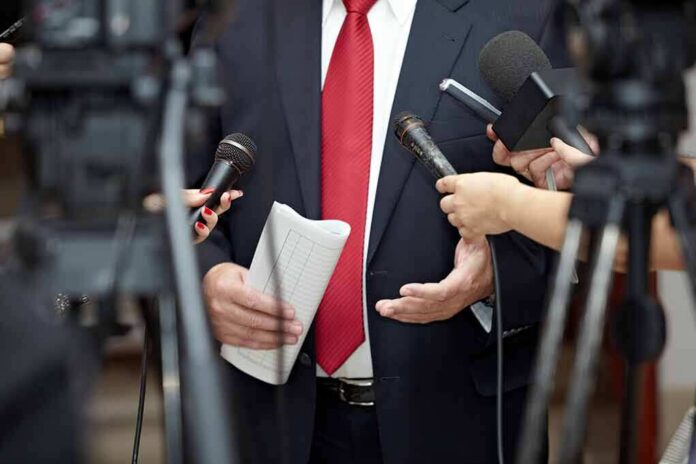
The White House press pool relayed a message from Chinese organizers that shouting questions was considered “extremely rude” and could lead to removal. Pool reporters said this warning applied to the broader press group, not just one outlet. The guidance framed the issue as decorum, not security. However, there was no named Chinese spokesperson on record explaining the decision, and no published credential rule has surfaced in coverage so far.
The White House Response and Press Access Stakes
A White House official tried to get Hordern reinstated before the three-leader session began. Chinese authorities held their ground and refused to allow her in, despite U.S. requests. That standoff turned a press access dispute into a diplomatic tug-of-war during a closely watched summit. The removal limited one outlet’s eyes on the room at a moment when leaders were setting public tones that drive markets and policy debates.
Journalists often shout questions during brief “sprays” when leaders appear together for a minute or two. The White House Correspondents’ Association guidance says not to shout over colleagues, but it also describes how these brief photo ops can get chaotic. That tension is common in Washington. The stakes grow overseas, where host governments control rooms, credential gates, and cultural norms about press behavior, often with tighter limits.
Why This Clash Resonates Across U.S. Politics
Americans across parties worry that powerful players limit information and dodge hard questions. This incident speaks to that fear. Chinese officials used conduct rules to decide who could enter a meeting with three world leaders. U.S. officials pushed back and lost. Readers who see elites guarding access will view this as proof that gatekeepers can shut out unwelcome voices, even when the White House itself asks for a reversal.
President Donald Trump opened a historic but brief 80-minute trilateral summit with Chinese President Xi Jinping and Russian President Vladimir Putin in Shenzhen on Thursday by criticizing “old school” American diplomacy. He said no problems were solved or peace forged by… pic.twitter.com/0heGrmiLg9
— TheSeekingSeagull (@TSSeagull) November 19, 2026
The story also fits a wider pattern of tight press control in China, where visiting and resident reporters face barriers, denials, and pressure. Researchers and press groups have documented these trends for years. That context helps explain why a warning about “rudeness” feels, to many, like a broader control tool. Still, the core facts here are clear and uncontested: a shouted question, a communicated decorum rule, a blocked reporter, and a failed U.S. appeal.
How to Read the Rules and the Consequences
Two norms collided. Hosts expect order during brief remarks. Reporters see those moments as rare chances to get unscripted answers. In the United States, similar clashes have led to reprimands or short-term access limits, not always longer bans. In Shenzhen, the sanction was immediate exclusion from a later session. The proportionality question will linger because coverage has not cited a written policy that set that penalty in advance.
What This Means Going Forward
Global summits are stage-managed, but markets and voters judge leaders by what slips through the script. When hosts can bar a reporter over a split-second call, it chills tough questions in the room. That outcome serves any government that prefers controlled optics. It also feeds a shared American concern: that citizens are getting less direct truth from the people in charge, and more filtered theater from the rooms where decisions start.
Sources:
yahoo.com, wrbl.com, thedailybeast.com, whca.press