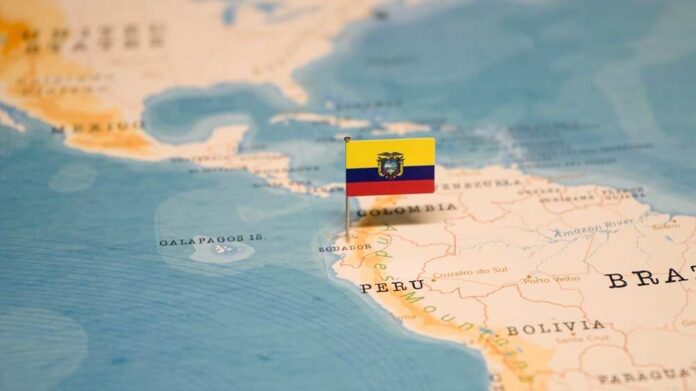
A U.S.-backed “narco-terrorist” strike that was sold as precision warfare is now under scrutiny after reporting said the target was a working dairy farm—exactly the kind of intelligence failure that turns limited missions into open-ended blowback.
Quick Take
- U.S. and Ecuador announced a joint bombing near the Colombian border, describing the target as a “narco-terrorist” training camp.
- Reporting later said the site hit was a cattle and dairy farm, with nearby homes also struck during the broader operation.
- Conflicting public claims about who carried out the strike—Pentagon versus Ecuador—raise accountability questions.
- The incident lands as Trump’s second-term base is already tired of forever wars and demands clearer limits, lawful authority, and real oversight.
What was announced on March—and why it mattered
U.S. and Ecuadorian officials publicly framed the March strike in Cascales Canton, near Ecuador’s border with Colombia, as a joint operation against “narco-terrorists” tied to Comandos de la Frontera, a FARC dissident faction linked to drug smuggling. Defense Secretary Pete Hegseth also amplified the operation online, portraying it as a widening campaign that would target cartels “on land as well” alongside Ecuadorian partners.
The messaging fit the broader “Operation Southern Spear” push that began in 2025, aimed at drug trafficking routes that ultimately feed America’s border and fentanyl crises. For conservative voters, the stated goal—disrupting cartels that profit off chaos—sounds like a commonsense national-security mission. The problem is that success depends on tight targeting, clear legal authority, and truthful after-action accountability, not just tough talk.
What later reporting said the strike actually hit
A March 24 report described a very different reality on the ground: the target was allegedly a cattle and dairy farm, destroyed by at least three helicopter-fired rockets. The same reporting described a week-long operation in which Ecuadorian forces interrogated farmworkers, burned shelters with gasoline, and struck two nearby homes. As of the latest updates, officials had not issued a public retraction addressing the farm identification.
Even allowing for fog-of-war and cartel deception, hitting civilian infrastructure is a strategic and moral problem, not just a public-relations headache. It risks radicalizing local communities, undermines cooperation with partner nations, and hands propaganda to America’s enemies. It also raises the practical question many Trump voters are asking in 2026: if we can miss a fixed site in Ecuador, what does “precision” look like in larger theaters?
Conflicting accounts, blurred responsibility, and the oversight gap
A key contradiction: the Pentagon said the U.S. conducted the bombing, while Ecuador’s public narrative emphasized Ecuadorian forces acting with U.S. intelligence support. That split matters because accountability follows the trigger pull. If U.S. assets fired, Americans deserve clarity on the chain of command, the rules of engagement, and what intelligence was relied upon. If Ecuador fired, Americans still deserve transparency on what U.S. targeting support enabled.
This lack of clarity also collides with a deeper conservative concern: missions creep when responsibility is diffused. When Washington can claim credit for a “win” but dodge ownership for a mistake, oversight becomes theater. Congress cannot do its constitutional job—authorizing, funding, and scrutinizing military action—if basic operational facts are contested after the fact, especially when the operation was publicly promoted at the top.
How this echoes earlier Southern Spear controversies—and why it’s politically combustible
The Ecuador strike sits inside a longer arc of controversy around Operation Southern Spear, including prior Caribbean boat strikes and disputes about legal authority and command relationships. This also notes prior news about internal tensions involving SOUTHCOM leadership and concerns about operational legality, along with allegations—denied by the Pentagon—related to past strike conduct. Those earlier disputes make the farm revelation harder to dismiss as a one-off error.
Drug Camp That Hegseth Said U.S. Bombed in Ecuador Was Actually Dairy Farm: Report https://t.co/WQHjIuryTV
— Mediaite (@Mediaite) March 25, 2026
In 2026, this is politically combustible because many MAGA voters are already split over America’s involvement abroad—including the ongoing war with Iran—and increasingly skeptical of blank-check foreign policy commitments. The lesson conservatives tend to draw from post-9/11 history is straightforward: when intelligence is shaky and accountability is blurred, “limited operations” become years of conflict, higher costs at the pump, and a federal government that grows while families absorb the consequences.
Sources:
Pentagon report says Hegseth risked endangering troops by revealing sensitive information on Signal
US military, Ecuador launch ‘lethal kinetic operations’ against alleged narco-terrorists