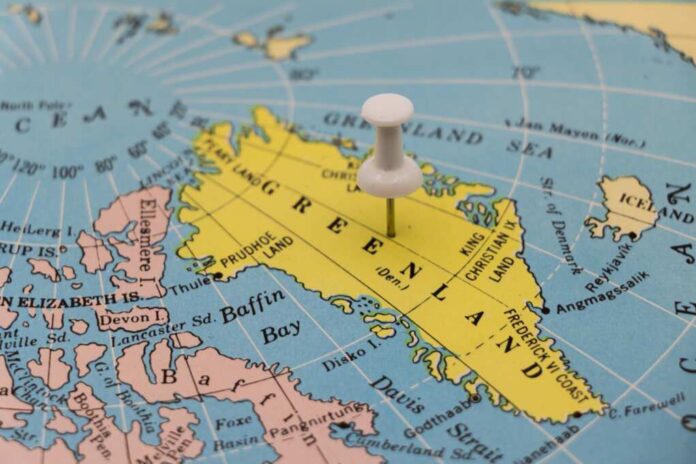
New research says Greenland’s ice is hitting a dangerous “tipping point” just as global elites eye its oil and minerals, raising big questions about who really benefits and who pays the price.
Story Highlights
- Scientists warn Greenland’s ice sheet is shrinking faster than at any time in 12,000 years and may be near an irreversible tipping point.
- Melting ice is exposing oil and mineral wealth that global powers and corporations are already circling, despite mounting physical risks.
- U.S. hearings spotlight how landslide‑prone fjords and unstable terrain make Arctic drilling more dangerous and costly.
- Sea‑level rise driven by Greenland threatens U.S. coastal communities and infrastructure, raising hard questions about past energy and climate policy.
Greenland’s Ice Is Shrinking Faster Than Modern History Can Explain
Scientists tracking Greenland from satellites and field stations report that the ice sheet has been in net loss for 29 straight years, thinning across almost its entire surface and retreating rapidly at the edges. Recent estimates suggest it is now losing roughly 264 billion tonnes of ice every year, or about 30 million tonnes every hour, a pace they say exceeds anything seen in at least 12,000 years of geological records. That kind of relentless loss puts long‑term sea‑level pressure on every coastal community.
Greenland’s ice sheet is enormous, covering about 1.7 million square kilometers, over three kilometers thick in places, and storing enough frozen water to raise global sea levels roughly seven meters if it ever fully melted. What alarms researchers is not that the ice changes—Earth’s climate has always cycled—but the speed and direction of today’s changes. Since the late twentieth century, the combination of warmer air, longer melt seasons, and warmer surrounding waters has turned Greenland into a persistent source of meltwater feeding the oceans.
Hidden Glacier Physics and Emerging “Tipping Point” Concerns
Newer studies show that Greenland’s melt is not driven only by sunshine and warm air at the surface. Researchers have documented massive underwater waves created when big ice blocks calve off glacier fronts into fjords, sending powerful pulses against the remaining ice face. Those waves scour and warm the submerged ice, dramatically increasing melt at the waterline and helping explain why many outlet glaciers are pulling back faster than earlier models anticipated, especially where deep fjords funnel ocean heat toward the ice.
Other work focuses on how surface melting itself can accelerate the process once it reaches certain thresholds. As ice at the top melts and the surface drops to lower elevations, it settles into warmer air, which in turn drives even more melting in a self‑reinforcing loop. Scientists describe this as a type of instability that can commit large parts of the ice sheet to continued loss, even if emissions are later curbed. In plain language, once enough damage is done, the system can keep sliding downhill for centuries, locking in higher seas for future generations.
Sea‑Level Consequences for American Communities and Infrastructure
For American readers, the most immediate concern is how Greenland’s melt feeds into sea‑level rise that threatens homes, roads, ports, and military bases along the coasts. Current research suggests Greenland alone could add around eight to twenty‑seven centimeters to global sea level by 2100 if present trends continue, on top of contributions from Antarctica and other sources. Even small increases matter: each additional centimeter of sea level exposes millions more people worldwide to flooding, storm surge, and saltwater intrusion into freshwater supplies.
Beyond this century, experts warn about “committed” sea‑level rise if tipping points are crossed. A fully melted Greenland would eventually mean roughly seven meters of sea‑level increase, which would take many centuries but would drastically redraw coastlines. Some projections tied to high‑emissions scenarios and unstable ice behavior do not rule out more than fifteen meters of global sea‑level rise by 2300 when Greenland and Antarctica are combined. That kind of long‑term shift would force large‑scale migration and enormous adaptation costs on future Americans, whether or not they had any say in past policy.
Geopolitics, Resources, and the Risks of Rushing Into the Arctic
As the ice pulls back, it exposes more of Greenland’s rocky coast and the oil, gas, and minerals buried there, drawing intense interest from major powers and multinational companies. Greenland is part of the Kingdom of Denmark but has growing self‑rule and sits at the crossroads of U.S., European, Russian, and Chinese strategic competition. Washington sees its air bases and early‑warning assets there as vital, and some policymakers look at new shipping routes and resource plays as opportunities, especially as great‑power rivalry heats up elsewhere.
At the same time, testimony before U.S. lawmakers in 2025 highlighted how melting ice and landslide‑prone fjords make Arctic extraction technically hazardous and potentially disastrous. Retreating glaciers can destabilize steep valley walls, increasing the risk of huge landslides that crash into fjords and send tsunamis toward coastal settlements or infrastructure. Companies eyeing Arctic drilling or mining must account for thawing permafrost, shifting ground, and more energetic waves and calving events, which can damage roads, ports, and rigs, driving up costs and insurance premiums while raising the stakes for any accident.
What This Means Under a Pro‑Sovereignty, America‑First Lens
For a conservative, America‑first audience, Greenland’s rapid melt is not just a talking point for global climate conferences; it is a hard‑edged reality with constitutional, economic, and security implications. Rising seas threaten coastal property rights, local tax bases, and critical ports that support U.S. trade and naval power. Expanded Arctic access invites new resource competition, but also more chances for international entanglements, environmental liabilities, and globalist bureaucracies to claim authority over how Americans produce energy and deploy their military in the far North.
You Won’t BELIEVE Just Happened with GREENLAND!!! https://t.co/0mVYD9jLt7 via @YouTube
— ArisFox (@ArisFox) January 8, 2026
Trump’s return to office has already shifted the policy frame back toward border security, energy independence, and skepticism toward costly climate schemes that ship jobs overseas while doing little to change global emissions. The Greenland story underscores why any response must guard U.S. sovereignty and taxpayers. Sound stewardship of America’s coasts and strategic interests in the Arctic does not require surrendering to expansive international control or green industrial boondoggles. It does demand sober recognition of the physics in play, tough‑minded risk assessments, and a refusal to let unelected global bodies dictate how American families, workers, and communities adapt to a changing world.
Sources:
Greenland: teetering on the edge
What could trigger massive ice-sheet collapse?
Antarctica’s ‘Greenlandification’ offers glimpse of ice melt’s future
Hidden waves from Greenland’s calving glaciers supercharge melt
Greenland’s melting ice and landslide-prone fjords make oil and minerals dangerous to extract
Ancient Antarctica reveals a one-two punch behind ice sheet collapse
NSIDC: Ice Sheets Today