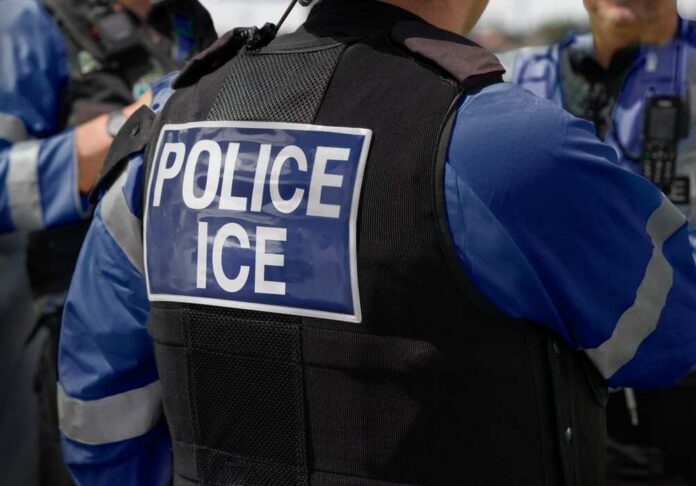
A Philadelphia prosecutor’s vow to “hunt down” federal ICE agents is testing whether local officials can intimidate federal law enforcement out of enforcing America’s immigration laws.
Story Snapshot
- CNN contributor Scott Jennings confronted Democrats on-air after they declined to condemn Philadelphia DA Larry Krasner’s rhetoric against ICE agents.
- Krasner appeared with Philadelphia City Council members to promote an “ICE OUT” legislative package aimed at restricting ICE activity on city property.
- The White House has cited a reported 1,300% surge in assaults on ICE officers, intensifying concern about inflammatory rhetoric directed at agents.
- Republican officials in Pennsylvania criticized Krasner’s comments as reckless while the broader sanctuary-city conflict continues under President Trump.
Jennings’ on-air challenge highlights a public-safety fault line
Scott Jennings, a CNN contributor, pressed Democrats during a Jan. 29, 2026 panel after Philadelphia District Attorney Larry Krasner drew national attention for describing ICE agents as “wannabe Nazis” and vowing to “hunt” them down. Jennings argued that mainstream Democrats’ refusal to condemn that language sends a dangerous signal when federal officers are carrying out lawful immigration enforcement. The exchange went viral as the immigration fight sharpened under President Trump.
Jennings’ critique centered less on partisan point-scoring and more on a basic rule-of-law question: whether elected prosecutors should use their platforms to target federal agents personally. The available reporting quotes Jennings saying no prosecutor should “yell at law enforcement,” framing the moment as a test of whether Democrats will draw a line when rhetoric escalates from policy disagreement into personal threats against officers.
Philadelphia’s “ICE OUT” push collides with federal authority
Philadelphia’s latest clash with ICE stems from a City Hall event where Krasner joined city councilmembers to unveil an “ICE OUT” package designed to restrict ICE operations. The proposals include barring ICE from city property and limiting access to public facilities without warrants. That posture reflects a longer sanctuary-city approach, but it also raises practical questions about how far local governments can go without obstructing federal enforcement.
Federal immigration enforcement is ultimately governed by national law and executive policy, and that deportation operations have proceeded “amicably elsewhere” even as Philadelphia officials resist. That contrast matters because it suggests local leadership choices can either lower tensions or inflame them. When local officials frame ICE as an illegitimate force rather than a federal agency, cooperation breaks down and enforcement becomes more contentious, even when agents are executing their assigned duties.
Violent-rhetoric concerns grow amid reported assault spike
The White House, according to the provided reporting, pointed to a 1,300% surge in assaults on ICE officers as national debate over deportations intensifies. This does not provide underlying data or an independent breakdown for that figure beyond the administration’s claim, so readers should treat the statistic as an official assertion rather than a fully documented public report. Even with that limitation, the policy implication is clear: heated language can increase risks for personnel.
From a constitutional standpoint, Americans can debate immigration policy vigorously while still rejecting intimidation of law enforcement. The First Amendment protects speech, but threatening to “hunt down” named categories of federal officers pushes the debate toward coercion rather than persuasion. Conservatives who prioritize limited government and public safety often view this as a bright-line issue: disagreement with federal policy does not justify targeting agents as enemies or comparing them to historical monsters to rally political support.
Pennsylvania backlash and the widening sanctuary-city playbook
Republican officials in Pennsylvania responded forcefully. The state Sen. Jarrett Coleman dismissing Krasner’s threats as “empty,” and House Minority Leader Jesse Topper calling them “hypocritical.” Those criticisms reflect a broader concern that progressive prosecutors and city leaders are using their offices to score ideological wins while leaving residents to deal with the practical consequences—less cooperation with federal authorities, more legal conflict, and a more hostile environment for officers tasked with enforcement.
Scott Jennings Tries Reasoning With Dems Who’re Leaving Americans Open to Terrorism for ICE Restrictions https://t.co/9xVkYhXojT
— Twitchy Updates (@Twitchy_Updates) March 10, 2026
The Philadelphia dispute also fits a larger pattern: Democrat-led cities coordinating to create “ICE-Free Zones” and publicly encouraging non-cooperation. The reporting mentions other officials and cities as part of that environment, including rhetoric attributed to Rep. Eric Swalwell. What remains unclear from the available sources is how these local policies will fare if challenged in court or confronted with direct federal pushback—details that will determine whether the conflict stays political or becomes operational.
Sources:
WATCH: Jennings Destroys Dems For Refusing To Condemn DA’s Vow To “Hunt Down” Nazi ICE Agents
Scott Jennings t Democratic congressional