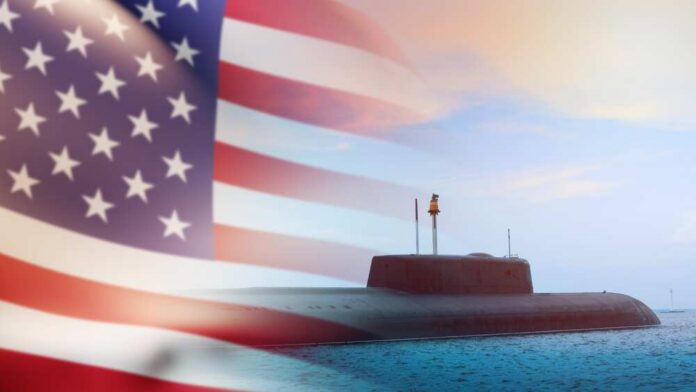
Alabama’s new $2.4 billion submarine factory delivers a rare victory for American workers and deterrence against China, proving public-private partnerships can rebuild manufacturing without endless foreign entanglements.
Story Highlights
- Hadrian opens 2.2 million sq ft Factory 4 in Cherokee, Alabama, on March 20, 2026, with $900M Navy funding and $1.5B private investment to mass-produce Virginia- and Columbia-class sub components.
- First of three facilities counters China’s naval edge—over 200 times U.S. capacity—while creating 1,000 jobs paying $70K+ in heartland America.
- AI automation trains workers in 30 days, bypassing labor shortages and globalist supply chains that have plagued defense production.
- Risk-sharing model rejects corporate welfare, enforcing performance from primes amid war with Iran and frustrations over high energy costs.
Factory Opening Revives shuttered Industrial Site
Hadrian opened Factory 4 on March 20, 2026, at Barton Riverfront Industrial Park in Cherokee, Alabama. The 2.2 million square foot facility repurposes the former FreightCar America plant, closed since 2021. U.S. Navy Secretary John C. Phelan joined Alabama’s congressional delegation—Reps. Robert Aderholt and Mike Rogers, Sens. Katie Britt and Tommy Tuberville—for the ribbon-cutting. This launch addresses critical bottlenecks in submarine production plaguing existing shipyards in Rhode Island, Connecticut, and Virginia. The project embodies efficient revival of American industry in Colbert County’s Shoals region.
Strategic Funding Counters China’s Naval Threat
The Navy allocated $900 million through the One Big Beautiful Bill Act, matched by Hadrian’s $1.5 billion private capital, totaling over $2.4 billion. Hadrian CEO Chris Power leads operations focused on precision components for Virginia-class attack submarines and Columbia-class ballistic missile subs. These platforms ensure nuclear deterrence. Sen. Britt highlighted China’s naval capacity exceeding U.S. by over 200 times, per Naval Intelligence. Factory 4 launches the first of three sites to scale the maritime industrial base without relying on overseas manufacturing vulnerable to global disruptions.
Risk-Sharing Model Prioritizes Accountability
Navy Secretary Phelan emphasized shared risk and performance-based contracts, rejecting “free money” handouts to prime contractors. Hadrian’s AI-driven automation enables 30-day training for unskilled workers to full productivity. Full-rate production targets 18-24 months after equipment stand-up, SUBSAFE compliance, and initial runs. Sustainable operations follow by year three. This approach eases pressures on General Dynamics Electric Boat and HII shipyards, countering worker shortages through domestic innovation rather than open borders or endless imports.
Local communities in northwest Alabama gain immediate economic revival. Up to 1,000 jobs at $70K+ salaries boost families, with suppliers in surrounding counties forming a resilient ecosystem. Sen. Tuberville called it transformational, projecting hundreds of billions in long-term impact—nothing more vital for national security and heartland prosperity.
U.S. Opens Massive Alabama $2.4 Billion ‘Factory Of The Future’ To Boost Navy Nuclear Submarine Productionhttps://t.co/WB5qkZMcOn
— Harry J. Kazianis (@GrecianFormula) March 25, 2026
Boost for American Families Amid Global Tensions
Rep. Aderholt described the site as a 21st century collaborative campus. As America confronts Iran in 2026, this factory strengthens deterrence without new regime-change adventures, honoring promises to avoid foreign quagmires. It validates OBBBA investments, prioritizing high-wage manufacturing over woke agendas, inflation-fueling spending, or illegal immigration. Conservatives weary of high energy costs from globalism see here a model: limited government partnering with private enterprise to rebuild strength at home.
Uniform praise from stakeholders underscores bipartisan support for defense priorities. No opposition noted, though performance mandates signal scrutiny on inefficiencies. This development bolsters sea power amid threats, training Americans quickly for precision work and securing supply chains for decades.
Sources:
Alabama Facility to Build US Nuclear Submarine Components
$2.4 billion submarine manufacturing facility opens in Colbert County
Advanced Shipbuilding ‘Factory of the Future’ Opens in Alabama
Advanced Shipbuilding Factory Of The Future Opens In Alabama
U.S. Opens Massive $2.4 Billion “Factory Of The Future” To Boost Nuclear Submarine Production
Navy bets $900M on automated factories to boost submarine production
New $2.4B naval facility opens in The Shoals
Hadrian to Build Precision Parts Factory in Alabama for Navy Submarine Programs