

Illinois’ sanctuary laws are once again under fire after DHS Secretary Kristi Noem blamed Governor Pritzker’s policies for allowing a fatal crime by an undocumented immigrant to go unchecked—raising urgent questions about public safety and the rule of law.
Story Snapshot
- DHS Secretary Kristi Noem accuses Illinois’ sanctuary policies of enabling violent crime and obstructing justice.
- Governor JB Pritzker defends the state’s TRUST Act, insisting Illinois complies with federal law while protecting immigrants.
- The murder of Emma Shafer by an alleged undocumented immigrant has intensified public outcry and federal-state tensions.
- Despite repeated DHS criticism, Illinois refuses to change its sanctuary stance, fueling ongoing debate over safety and sovereignty.
Noem Blasts Illinois Sanctuary Laws After High-Profile Crime
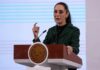
Department of Homeland Security Secretary Kristi Noem has publicly condemned Illinois Governor JB Pritzker for steadfastly maintaining the state’s sanctuary status after the extradition request for Gabriel Calixto, a suspect in the 2023 stabbing death of Emma Shafer. Noem argues that Illinois’ sanctuary laws, particularly the TRUST Act, directly undermine cooperation with federal immigration enforcement, creating an environment where criminals can evade justice. This case has become a rallying point for those demanding a return to law and order and stronger border controls.
Kristi Noem rips Illinois Democrats for their sanctuary city fantasies—specifically @GovPritzker and @ChicagosMayor as “obstructionists” who shield violent criminals.
In a press conference in Elgin, Illinois—Sec. Noem detailed how ICE and federal agents had to work alone to… pic.twitter.com/yIFPd54UWU
— Midwest Millennial (@MillennialVerse) August 8, 2025
Governor Pritzker, however, asserts that Illinois remains in full compliance with federal law when presented with proper judicial warrants, defending the TRUST Act as necessary to foster trust between law enforcement and immigrant communities. He claims the law prevents blanket detentions based solely on immigration status, aiming to protect vulnerable populations and ensure that victims and witnesses feel safe coming forward. The governor accuses federal officials of politicizing the tragedy to push an anti-immigrant agenda, further deepening the conflict between state and federal authorities.
Sanctuary Policy Origins and the Federal-State Clash
Illinois’ sanctuary framework began with the 2017 TRUST Act, which bars local law enforcement from detaining individuals solely on the basis of immigration status and limits cooperation with ICE unless a judicial warrant is presented. This approach, popularized in progressive cities nationwide, was designed to enhance public safety by encouraging cooperation with police among immigrant residents. However, the Shafer case has exposed the risks and unintended consequences of such policies—fueling arguments that local autonomy is being prioritized over the safety of law-abiding citizens and the authority of federal immigration law.
The federal government’s repeated attempts to pressure Illinois into reversing its sanctuary stance have so far failed. DHS has used high-profile crimes, such as Shafer’s murder, to spotlight the state’s refusal to honor ICE detainers and to frame sanctuary laws as a threat to public safety and constitutional order. The political standoff has only deepened, with both sides leveraging emotionally charged events to sway public opinion and legislative agendas.
Stakeholders, Community Impact, and the Constitution
The principal stakeholders—Noem, Pritzker, ICE, the state legislature, advocacy groups, and the families of victims—are locked in a power struggle over the future of sanctuary jurisdictions. Noem and federal authorities argue that current Illinois policies handcuff law enforcement and embolden criminals, undermining national sovereignty and threatening communities. Victims’ families have become symbols in this battle, their tragedies used to underscore the potential dangers of prioritizing political ideology over public safety and constitutional rights.
On the other side, immigrant advocacy organizations defend sanctuary policies as essential for protecting civil liberties and maintaining trust in law enforcement, particularly among marginalized groups. They point to academic studies showing inconclusive links between sanctuary policies and crime rates, but critics counter that even one preventable tragedy is too many. With no major legislative changes on the horizon, Illinois residents remain caught in a climate of heightened polarization, uncertainty, and frustration—especially as officials on both sides appear more interested in scoring political points than finding practical solutions.
Sources:
DHS Secretary Noem defends ICE tactics in second Illinois visit
Noem, Pritzker clash over Illinois immigration policy
NIJC Statement: House Oversight Governors June 12, 2025
Homeland Security head Noem criticizes Pritzker, Johnson in Illinois visit while local leaders push back