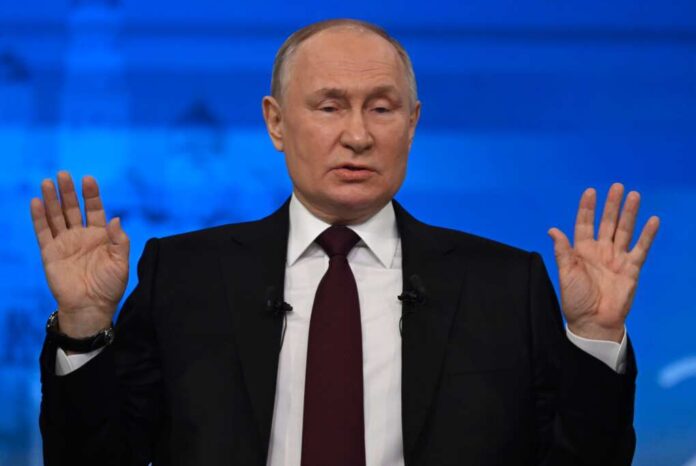
A UK inquiry has formally concluded that Vladimir Putin personally authorized the 2018 Novichok poisoning of former Russian spy Sergei Skripal, marking the first official attribution of a banned chemical weapons attack directly to Russia’s president.
Story Highlights
- UK inquiry formally attributes Putin’s personal authorization of 2018 Salisbury Novichok attack
- Investigation traced operation from GRU operatives to Kremlin command structure over six years
- Attack killed innocent British citizen Dawn Sturgess and endangered NATO territory with banned weapons
- Finding elevates case from intelligence operation to documented state-level assassination order
Putin Directly Implicated in Chemical Weapons Attack
The UK inquiry’s determination that Vladimir Putin must have personally authorized the 2018 Novichok poisoning represents a watershed moment in international accountability. Unlike previous assessments describing “highly likely” Russian state involvement, this conclusion directly names Putin as the decision-maker behind deploying banned chemical weapons on British soil. The finding rests on evidence showing Russian command structures would require presidential authorization for such sensitive operations, particularly involving chemical agents on NATO territory.
Vladimir Putin must have authorized 2018 nerve agent poisoning of ex-Russian spy, UK inquiry concludes https://t.co/4Pp3F60ACH pic.twitter.com/UaENg4DgzG
— New York Post (@nypost) December 4, 2025
Six Years of Investigation Reveal GRU Command Chain
British investigators methodically built their case through forensic evidence, CCTV footage, and intelligence analysis linking two Russian GRU officers to the March 4, 2018 attack. The operatives, traveling under false identities, deployed military-grade Novichok on Sergei Skripal’s front door in Salisbury. Skripal, a former GRU colonel who spied for Britain before being exchanged in a 2010 spy swap, survived the assassination attempt along with his daughter Yulia. However, the investigation revealed extensive command networks stretching from the field operatives back to GRU headquarters and ultimately to the Kremlin.
Innocent British Victim Exposes Russian Recklessness
The attack’s most damning aspect emerged months later when Dawn Sturgess, an innocent British citizen, died from Novichok exposure after handling a discarded perfume bottle containing the nerve agent. Her death, along with the poisoning of her partner Charlie Rowley, demonstrated Putin’s willingness to endanger civilian populations with banned weapons. Detective Sergeant Nick Bailey also suffered exposure while responding to the initial incident, highlighting the operation’s complete disregard for British lives and sovereignty.
Pattern of Putin-Authorized Assassinations Established
The Skripal inquiry builds on the 2006 Alexander Litvinenko case, where a UK investigation concluded that Putin likely approved the polonium-210 poisoning of the former Russian spy in London. This pattern reveals Putin’s systematic targeting of defectors and dissidents abroad, sending chilling messages to potential traitors while demonstrating Russia’s willingness to violate international law. The use of signature Russian weapons—polonium and Novichok—serves as both calling cards and warnings to Russia’s intelligence community.
The inquiry’s findings validate years of Western intelligence assessments about Putin’s direct involvement in overseas assassination operations. This formal attribution strengthens the case for continued sanctions and demonstrates why President Trump’s administration must maintain robust deterrence against Russian chemical weapons programs that threaten American allies and global stability.
Sources:
British Ambassador to Russia briefing on the Salisbury attack
British Ambassador briefing following the OPCW report
The Salisbury spy poisonings: five years on
Salisbury attack suspects Russia GRU