
President Trump signed an order to rename Lake Ontario “Lake America” while escalating a 50% tariff fight with Canada, turning a border landmark into a political weapon amid real economic pain.
Story Snapshot
- Trump advanced a 50% tariff campaign and moved to rename Lake Ontario “Lake America.”
- Talks collapsed after both sides accused the other of last-minute changes and unfair terms.
- Ontario Premier Doug Ford backed walking away and vowed support for hit industries.
- Analysts warn Ontario’s auto and steel hubs face outsized damage if tariffs persist.
What Triggered The Latest Flashpoint
Trade talks between the United States and Canada broke down on August 22. United States Trade Representative Jamieson Greer said Canada walked back commitments and declined to finish an agreed deal. Canadian Prime Minister Mark Carney said new United States terms were unfair and uneconomic. Each side blamed the other and moved to tariffs. President Trump’s team framed the measures as leverage to fix unequal treatment of American autos, dairy, and alcohol.
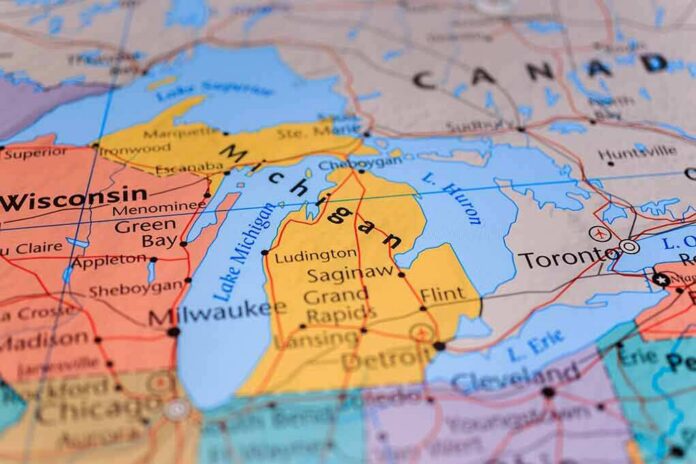
After the talks failed, the White House pushed ahead with 50% tariffs on a large set of Canadian goods. Canadian leaders announced matching counter-tariffs. The result is a rapid cycle of penalty and response. Trump also promoted renaming Lake Ontario as “Lake America,” adding symbolism to an already tense fight. The name move does not change trade math, but it signals a harder line and stokes public anger on both sides of the border.
Ontario’s Role And Rising Economic Stakes
Ontario sits at the center of the supply chains now under stress. The province’s economy depends on autos, steel, and cross-border parts. Ontario Premier Doug Ford said the proposed deal was a bad one for the auto, steel, and manufacturing sectors. He supported suspending talks and promised help for workers and firms. He also backed a Team Canada front and hinted at targeted pressure on politically important United States states to gain leverage.
Local business leaders and economists warn that tariffs will hit Ontario first and hardest. News reports describe 50% duties on key exports and say costs could ripple fast through assembly lines and small suppliers. The flow of parts across the border makes even short delays costly. If tariffs hold, layoffs and reduced shifts are likely. Analysts cited by Canadian outlets expect the fight to drag on growth and strain smaller firms with thin margins.
How Washington Explains The Strategy
The White House says tariffs will rebuild American industry and jobs. President Trump argues Canada treats American autos, dairy, and alcohol unfairly, and that the United States must correct a one-sided relationship. United States Trade Representative Greer said Canada upended a balanced package late in the process. Supporters in Washington say a firm stance now could secure better terms later and protect core factories at home.
The Canada side rejects that view. Prime Minister Carney said United States changes were unfair and uneconomic, and that Washington asked too much and offered too little. Ottawa’s position is that it will not accept a deal that harms major sectors. That means more tariffs for now. The gap between the two stories remains wide, and no clear off-ramp has appeared since the breakdown.
Why The Lake Name Gambit Resonates
The push to rename Lake Ontario adds culture-war heat to a pocketbook fight. Supporters see it as swagger and national pride. Critics see it as a distraction from policy details that decide jobs and prices. Both right and left share a deeper fear here: big decisions feel theatrical while factories and families carry the cost. The name move grabs attention, but border towns and shop floors will judge results by paychecks, not slogans.
People across the spectrum worry elites on both sides use drama to mask stalemate. Voters want concrete steps: narrow exemptions that keep critical parts moving, clear timelines, and honest data on who pays. Practical fixes could include temporary carve-outs for auto parts, steel inputs, and farm goods while talks reset. Without that, the tariff tax lands on workers, retirees, and small businesses who have the least room to absorb it.
What To Watch Next
Watch for sector carve-outs and a limited truce. Signs include joint statements on rules of origin, fresh customs guidance to speed parts at the border, and a pause clock on the harshest lines. Also watch Ontario’s support rollout for hit firms and workers, and any targeted Canadian tariffs on swing-state goods. If those steps appear, the tone may cool. If not, expect more heat, higher prices, and deeper mistrust on both sides.
Sources:
youtube.com, toronto.citynews.ca, politico.com, cnbc.com, theguardian.com, cbc.ca, finance.yahoo.com