
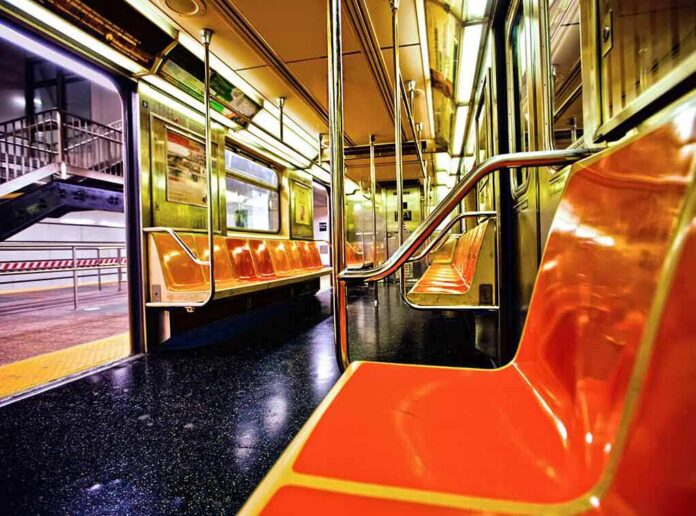
A man was shot and killed on a moving Green Line train, and police still have no suspect in custody.
Story Snapshot
- Police reported a fatal shooting on a Green Line train, the case is open with no arrests.
- Metro Transit increased officers on trains and platforms after the killing and called safety work “relentless”.
- Riders and residents report fear, disorder, and fights on the line beyond rare homicides.
- The record lacks clear trend data to prove the Green Line is safer overall.
What Happened On The Train
Police said a passenger was shot around 9 p.m. on October 3 while the Green Line traveled from Stadium Village toward St. Paul. The train stopped at Westgate Station, where officers found the victim, who later died. Investigators reported that a suspect left the train soon after the shooting. Police described the case as active, and no arrests had been made at the time of the latest reports. A separate outlet also noted the open status and ongoing search for the shooter.
Local coverage identified the victim as Joseph Denny Nezperce in the days after the attack and confirmed that detectives were still working the case. Reports emphasized the confined setting of a moving train and the public risk that creates for riders. Police have not announced a motive, a recovered weapon, or an arrest timeline. Those gaps keep pressure on the agency and fuel debate over whether current safety steps are enough to deter similar crimes.
Transit Agency Response And Limits Of The Data
Metro Transit said the killing “reinforces why our work to strengthen safety on transit is relentless and ongoing,” and it deployed more officers on trains and at stations “for the foreseeable future”. The agency framed the move as part of a broader effort to improve rider safety. That announcement shows action, but it does not prove the line is safer. The record offered here does not include before-and-after crime rates, arrest data, or rider injury trends that would test results.
Without consistent numbers over time, it is hard to judge whether safety is improving, holding steady, or getting worse. The evidence set confirms one fatal shooting, extra patrols, and a commitment to security. It does not include exposure-adjusted rates, station-by-station comparisons, or a full list of serious and nonviolent incidents. Readers deserve those metrics. Until they exist, arguments that the system is broadly safe—or unsafe—rest more on isolated events and feelings than on a clear trend line.
Rider Fear, Disorder, And The Perception Gap
Riders say the issue is bigger than one shooting. A daily Green Line passenger said she does not feel safe and bought pepper spray because she cannot predict who she will face on board. The Star Tribune reported that residents have long complained about drug use, loud music, and fights on trains and in stations. The paper also noted two shootings on the line within nine days in a past November, one of them fatal. These accounts point to both crime and disorder that shape how people feel day to day.
Research on transit safety shows a common split: recorded crime and perceived safety often move on different tracks. Visible security, lighting, and frequent service can ease fear, even when shifts in crime are mixed across categories and places. That matters for trust. When agencies and officials talk about rare events, people riding every day see the fights and chaos. When media highlight the deadliest cases, some readers hear that the whole system is broken. Both sides can feel true at once—and that is why data and follow-through count.
Why This Matters Beyond One City
Americans on the left and right are tired of leaders who talk tough but do not deliver. This case shows the gap. A rider is dead on a public train. Police have not arrested a suspect. The agency promises more patrols. But the public still does not see the numbers that prove progress. People want basics that work: safe rides, clear plans, and proof that officials will stick with it until results show up in real life, not only in press releases.
What To Watch Next
Watch for three things. First, whether police identify and arrest a suspect, and how fast that happens. Second, whether Metro Transit publishes regular, route-level safety dashboards with crimes, arrests, response times, and rider surveys tied to the Green Line. Third, whether added patrols continue and are targeted to hotspots, with clear measures of success. If leaders deliver those steps, trust can rise. If not, riders’ fear and anger will grow—and fewer people will ride.
Sources:
twitchy.com, fox9.com, yahoo.com, bringmethenews.com, cbsnews.com, libraryarchives.metro.net