The Justice Department’s latest firings signal that Washington’s “rules” can change overnight—depending on who controls the badge and the bureaucracy.
Quick Take
- The DOJ terminated at least four prosecutors tied to Biden-era FACE Act cases, calling the prior enforcement “weaponized.”
- The firings coincided with dismissed FACE cases against anti-abortion protesters and a reported pause on future investigations in that lane.
- Some FACE prosecutions involving abortion-rights activists are still moving forward, raising fresh questions about equal treatment.
- A broader fight is emerging over whether DOJ is restoring neutrality or simply swapping one political standard for another.
DOJ cuts prosecutors as FACE Act enforcement shifts
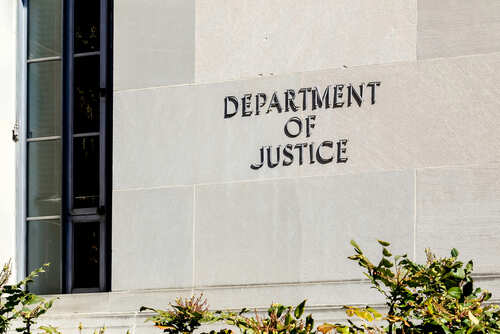
Department of Justice leadership under President Trump’s second term fired at least four prosecutors who worked on Freedom of Access to Clinic Entrances (FACE) Act cases during the Biden administration. Reporting identified Civil Rights Division prosecutor Sanjay Patel among those removed after he had been placed on administrative leave. The DOJ characterized the group as “personnel responsible for weaponizing the FACE Act,” a sweeping phrase that effectively reframes routine prosecutions as political targeting.
The personnel action landed alongside broader operational changes. Multiple FACE Act cases against anti-abortion protesters were dismissed, and future investigations in that category were reportedly halted. At the same time, at least one FACE Act case involving an abortion-rights activist continued, including a 2025 sentencing of 120 days in prison. That asymmetry is central to the controversy: critics see selective enforcement, while supporters argue the DOJ is correcting an imbalance from the prior administration.
What the FACE Act covers—and why it became a flashpoint
Congress passed the FACE Act more than 30 years ago with bipartisan support to criminalize threats, violence, and physical obstruction that interferes with access to reproductive health clinics. Courts have upheld the law’s constitutionality, which makes the current dispute less about whether the statute exists and more about how it is used. Under Biden, DOJ prosecutors brought cases against protesters accused of blocking access—cases that often ended in jury convictions.
The “weaponization” claim meets a hard legal reality: juries and evidence
Trump administration allies argue the Biden DOJ used the FACE Act against conservatives, particularly Christian and pro-life activists, in a way that chilled protected speech. A draft report obtained by a pro-life outlet reportedly portrays some defendants as “peaceful,” even as it acknowledges that certain cases involved threats or confrontational conduct and that juries still convicted. That tension matters: the strongest argument for reform is inconsistent charging standards, not relitigating verdicts where evidence persuaded jurors.
Stacey Young of Justice Connection, a nonprofit led by a former DOJ lawyer, has defended the FACE Act as bipartisan and constitutional. From a limited-government perspective, that defense is plausible: laws against threats and physical obstruction are not inherently “woke,” and maintaining public order is a basic state function. The sharper question is whether the DOJ can credibly claim neutrality if it stops pursuing one category of defendants while permitting another category of FACE prosecutions to proceed.
A familiar institutional fight: political control versus career independence
The firings also sit inside a larger, long-running battle over the Justice Department’s culture and accountability. The Brennan Center has described DOJ accountability as “broken” and warns that political appointees can overwhelm internal guardrails, especially when oversight functions are weakened. Conservatives who distrust the “deep state” often welcome top-down corrections. Yet the same distrust can cut the other way if personnel decisions look like ideological litmus tests instead of performance-based discipline.
What to watch next: equal protection, deterrence, and public trust
Two practical outcomes will determine how this is remembered. First, watch whether DOJ publishes clear, consistent criteria for FACE Act investigations that apply regardless of ideology—because transparent standards are the simplest antidote to claims of selective prosecution. Second, watch whether clinic-access disputes escalate as deterrence changes. When prosecutors back away from a category of cases, street-level behavior can shift fast, and the public typically pays the price for elite political gamesmanship.
For Americans who believe government has become self-protective and careerist, the deeper takeaway is uncomfortable: “weaponization” is easiest to allege and hardest to prove without full case files, charging memos, and comparative data. What is clear from the reporting is that DOJ leadership is making enforcement and staffing decisions with overt political meaning attached. In a country already skeptical that the rules are applied evenly, that alone is a combustible development.
Sources:
DOJ fires at least 4 prosecutors involved in FACE Act cases during Biden admin
Department of Justice’s Broken Accountability System