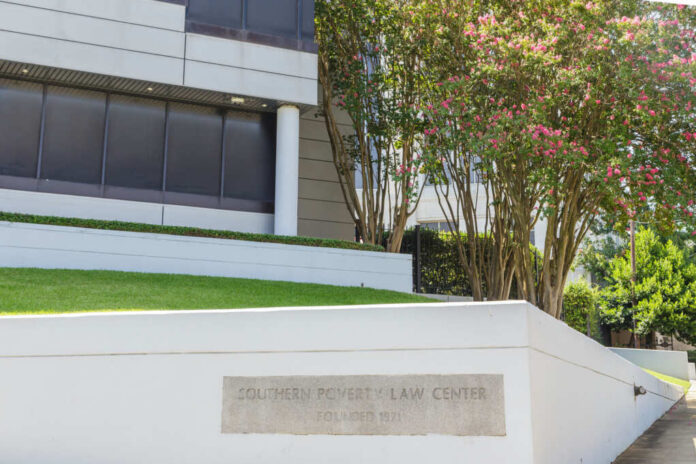
A civil-rights group now faces fraud charges and is accusing the very Justice Department prosecuting it of quietly leaking a draft indictment to the media before the court or defense ever saw it.
Story Snapshot
- SPLC says the Justice Department sent reporters an unsigned draft superseding indictment before it was filed or shared with defense counsel.[1]
- The draft reportedly contained internal Justice Department metadata and language that never appeared in the grand jury’s final, filed indictment.[1]
- The dispute unfolds on top of an 11‑count fraud and money‑laundering case charging the Southern Poverty Law Center with secretly funneling donor money to extremist figures.[2][4]
- Both sides now argue not only over guilt or innocence, but over whether the government itself is following basic rules meant to keep powerful prosecutors in check.[1]
SPLC’s Sanctions Bid: Alleged Leak Before the Case Was Even Filed
The Southern Poverty Law Center asked a federal judge to consider sanctioning Department of Justice prosecutors after learning that an “unsigned, unstamped Microsoft Word version” of a draft superseding indictment was circulated to journalists.[1] According to the group’s filing, summarized by CBS News, prosecutors shared this draft before any legitimate indictment was unsealed on the court’s docket and before defense lawyers received a copy.[1] That sequence, if accurate, places reporters ahead of the defendant and the court in seeing the charging document.
The Southern Poverty Law Center’s filing says the draft document went out with embedded data showing which Justice Department attorneys authored and last modified it on a Tuesday morning.[1] The same report notes that the Microsoft Word version contained language that did not appear in the grand jury’s superseding indictment that was eventually returned and made public the next day.[1] Lawyers for the organization argue that this kind of pre‑filing, one‑sided disclosure invites a media narrative to harden against the defendant before there is any opportunity to respond in court or in public.[1]
What the Government Says SPLC Did – and Why the Leak Fight Matters
A federal grand jury in Montgomery, Alabama, previously charged the Southern Poverty Law Center with 11 counts of wire fraud, making false statements to a federally insured bank, and conspiracy to commit concealment money laundering.[2] Justice Department press materials and the unsealed indictment describe a scheme in which the group allegedly funneled more than $3 million in donated funds through shell entities to individuals tied to violent extremist groups, including the Ku Klux Klan and several neo‑Nazi organizations, while telling donors their money was supporting civil‑rights work.[2][4] Prosecutors say covert accounts and false statements to banks helped hide those payouts.[2]
The civil‑rights organization and its allies call the prosecution itself a politicized strike against a decades‑old watchdog of white supremacist groups.[3] Commentary from legal advocacy groups argues that turning an indictment against the Southern Poverty Law Center into a test case risks chilling other organizations that track or sue extremist networks.[3] In that heated environment, an accusation that the Justice Department leaked a draft indictment before filing does more than raise a technical complaint; it taps into broader public fears that powerful agencies weaponize procedure and media access to shape opinion long before a jury hears evidence.[1][3]
Unanswered Questions, Shared Distrust, and the Bigger Rule‑of‑Law Test
Reporting so far reflects largely the Southern Poverty Law Center’s characterization of the leak, not a detailed Justice Department account of who sent what to whom and under what authority.[1] Public materials do not identify the specific prosecutor or staffer involved, nor do they show whether any internal media policy was followed.[1] There is also no publicly documented finding from the judge on these sanctions allegations yet, leaving open whether the court will treat this as a serious breach of grand jury secrecy or a more routine pretrial publicity issue.[1]
In a new court filing, the Southern Poverty Law Center says DOJ inappropriately sent a draft grand jury indictment of SPLC to reporters, with even the prosecutor in the case unaware of what was going on. https://t.co/Ij4WbXV2ut
— Will Sommer (@willsommer) June 4, 2026
This fight lands at a moment when many conservatives and liberals alike already distrust how federal institutions wield power. For those skeptical of the Southern Poverty Law Center, the fraud charges appear to confirm long‑held doubts about activist nonprofits.[1][2] For those skeptical of the Trump‑era Justice Department, a leak of a draft indictment in a politically charged case fits a pattern of selective disclosure and narrative management.[1][3][4] Whatever the court decides on sanctions, the episode underscores a deeper concern that basic guardrails—grand jury secrecy, equal access to information, and professional restraint—are strained when politics and prosecution collide.
Sources:
[1] Web – SPLC asks judge to weigh sanctions against DOJ for sending out …
[2] Web – Southern Poverty Law Center asks judge to weigh sanctions against …
[3] Web – American Oversight Launches Investigation into Trump Admin’s …
[4] YouTube – ‘Nakedly political’: DOJ indicts Southern Poverty Law Center