Ireland’s fuel-tax revolt is colliding with a hard reality: when energy policy makes daily work unaffordable, governments often reach for force before they reach for compromise.
Story Snapshot
- Protests that began April 7 have targeted Ireland’s transport arteries and fuel infrastructure as drivers and farmers demand relief from high prices and “green” levies.
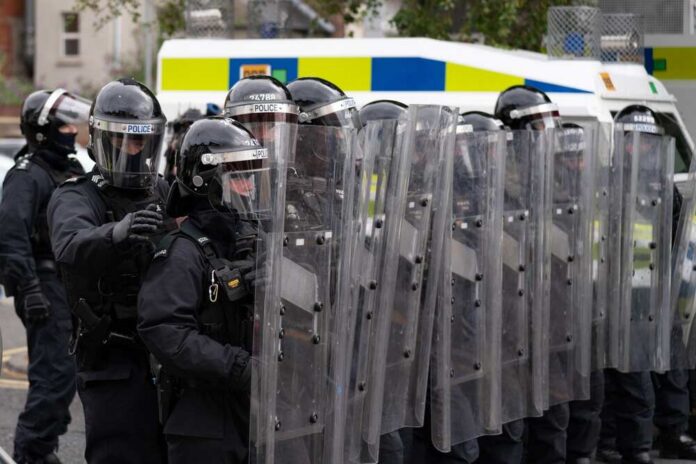
- Irish police (Garda) used pepper spray and arrests to clear key blockades on April 12, with Defense Forces support reported at the Whitegate oil refinery in Cork.
- Authorities cleared Dublin’s M50 early April 12, but multiple motorway blockades reportedly continued into a sixth day, disrupting commuting and deliveries.
- The core dispute centers on energy costs, carbon taxes (including on agricultural diesel), and limits on domestic fossil-fuel exploration aligned with EU net-zero policy.
Fuel price shock meets organized resistance
Irish demonstrations escalated after April 7 as truckers, farmers, and transport workers protested high fuel prices and government climate policies, according to reports and videos circulated online. Protest activity has focused on leverage points that matter in a modern economy—motorways, ports, depots, and fuel supply routes—creating immediate pressure on commuters and businesses. The protests have also drawn wider public attention through convoy footage and crowd chants aimed at senior leaders.
Massive Protests Over Fuel Prices Are Ongoing in Ireland Among Police and Army Crackdown on Roadblocks (VIDEOS)
READ: https://t.co/T83iliDzR1 pic.twitter.com/srFBNpDStf
— The Gateway Pundit (@gatewaypundit) April 12, 2026
The immediate complaint is cost: diesel and fuel pricing that protesters say threatens their livelihoods, particularly in rural and agricultural sectors that rely on heavy transport. Reporting tied the spike to a mix of geopolitics and policy, including disruption around the Strait of Hormuz and Ireland’s carbon-tax framework that increases the cost of fuels such as agricultural diesel. The protests suggest that even incremental tax burdens can become politically explosive when markets tighten.
Police clear strategic chokepoints as blockades continue
Authorities moved more aggressively by April 11–12, with reports that Garda and Defense Forces support helped clear blockades at the Whitegate oil refinery in Cork, Ireland’s only refinery. Garda reportedly used pepper spray and made arrests during efforts to restore access and escort fuel trucks. Officials also cleared Dublin’s M50 motorway early April 12, but reports said seven other motorways remained blocked, prolonging delays and keeping the crisis visible.
Garda leadership framed the blockade tactics as a public safety threat, with Chief Justin Kelly quoted calling the actions “endangering the state.” That language matters because it signals a shift from routine traffic enforcement to a broader law-and-order posture that can justify stronger crowd-control measures. The reporting does not quantify arrests or injuries, and it offers limited independent verification of the scale beyond the repeated claim that disruption was widespread and persistent.
What this says about “green” politics and working-class limits
The protests highlight a political limit that conservative voters in the U.S. will recognize: decarbonization goals are easier to sell to elites than to the workers who pay the bill at the pump. Ireland’s alignment with EU net-zero commitments—and reported restrictions on domestic fossil-fuel exploration—has become a focal point for protesters who want carbon taxes suspended and exploration reconsidered.
Broader trend: energy costs are becoming a governance stress test
The pattern is clear: energy prices can rapidly turn into a legitimacy crisis when governments prioritize long-range climate targets over near-term affordability. Comparable international episodes—such as Myanmar’s 2007 protests after steep fuel price hikes and Indonesia’s crackdown amid cost-of-living unrest—show that when states respond primarily through arrests and force, conflict can deepen rather than resolve. Ireland’s next moves on enforcement and taxation will signal whether leaders aim to de-escalate or double down.
For American readers in 2026, the Ireland clash is a cautionary tale about energy policy and accountability: when everyday people believe government choices are insulated from consequences, distrust spikes across ideological lines. Conservatives see a warning about bureaucratic “net-zero” mandates driving costs and provoking crackdowns, while many liberals worry about heavy-handed policing and inequality in who absorbs policy pain. Either way, the episode underscores how quickly “energy” becomes “order,” and “order” becomes a test of democratic consent.
Sources:
Irish police push back fuel price protesters blocking country’s only oil refinery