

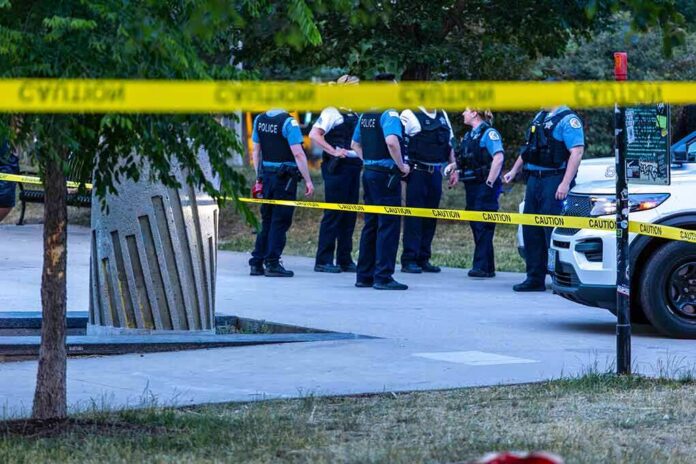
San Francisco police staged a fast, targeted sweep that arrested dozens tied to repeat retail theft and recovered stolen goods in hours.
Story Snapshot
- Police ran intelligence-led stings that netted 25 suspects and seized merchandise.
- City leaders say new felony tools under Proposition 36 target repeat theft offenders.
- San Francisco secured $17 million in state funds to expand theft enforcement.
- Critics warn arrests and filings do not yet prove citywide theft is falling.
What Police Did In The Latest Sweep
San Francisco Police Department officers said their Organized Retail Crime Task Force ran planned operations across several stores in June and July 2026. The department reported 25 arrests and more than $8,000 in merchandise linked to theft crews. Officers described these as intelligence-driven stings focused on repeat and organized activity. The effort targeted known hot spots and patterns drawn from reports and videos. Police posted summaries and video to show tactics and outcomes from the blitz.
Officials also highlighted earlier and parallel crackdowns that followed a similar playbook. These included rapid-response teams, undercover surveillance, and quick booking to disrupt active crews. The police department said these tactics have scaled into repeated multi-suspect operations over weeks, not one-offs. The message from law enforcement was clear: expect more sweeps and faster follow-up when stores report patterns. The focus remained on speed, visibility, and linking cases across locations.
How Prosecutors Are Charging Repeat Offenders
District Attorney Brooke Jenkins said Proposition 36 lets prosecutors file felony cases against people with two or more prior theft convictions. She said her office has filed well over 100 cases under the statute since late 2024. Prosecutors argued the new tool closes a gap that left many serial thefts as misdemeanors. They also said stronger charges help track patterns across cases and set firmer terms for release, plea talks, and probation in court.
City leaders and business groups framed Proposition 36 as a voter-backed response to retail theft. They said it raised penalties for repeat theft and coordinated with new police tactics. Supporters credited the change with shifting some charging decisions and making it easier to build cases against persistent suspects. They also praised closer work between store security and police. A public panel featuring the police chief and business leaders echoed this view early last year.
Money, Manpower, And The Push To Scale Up
City officials announced a $17 million state grant to expand retail-theft enforcement. The plan included $15 million for police overtime and $2 million for a dedicated prosecutor and an investigator to handle theft cases. The funding aimed to keep more officers on targeted details while prosecutors managed complex, repeat-offender dockets. Leaders said the money would help sustain blitz operations beyond headlines and into routine, citywide coverage.
SFPD’s Organized Retail Crime Task Force recently arrested multiple suspects targeting REI on Brannon Street. Retail theft raises costs and threatens our neighborhood businesses.
These operations send a clear message: retail theft will not be tolerated in San Francisco. Thank… https://t.co/zR5YQ76UBb
— Daniel Lurie 丹尼爾·羅偉 (@DanielLurie) August 27, 2026
Police and city statements emphasized growth in arrest counts and recovered goods. But arrest and filing totals do not equal long-term results. Critics pointed to two open questions: whether theft fell across the city and how many felony filings ended in convictions or meaningful custody. Reporters noted that many stings cluster in high-profile corridors. They also warned that outcomes depend on court rulings on pretrial detention and case processing, not arrests alone.
Why Both Sides Are Frustrated, And What To Watch Next
Shoppers and store workers want safer aisles now. Retailers need losses to drop and staff to stay. Police want repeat crews off the street. Prosecutors want laws with teeth to stick in court. Reformers say punishment alone misses drug use, poverty, and mental health. Many residents across politics see a bigger problem: a system that touts stings and filings but struggles to deliver clear results. That gap feeds anger at “the elites” and mistrust in government promises.
Three tests will show if this crackdown works. First, monthly theft reports must fall in more than a few hot spots. Second, felony cases should lead to steady convictions, restitution, and fewer rearrests. Third, the $17 million should turn into measurable outputs, not just overtime. Independent tracking will matter more than press releases. Until then, fast arrests may calm nerves for a day, but the public will judge by safer stores and fewer repeat offenders over time.
Sources:
nypost.com, sanfranciscopolice.org, cbsnews.com, kron4.com