UN Secretary-General António Guterres condemned the Trump administration’s joint military action with Israel against Iran as unlawful, even as the strikes targeted the regime’s nuclear infrastructure and ballistic missile capabilities that pose an existential threat to American allies and global security.
Story Snapshot
- US and Israel launched massive strikes on Iran’s nuclear sites, missile capabilities, and naval assets on February 28, 2026, marking direct action on Iranian soil
- Iran retaliated immediately with attacks violating the sovereignty of seven countries: Bahrain, Iraq, Jordan, Kuwait, Qatar, Saudi Arabia, and UAE
- UN chief condemned all parties, claiming strikes violated international law despite occurring after Iran-backed proxy aggression throughout the region
- Strikes came days after indirect US-Iran diplomatic talks mediated by Oman, with technical nuclear discussions scheduled for Vienna
- Ambassador Mike Waltz defended US action as necessary response to Iran’s “persistent aggression” and nuclear ambitions threatening regional stability
Trump Administration Strikes Iranian Nuclear Infrastructure
The Trump administration executed coordinated military strikes with Israel on February 28, 2026, targeting Iran’s ballistic missile capabilities, naval assets, and nuclear-related infrastructure across multiple Iranian sites. Ambassador Mike Waltz justified the operation as targeting Iran’s missiles, navy, and proxy networks to prevent nuclear weapon development. The strikes represent the second direct US-Israeli action on Iranian territory in recent months, demonstrating the administration’s commitment to preventing Tehran from acquiring nuclear weapons capability. This decisive action addresses years of Iranian aggression that the previous administration largely ignored through failed appeasement diplomacy.
Iranian Regime Attacks Seven Countries in Retaliation
Iran immediately responded with military attacks that violated the sovereignty of Bahrain, Iraq, Jordan, Kuwait, Qatar, Saudi Arabia, and the United Arab Emirates on the same day as the US-Israeli strikes. The multi-country assault demonstrates precisely why the Trump administration’s action was necessary—Tehran’s willingness to destabilize the entire region when confronted. Iranian Ambassador Amir Saeid Iravani labeled the US-Israel strikes as “unprovoked aggression” and “war crimes,” conveniently ignoring his regime’s decades of proxy warfare, support for terrorist organizations including Hezbollah and Hamas, and ballistic missile development threatening American allies throughout the Middle East.
UN Chief Condemns Necessary Defense Against Nuclear Threat
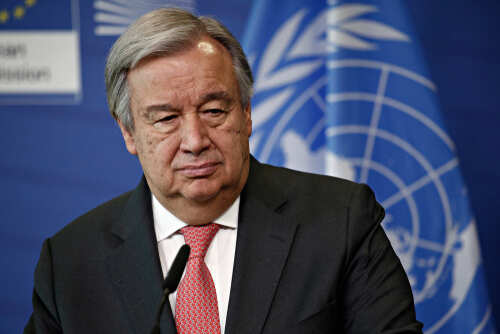
Guterres issued statements during an emergency UN Security Council session describing the strikes as violations of the UN Charter and a “grave threat to international peace and security.” He urged immediate de-escalation and return to diplomacy on Iran’s nuclear program, noting the strikes followed recent Oman-mediated talks. The UN chief’s position reflects the institution’s historical weakness in confronting genuine threats to international stability. The real grave threat remains Iran’s pursuit of nuclear weapons while funding terrorist proxies across the region. Guterres warned of “a chain of events that no one can control,” yet fails to acknowledge that uncontrolled escalation stems from years of allowing Iran’s nuclear ambitions to progress unchecked.
Diplomatic Window or Strategic Deception
The strikes occurred just days after the third round of indirect US-Iran talks mediated by Oman, with technical discussions on nuclear issues scheduled for Vienna followed by political negotiations. Critics claim this timing “squandered a chance for diplomacy,” but this perspective ignores Iran’s historical pattern of using diplomatic engagement as cover for continued nuclear development. The 2015 JCPOA nuclear deal collapsed after US withdrawal in 2018 precisely because it failed to prevent Iranian uranium enrichment escalations and ballistic missile development. Ambassador Danny Danon accurately framed the strikes as an “act of necessity” against existential nuclear, missile, and proxy threats that diplomacy alone has proven incapable of restraining.
Regional Security Implications and Energy Markets
The strikes and subsequent Iranian retaliation carry significant implications for regional stability and global energy markets. Gulf Cooperation Council states found themselves targeted by Iranian attacks despite many pursuing diplomatic relations with Tehran. The US President reportedly contacted GCC leaders following the strikes, while Iran’s Foreign Minister reached out to counterparts in affected countries. Oil prices face volatility given the strikes on naval assets and proximity to critical shipping lanes. This situation underscores the importance of American strength in maintaining regional order—weakness invites aggression, while decisive action backed by military capability protects allies and secures vital economic interests against authoritarian regimes pursuing destabilizing weapons programs.
Sources:
Iran strikes ‘squandered a chance for diplomacy’: Guterres – UN News
Statement by the Secretary-General on Iran – United Nations