Canada’s claim that it’s cracking down on Iranian regime operatives collides with one explosive question: how did reports of roughly 700 IRGC-linked nationals living there pile up before Ottawa widened its enforcement net?
Story Snapshot
- Reports dating back to 2024 alleged about 700 Iranian nationals linked to the IRGC may have resided in Canada, but the exact current number remains unconfirmed.
- Canada expanded inadmissibility rules for senior Iranian officials under IRPA section 35, triggering large-scale reviews and removals.
- Officials said 17,800+ cases have been reviewed, with dozens removed and hundreds still under investigation.
- Temporary immigration measures were extended for many Iranian nationals—while policy explicitly targets senior regime-linked roles.
What the “700” claim is—and what the research can actually prove
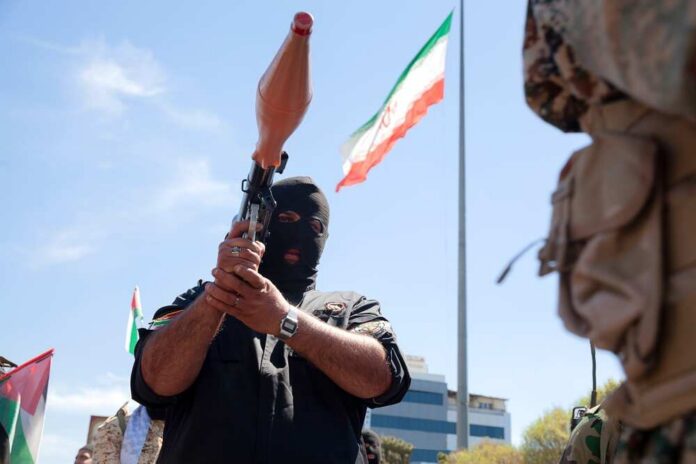
A January 2026 analysis cited earlier intelligence reporting that approximately 700 Iranian nationals linked to the Islamic Revolutionary Guard Corps (IRGC) had reportedly resided in Canada. That figure has become shorthand online for “Iranian military and government officials living illegally,” but the underlying reporting is narrower: it focuses on alleged links to the IRGC, which Canada has designated as a terrorist entity.
The distinction matters because “illegal” implies immigration status, while the policy debate in Canada has centered on inadmissibility for senior roles tied to a regime accused of gross human-rights violations. It also documents visible political attention—hard to square with the slogan “no one cares.” Conservative leader Pierre Poilievre publicly pledged in 2025 to “find and deport” IRGC-linked individuals, reflecting that this issue has been active in Canadian politics rather than ignored.
Canada’s widened inadmissibility policy: broader net, lower proof threshold
Canada designated Iran in 2022 under Immigration and Refugee Protection Act authorities tied to “gross and systematic human-rights violations,” but early enforcement reportedly required proof of personal complicity. By late February 2026, Canada widened the approach under IRPA section 35(1)(b), aiming at senior Iranian officials across government and state-affiliated entities, including the IRGC. The practical shift is that inadmissibility can be assessed using open-source information and classified intelligence rather than criminal-court proof standards.
Canadian authorities reported reviewing more than 17,800 applications following the broadened approach, with dozens deemed inadmissible or removed and hundreds under investigation. That volume suggests a major screening push, but it also highlights a basic limitation: a large review count does not translate into a confirmed tally of IRGC-linked residents today. It does not provide an official, updated number validating the “700” claim after these investigations, only that enforcement actions and ongoing probes are underway.
Enforcement versus accountability: deportation alone doesn’t equal justice
The most pointed critique is not that Canada is doing “nothing,” but that deportations may fall short of genuine accountability. Analysts cited concerns that sending figures back to Iran can remove them from Canadian jurisdiction without ensuring any justice or transparency in Iranian courts. That criticism cuts two ways: it acknowledges Canada is acting, while questioning whether the outcome protects victims or simply moves the problem off Canada’s books. It also does not provide evidence of prosecutions tied to these removals.
From a conservative, rule-of-law perspective, the core test is whether Canada is enforcing national security and immigration integrity without turning the process into arbitrary bureaucracy. The limited recourse for those flagged, often channeled through ministerial processes or the Federal Court. That means Ottawa’s power is strong, and the safeguards become especially important—because a wide net can capture genuine bad actors, but also risks sweeping in people whose seniority in a state system did not equate to participation in abuses.
Temporary measures for Iranian nationals: relief for some, sharper scrutiny for regime affiliates
Canada also extended temporary special measures for certain Iranian nationals, including work-permit extensions for people with permits issued by late February 2025, with eligibility timelines stretching toward a 2027 deadline. The government framed this as support for Iranian nationals contributing to Canada amid instability. These measures are distinct from the inadmissibility crackdown and do not exist to shield regime-linked officials. Visitors and students were directed toward regular processes rather than open-ended special extensions.
Politically, that split policy—help for ordinary people and a tougher stance toward senior regime roles—illustrates why the online claim “no one cares” overreaches what can be proven. What remains unresolved is the public’s demand for clarity: how many of the allegedly IRGC-linked residents were admitted under older screening rules, how many have been removed, and how many cases remain pending. It supports enforcement activity, but not a definitive, updated accounting of the “700.”
The takeaway for Americans watching from 2026
For U.S. readers who spent years watching lax enforcement and security blind spots under globalist-style immigration thinking, the Canadian case is a reminder that democratic countries can be slow to react—and then swing toward broad, intelligence-driven enforcement once public pressure peaks. Canada is now using stronger inadmissibility tools and conducting mass reviews, while facing criticism about due process and the practical limits of deportation as accountability. The facts support a live policy fight, not indifference.
Up to 700 Iranian Military and Government Officials May Be Living Illegally in Canada and No One Careshttps://t.co/RD5SV2brfM
— RedState Updates (@RedStateUpdates) March 16, 2026
It leaves key questions unanswered—especially a current, official confirmation of the “700” figure and the legal status of those individuals at entry. Still, the documented trend is clear: allegations sparked scrutiny, scrutiny drove policy expansion, and Canada is now actively investigating and removing targeted individuals. For Americans, the broader lesson is that enforcement matters early, because once a hostile network establishes roots, the cleanup becomes legally complex, politically divisive, and never as fast as voters want.
Sources:
Canada widens immigration inadmissibility net for senior Iranian officials
Iran: Immigration and citizenship services
Canada extends certain temporary special measures for Iranian nationals