President Trump’s claim that King Charles privately backed his hard line on Iran puts Britain’s famously apolitical monarchy in the middle of a modern geopolitical fight.
Story Snapshot
- President Trump told a White House state dinner that King Charles agreed Iran “cannot” have a nuclear weapon after a private Oval Office discussion.
- The remark highlighted close U.S.-U.K. coordination on Iran while intensifying political tension with U.K. Prime Minister Keir Starmer, whom Trump criticized over Iran policy.
- No public confirmation from Buckingham Palace was reported, leaving Trump’s claim largely unverifiable beyond his account of the private meeting.
- The episode underscores how foreign policy messaging can use elite symbolism—sometimes at the cost of institutional neutrality and public trust.
What Trump Said at the State Dinner—and Why It Matters
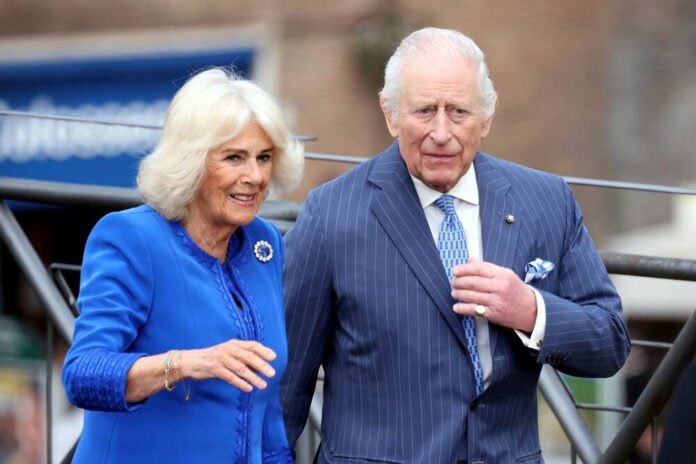
President Trump used a toast at a White House state dinner honoring King Charles III and Queen Camilla to claim the monarch privately agreed with him that Iran must not obtain a nuclear weapon. Trump said the two discussed the issue in a Tuesday Oval Office meeting and added that Charles was “even more aligned” with him than he was himself. The quotes drew attention because they attributed a specific policy stance to a figure expected to stay above day-to-day politics.
Trump also framed the conflict in sweeping terms, saying the United States and Israel had “successfully militarily overcome” Iran and would not allow Tehran to acquire a nuclear weapon. Those statements may play well with voters who favor peace through strength, but it included no independent verification of the claimed military outcome. A high-profile state dinner, roughly 120 guests, and a president using ceremonial pageantry to emphasize resolve.
The Unverifiable Core: A Private Conversation, Public Consequences
Because Trump’s account relied on a private Oval Office exchange, the central claim—what the King “agreed” with—cannot be checked through public records. No indication that King Charles personally showed support for U.S.-Israeli actions against Iran, and the Palace did not publicly weigh in. That gap matters in a media environment where citizens across the political spectrum already suspect messaging is shaped by “elites” for strategic effect.
For conservatives, the takeaway is twofold. First, the policy goal itself—preventing a hostile regime from acquiring nuclear weapons—has long been treated as a core national security imperative. Second, attaching that goal to an unelected foreign monarch can look like an attempt to borrow legitimacy rather than to persuade through evidence. When leaders lean on prestige and symbolism it can deepen the broader belief that institutions are managing perceptions more than delivering results.
UK Politics in the Background: Trump vs. Starmer
Trump’s comments landed amid reported tensions with U.K. Prime Minister Keir Starmer, whom Trump has criticized for opposing U.S.-Israeli actions tied to the Iran conflict. In that context, the King’s presence became more than ceremony; it became a contrast point between Britain’s elected leader and its head of state. That dynamic risks pulling the monarchy into partisan crosswinds—exactly what modern royal protocol is designed to avoid.
It is also suggested British officials viewed the overall U.K. policy direction as aligned with the U.S. stance on Iran, attempting to insulate the monarch from political fallout. Even so, the episode illustrates how easily diplomatic theater can become domestic ammunition. For Americans watching, it reinforces a familiar pattern: political leaders using institutions—whether a royal family, a bureaucracy, or an alliance—as props in an argument aimed at opponents back home.
The Broader Trend: Security, Credibility, and Public Trust
The Iran nuclear question sits at the intersection of security and credibility. Since the debate over the 2015 nuclear deal and its aftermath, Western governments have cycled between negotiation, sanctions, and military pressure, while voters have grown weary of costly foreign entanglements and opaque decision-making. Trump’s dinner remarks attempted to project clarity—no nuclear weapon for Iran—while leaving key details unaddressed in public, including what “overcome” means in operational terms.
Many conservatives see global institutions and diplomatic rituals as vehicles for unaccountable influence; many liberals fear executive overreach and escalation. When a major claim rests on a private conversation with a figure who typically avoids politics, both sides can read it as another example of government operating through controlled narratives instead of transparent, accountable facts.
For now, the practical bottom line remains unchanged: the U.S. policy line described in the reporting is that Iran must not obtain a nuclear weapon, and Trump is signaling determination to enforce that outcome. The unanswered question is political, not just strategic—whether invoking King Charles strengthens the “special relationship” in the eyes of the public, or instead fuels the growing sense that leaders lean on elite optics while ordinary citizens are left to absorb the risks, costs, and uncertainty.
Sources:
King Charles agrees Iran cannot have a nuclear weapon
Hosting British king, Trump says Charles agrees Iran cannot have nuclear bomb