
Iran’s sudden “open the strait—now we’ll close it” reversal is the kind of energy blackmail that can jolt U.S. prices without firing a shot.
Quick Take
- Iran briefly signaled the Strait of Hormuz would stay open, then pivoted to closure threats and “strict control,” rattling markets that depend on the chokepoint.
- The Strait of Hormuz carries roughly one-fifth of global oil flows, so even threats can spike prices and insurance costs for shippers.
- President Trump publicly rejected what he called blackmail tied to the strait while pressing Iran on enriched uranium and broader nuclear demands.
- Reporting points to internal Iranian power struggles and the IRGC’s leverage strategy as drivers of the whiplash.
Hormuz “whiplash” puts everyday Americans on the hook
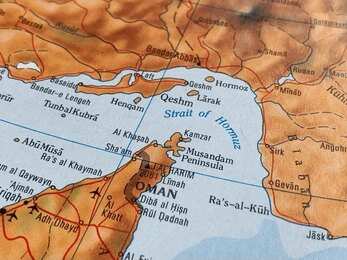
Iran’s handling of the Strait of Hormuz swung sharply over a matter of days: public signals that shipping would continue gave way to renewed closure threats and tighter controls. Because the strait is a narrow passage between Iran and Oman, disruptions there can quickly translate into higher global oil prices and higher shipping insurance. For U.S. families already sensitive to inflation, this is the kind of overseas risk that can show up fast at the gas pump.
Iran’s Supreme National Security Council added another layer by outlining “cost conditions” after the latest closure episode, including fees tied to security, safety, and environmental services. That approach effectively reframes a global waterway into a toll-leverage instrument. The practical impact is uncertainty: energy traders price in risk, shipping firms prepare reroutes, and consumers worldwide absorb volatility even if tankers keep moving under partial restrictions rather than a total shutdown.
Trump rejects strait leverage as nuclear talks remain stalled
President Trump responded by rejecting the idea that Tehran can use the chokepoint to pressure Washington, while also tying the standoff to the unresolved nuclear file. Trump referencing the seizure of Iran’s enriched uranium and dismissing threats linked to the strait. Iranian Deputy Foreign Minister Saeed Khatibzadeh, by contrast, rejected shipping uranium to the U.S. and pushed for sanctions issues to be addressed before higher-level engagement proceeds.
This dynamic matters because it combines two pressure points—nuclear capability and energy disruption—into a single negotiating battlefield. Tehran’s position, as described in reporting, emphasizes process and sanctions relief; Washington’s position emphasizes enforcement and material constraints on enrichment. In past eras, diplomacy often tried to separate these files. This shows how quickly they can fuse, with shipping lanes becoming a bargaining chip in disputes that begin far inland.
IRGC leverage vs. factional infighting: what the reporting supports
Commentary from Fox News contributor Lisa Daftari argues that the back-and-forth is not confusion but a feature of the regime’s strategy, driven by the Islamic Revolutionary Guard Corps and its ability to threaten shipping disruption, missiles, and proxy activity. Separately, business reporting characterized the policy swings as evidence of factional infighting under pressure from a tightened U.S. naval posture. Those two interpretations can coexist: internal divisions can still produce a consistent outcome—maximum leverage—when hardline security services hold veto power.
Why a 21-mile chokepoint can override “green” promises and budget debates
The Strait of Hormuz is only about 21 miles wide at its narrowest, yet it remains central to the real-world energy economy because it handles roughly 20% of global oil flows. For conservatives frustrated by high energy costs and policy-driven price shocks, the lesson is basic: physical supply routes still matter. When policymakers treat energy as an abstraction—something to regulate away—events like this expose how quickly external actors can impose costs.
For liberals focused on inequality and consumer protection, the episode also lands: sudden price spikes hit working households hardest, regardless of party. The broader frustration many Americans share—left and right—is that government often reacts after the fact. Whether the answer is stronger deterrence, tighter enforcement, more domestic production, or a more resilient supply chain, the immediate takeaway is that overseas coercion can exploit domestic fragility when leadership signals inconsistency or when the system depends on optimistic assumptions.
"LISA DAFTARI: Hormuz whiplash proves Tehran can't honor any deal it signs" – Fox News #SmartNews https://t.co/sOgv07UjPS
— Gene Melius (@gene_melius2) April 19, 2026
Credible threats alone can move markets. As the administration and Congress look at next steps, voters will likely judge outcomes less by rhetoric and more by whether U.S. policy reduces the ability of adversaries to turn chokepoints into price shocks that punish ordinary Americans.
Sources:
LISA DAFTARI: Hormuz whiplash proves Tehran can’t honor any deal it signs
Iran outlines Hormuz ‘cost conditions’ after closure, Trump says Tehran can’t blackmail US