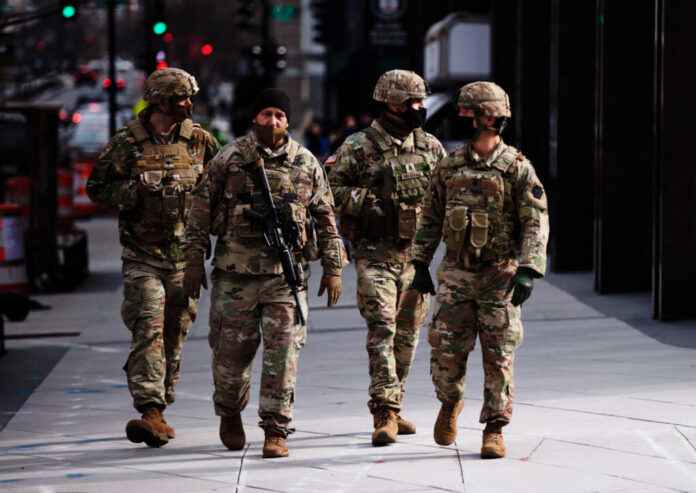
America’s largest National Guard military exercise has launched in Michigan, showcasing U.S. military strength while spotlighting both the opportunities and the real threats facing our nation’s security and constitutional values.
Story Snapshot
- Over 7,500 service members from 36 states and nine allied nations train jointly in Michigan for Northern Strike 25-2.
- Exercise targets modern threats: drones, cyber attacks, and maritime security, using advanced technologies and real-world scenarios.
- Michigan communities see a $38 million economic boost, but some locals are concerned about disruptions from the massive military presence.
- National Guard leaders emphasize defending American interests and readiness amid global instability and emerging security threats.
Michigan Hosts America’s Largest Military Readiness Exercise
On August 2, 2025, Northern Strike 25-2 commenced across Michigan, drawing over 7,500 National Guard and allied forces from 36 states and territories, plus nine international partners. The event, which runs through August 16, is the largest National Guard Bureau-sponsored military readiness exercise in the country. Training centers such as the National All-Domain Warfighting Center (NADWC) provide a unique environment for joint operations, blending land, air, and maritime scenarios. Military leaders, including Maj. Gen. Paul D. Rogers, emphasize that the exercise’s scale and complexity are essential for preparing forces to respond to modern warfare scenarios involving cyber attacks, unmanned aerial systems, and joint operations.
Northern Strike’s scenarios reflect today’s battlefield realities, focusing on joint, multi-domain operations. Training incorporates advanced technologies to counter unmanned aerial systems (UAS), cyber warfare, maritime security, and rapid medical evacuations. These priorities address the proliferation of drones, the growing risk of cyber attacks on both military and civilian infrastructure, and the need to secure U.S. borders and critical assets. Participants are exposed to conditions that mirror modern threats, emphasizing the importance of preparedness against emerging technologies and adversaries capable of disrupting national defense systems and infrastructure.
Strategic Objectives and Stakeholders
The Michigan National Guard leads the exercise, supported by the U.S. Department of Defense and National Guard Bureau. Senior officers such as Maj. Gen. Paul D. Rogers and Col. Todd Fitzpatrick have designed the event to maximize realism, integrating lessons from recent conflicts and technological advancements. International partners join to strengthen interoperability, reflecting America’s commitment to strong alliances. Local communities in Michigan play a vital role, benefiting economically while also managing temporary disruptions from increased military activity, including aircraft noise and road closures near training sites.
Since its inception in 2012, Northern Strike has grown into a premier venue for validating U.S. reserve component readiness and advancing innovation in military tactics. Each year, the exercise adapts to evolving security challenges, such as the use of drones and the threat of cyber intrusion. The NADWC’s unique geography—featuring Camp Grayling, Alpena Combat Readiness Training Center, Rogers City Quarry, and Lake Huron—enables comprehensive, realistic training across multiple domains, a capability unmatched elsewhere in the U.S.
Economic, Community, and Security Impact
Northern Strike delivers a substantial economic benefit to Michigan, injecting an estimated $38 million annually through military pay, travel, and local spending. This influx supports small businesses and local services, reinforcing the strategic value of hosting such large-scale exercises. Despite the financial gains, some residents voice concerns about noise, traffic, and disruptions, though most acknowledge the broader benefits to the region and national security. The exercise also boosts public awareness, encouraging community engagement with the military and fostering a greater understanding of America’s defense priorities.
At a national level, Northern Strike underlines the necessity of strong defense readiness in an era marked by global instability, technological threats, and attacks on American values. Military and defense experts agree that realistic, integrated training—especially with allied partners—is essential for deterring adversaries and protecting the freedoms enshrined in the Constitution. The exercise’s focus on countering drones, strengthening cyber defenses, and defending U.S. sovereignty speaks directly to concerns about government overreach, border security, and the preservation of traditional American principles.
Looking forward, the continued expansion and modernization of Northern Strike signals America’s resolve to maintain military supremacy and defend national interests. The lessons learned will inform future strategies, ensuring that both the National Guard and allied forces are equipped to tackle evolving threats—without sacrificing the values and liberties that define this nation. For communities in Michigan and across the U.S., the exercise is both a reminder of the costs of defense and a testament to the enduring commitment to protect America’s way of life.
Sources:
Michigan Department of Military and Veterans Affairs Press Release
Radio Results Network (local news and interviews)
Defense Visual Information Distribution Service (DVIDS)
UpNorthLive Newsroom (regional coverage)
ClickOnDetroit (local news)