A new policy threatens Palestinian self-governance, sparking debates over sovereignty and American influence.
Story Snapshot
- Trump chairs the Board of Peace overseeing Gaza reconstruction.
- American and international figures dominate the governance model.
- Gaza transitions to a new hybrid governance structure.
- Concerns over Palestinian autonomy under American oversight.
Trump’s Vision for Gaza Reconstruction
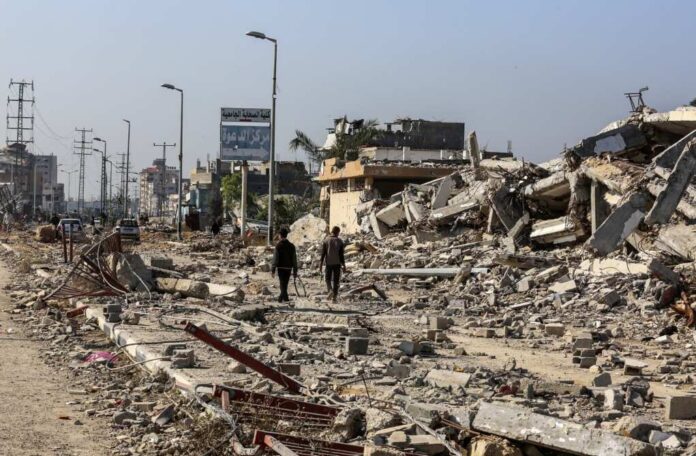
On January 16, 2026, the White House unveiled the “Board of Peace,” chaired by President Donald Trump, to oversee the reconstruction and governance of Gaza. This initiative follows a ceasefire agreement between Israel and Hamas, marking a shift in Gaza’s governance structure. The board, dominated by American and international figures, includes Tony Blair, Marco Rubio, Jared Kushner, and Steve Witkoff. This setup has sparked debates over the extent of Palestinian self-governance under U.S. supervision.
This announcement came after a Palestinian technocratic committee held its first meeting in Cairo, establishing governance frameworks under U.S. oversight. Trump’s approach combines international leadership with American oversight, aiming to manage reconstruction, security, and political transition. However, the governance model’s dominance by American appointees raises questions about the legitimacy and autonomy of Palestinian governance structures.
Watch:
Challenges in Implementing Governance
The governance model presents significant challenges, as the technocratic committee operates under U.S. supervision rather than full Palestinian self-governance. The involvement of Tony Blair, despite his controversial history with the Iraq invasion, adds sensitivity to the Middle East dynamics. Blair, having spent years on Israeli-Palestinian issues, brings expertise to the table, yet his role remains contentious.
Security remains a core concern, with the disarmament of Hamas and the deployment of international security forces presenting immediate operational hurdles. The International Stabilization Force commander, Major General Jasper Jeffers, is tasked with maintaining security and demilitarization, a critical aspect of the peace plan. However, challenges in recruiting countries for the stabilization force persist, reflecting ongoing regional tensions.
Implications for Palestinian Self-Governance
The new governance model, while aimed at efficient reconstruction, departs from traditional Palestinian Authority structures. This raises questions about democratic legitimacy and self-determination for the Palestinian population. The three-year reconstruction timeline signals an extended international presence in Gaza, influencing broader Israeli-Palestinian dynamics and regional relationships.
Trump’s economic vision for Gaza, focused on international investment and security, hinges on effective disarmament and governance. The success of this plan depends on sustained international commitment and cooperation from regional powers such as Turkey, Qatar, and Egypt. The situation remains fluid, with the Gaza transition marking a pivotal moment in the region’s history.
Sources:
Tony Blair, Rubio, Kushner, Witkoff to help oversee Gaza reconstruction
White House announces Board of Peace membership and executive structure
Trump taps former British Prime Minister Tony Blair as US military head for Gaza
Statement on President Trump’s comprehensive plan to end the Gaza conflict