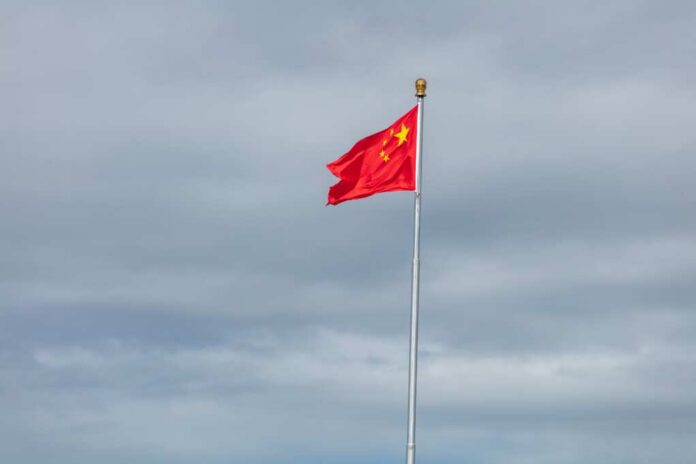
China’s methodical “AI+” strategy threatens to eclipse American innovation, positioning Beijing to dominate global markets by 2030 while President Trump’s America focuses on frontier breakthroughs.
Story Highlights
- China targets 70% AI integration across its economy by 2027, 90% by 2030, and full deployment by 2035, leveraging manufacturing and e-commerce strengths.
- The State Council formalized the “AI+” action plan in August 2024 after a decade of local experimentation, avoiding direct competition with the U.S. AGI pursuits.
- Over 30 cities build AI computing centers, backed by a $30 billion national fund plus regional investments, fueling rapid sectoral rollout.
- The 15th Five-Year Plan, due March 2026, frames this as China’s window to “run side by side, and even lead” in practical AI dominance.
China’s Pragmatic AI Shift
China designated AI as a policy priority in 2006 through its National Medium and Long Term Plan for Science and Technology. The State Council unveiled the New Generation Artificial Intelligence Development Plan in 2017, setting goals to lead globally by 2030 with an industry value of $150 billion. This blueprint echoed initiatives like Made in China 2025. Local governments tested AI applications for a decade before central adoption. President Trump’s administration must counter this state-driven push to protect U.S. economic sovereignty.
China steps up efforts to advance AI-assisted manufacturing
The deep integration of artificial intelligence (AI) with the real economy is profoundly reshaping models of manufacturing and economic structures, accelerating industrial upgrading.On January 7, China's Ministry of… pic.twitter.com/gyBSpgazsd
— China Science (@ChinaScience) January 22, 2026
AI+ Action Plan Details
The State Council released its Opinion on Deepening Implementation of the AI+ Action Plan in August 2024. This document establishes penetration targets: 70% economic integration by 2027, 90% by 2030, and complete rollout by 2035. MIIT plans a roadmap for AI+Industrialization in manufacturing. Other sectors include AI+Energy aiming for world-leading status by 2030, AI+Health as an emerging industry, and AI+Government Affairs platforms. Premier Li Qiang launched the initiative in March 2024.
Massive Infrastructure Investments
By March 2023, over 30 Chinese cities built or planned intelligent computing centers for AI workloads. Government funds total billions: $30 billion nationally, Shanghai $15 billion, Beijing $2 billion, Tianjin $15.7 billion. These investments support the 14th Five-Year Plan’s priorities in manufacturing, healthcare, education, and governance. Local experimentation in Beijing since 2020 tested AI+health and government affairs. This bottom-up approach minimizes risks, contrasting free-market U.S. innovation under Trump.
15th Five-Year Plan Preparations
Officials prepare the 15th Five-Year Plan for announcement in March 2026, elevating AI integration. Xi Jinping directs emphasis on scientific innovation grounded in the real economy. The period marks a critical window to shift from trailing to leading in AI applications. Targets position AI as the main driver for industrial upgrading and economic transformation by 2030. U.S. conservatives see this as a wake-up call: China’s centralized planning challenges American individual liberty and market-driven progress.
China’s strategy blends second-best AI with manufacturing prowess and e-commerce infrastructure. Experts note it acknowledges U.S. AGI leads while exploiting China’s scale advantages. Short-term, rapid deployment accelerates productivity in key sectors. Medium-term, AI transforms governance and healthcare. Long-term, Beijing aims for an intelligent economy by 2035, potentially displacing U.S. competitors in applied markets. Trump’s policies must prioritize practical AI to safeguard jobs and national security.
Sources:
Jamestown Foundation analysis
EU-SME Centre report
Geopolitics & AGI Substack
Wikipedia (AI industry in China)
MERICS report
Global Times