
A new discovery challenges our understanding of black holes, questioning the very foundations of modern cosmology.
Story Snapshot
- Event Horizon Telescope reveals unprecedented black hole images.
- Unexpected phenomena challenge existing cosmological theories.
- Machine learning enhances image clarity, revealing new details.
Revolutionary Black Hole Imaging
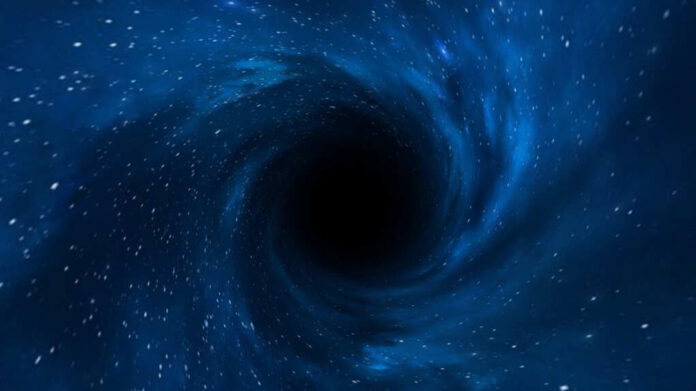
The Event Horizon Telescope (EHT) collaboration has captured the first-ever direct images of supermassive black holes, providing a groundbreaking view of these mysterious cosmic entities. The initial image of M87* was released in April 2019, followed by Sagittarius A* in May 2022. These images offer unprecedented visual evidence of event horizons, sparking debates among scientists and enthusiasts alike about the fundamentals of black hole physics and general relativity.
These discoveries were made possible through the use of a global array of radio telescopes, which effectively created an “Earth-sized” virtual telescope. This allowed scientists to capture the minute details of black holes located millions of light-years away. The EHT’s success marks a significant milestone in astrophysics, demonstrating the power of international collaboration and cutting-edge technology in pushing the boundaries of our knowledge.
The Black Hole That Could Rewrite Cosmology https://t.co/PQdZMLrmUf
— The Bork Report (@BorkReport) September 25, 2025
Challenges to Existing Theories
Recent findings from the EHT have uncovered phenomena not accounted for by current models. Notably, a polarization flip observed in M87* between 2017 and 2021 has perplexed scientists, challenging existing theories about black hole magnetospheres and accretion disks. This unexpected change suggests that black holes may behave in ways not fully predicted by established cosmological theories, potentially requiring a re-examination of our understanding of gravity and spacetime.
Machine learning has played a crucial role in enhancing the resolution of black hole images, allowing researchers to discern finer structures within these massive entities. By utilizing advanced algorithms, scientists have been able to obtain sharper images, leading to more precise mass estimates and revealing features that could redefine our understanding of black holes. This technological advancement not only aids in astrophysical research but also has potential applications in various other scientific fields.
Implications for the Future
The implications of these discoveries extend far beyond the realm of astrophysics. In the short term, they necessitate a reevaluation of black hole accretion models and magnetic field dynamics. In the long term, persistent anomalies might lead to revisions of general relativity or the development of new theories that better explain these cosmic phenomena. Such advancements could place new constraints on quantum gravity and alternative theories, potentially leading to paradigm shifts in our understanding of the universe.
The broader impact of these findings is significant, with potential economic, social, and political ramifications. Increased investment in scientific infrastructure and international collaboration is likely, as nations strive to remain at the forefront of astrophysical research. The iconic imagery of black holes serves to engage the public and inspire a new generation of scientists, emphasizing the importance of STEM education and research in today’s world.
Sources:
Astronomers Capture First Image of a Black Hole
Astronomers Reveal First Image of the Black Hole at the Heart of Our Galaxy
How Scientists Captured the First Image of a Black Hole
A Sharper Look at the M87* Black Hole
Event Horizon Supermassive Black Hole Polarization