Reza Valizadeh’s prison voice memo turns a hidden detention case into a public test of whether Iran will keep controlling the story from inside Evin Prison.
Quick Take
- Valizadeh says prisoners in Evin Prison are suffering from inadequate medical care and “physical and mental torture.”[1]
- Advocacy and rights groups say his health has worsened through asthma, dental problems, poor air quality, and denial of nutrition and treatment.[2][1]
- Reporting says he was moved to Fashafouyeh Prison after an Israeli strike on Evin, then later returned to Evin.[1][4]
- The United States government has formally designated him as wrongfully detained, strengthening attention on his case.[2]
What Valizadeh Said From Prison
In the recording attributed to him from Evin Prison, Valizadeh said three American citizens, including himself, “suffer from various diseases without adequate medical care” and that detainees face “physical and mental torture.”[1] The message matters because it comes from inside the prison environment itself, where outside observers have limited access and official records are not publicly available.
That same source set says he described the judicial process for political prisoners in Iran as rushed, thinly reviewed, and unfair, which reinforces the broader claim that his detention is not a routine criminal case.[1] The Federal Bureau of Investigation (FBI) is not involved in this case; the dispute instead centers on Iranian prison conditions, judicial process, and diplomatic pressure from Washington.
Health, Transfer, and Prison Conditions
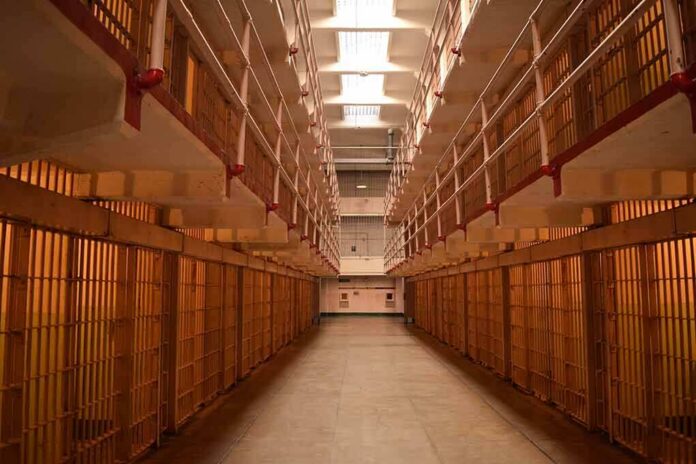
Several groups say Valizadeh’s health has deteriorated in custody. The Foley Foundation says he suffers from asthma and significant dental problems and has repeatedly been denied proper nutrition and medical care.[2] Committee to Protect Journalists reporting says he was transferred to Fashafouyeh Prison after an attack on Evin and exposed to dangerously overcrowded and medically inadequate conditions that severely affected his health.[1]
Radio Free Europe/Radio Liberty says Valizadeh remains in Evin Prison and notes that the prison sits in a neighborhood that has come under heavy bombardment, adding a security risk on top of existing detention concerns.[4] That external danger does not prove medical neglect by itself, but it helps explain why his case has drawn attention beyond ordinary prison-conditions reporting.[4]
Why the Case Has Drawn Wider Attention
The strongest official U.S. action in the record is the May 2025 wrongful-detention designation, which the Foley Foundation says came from the Secretary of State.[2] Committee to Protect Journalists also quotes Valizadeh’s brother as saying the United States State Department issued statements condemning the arrest as arbitrary and contrary to international law, showing that the case has moved into the familiar hostage-diplomacy arena.[1]
It was haunting to hear the voice of former @RFERL @RadioFarda_ journalist Reza Valizadeh on @CBSEveningNews tonight. He's speaking to us from Evin Prison and asking for help. We must bring him home @freerezav https://t.co/cEKlLtyUdN
— Deniz Yüksel (@denizyuksel130) June 5, 2026
That framing has a clear downside: it can push the public conversation toward release demands while leaving the prison-health question under documented. The available material is still mostly built from Valizadeh’s own words, family accounts, and advocacy groups, and the source set does not include prison medical files, neutral inspections, or direct rebuttals from Iranian authorities.[1][2][4][5]
The pattern fits a broader reality in politically sensitive detention cases, where the state controls access and outside observers must rely on fragmented testimony. Here, the practical significance is not just one journalist’s condition; it is the larger question of whether any detainee in a closed system can obtain credible medical care, fair process, or independent scrutiny when the government holds nearly all the evidence.[1][2][4][5]
Sources:
[1] Web – Journalist in Iran’s Evin Prison pleads for medical help for him, U.S. …
[2] Web – Iranian-American Journalist on Hunger Strike in Evin Prison
[4] Web – A Q&A with Iranian-American journalist Reza Valizadeh’s brother
[5] Web – Reza Valizadeh – Foley Foundation