New York City’s first mayor in six decades to skip the Israel Day Parade is simultaneously promising “record” security for it, spotlighting how symbolism and public safety collide in an era when many Americans believe the system serves the powerful more than the people.
Story Snapshot
- Mayor Zohran Mamdani will not attend the 2026 Israel Day Parade, breaking a 61‑year mayoral tradition.
- He insists his decision is about a universal “equal rights” principle, not permits or security for the event.
- City officials promise the most extensive security operation ever for the parade despite his absence.
- The clash shows how political symbolism, identity politics, and distrust of elites drive today’s divides.
Mayor breaks parade tradition while citing universal rights
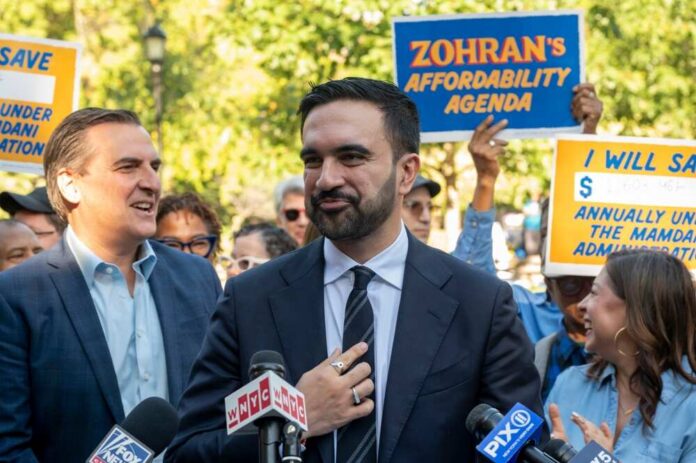
New York City Mayor Zohran Mamdani has confirmed he will not attend this year’s Israel Day Parade, making him the first sitting mayor to skip the event since 1964, a break in a 61‑year civic tradition that past mayors treated as almost automatic.[1] The 2026 march, themed “Proud Americans, Proud Zionists,” is organized as a public celebration of Israel and Jewish identity, and critics say a no‑show by the city’s top official sends a pointed message at a time of rising antisemitism.[1][3] Mamdani, however, frames his absence as a matter of political principle rather than a withdrawal of basic civic support.
In comments reported by the Jerusalem Post, Mamdani stressed that his nonattendance “should not be mistaken for a refusal to provide security or the necessary permits for its safety,” drawing a sharp line between his personal stance and the obligations of his office.[1] He said his approach is guided by a broader belief in “equal rights for all people everywhere,” presenting his decision as rooted in a universal human‑rights ethic rather than opposition to Jewish New Yorkers as a community.[1] He also emphasized that he expects the parade to proceed safely under city protection, despite his choice not to march.
Security plans underscore tension between symbolism and governance
At a briefing ahead of the parade, Mamdani and New York Police Department Commissioner Jessica Tisch pledged what they called a record level of security, signaling that city agencies are “not messing around” with safety even as the mayor steps back from attending.[2] Mamdani said his administration had been preparing “for weeks” to secure the event and that he takes seriously his responsibility to protect “every New Yorker and every event, regardless of my attendance.”[2] Commissioner Tisch described “the most extensive security plan that the New York Police Department has ever put together” for the parade, with the largest number of officers ever assigned to that detail, plus visible and covert units, vehicle barriers, and increased monitoring for potential threats.[2][4]
Officials reported no known, credible threats against the parade but warned that an absence of specific intelligence does not eliminate risk in a charged environment.[2] Security measures will include heavy weapons teams, drone and helicopter coverage, explosive‑detection dogs, and hardened vehicles blocking side streets to prevent vehicular attacks, a template similar to tactics used at other high‑profile events after recent years of unrest and terrorism concerns.[2][4] For New Yorkers who distrust both parties and worry the government cannot or will not protect them, this mix of unprecedented security and political controversy reinforces the sense that ordinary people are caught in the middle while elites argue over symbolism.
Critics see a loyalty signal; supporters stress principle and precedent
Commentary across cable and online media has cast Mamdani’s absence as a boycott that undermines solidarity with Jewish New Yorkers, with some critics tying it to a broader narrative that Democrats and institutional elites have grown hostile to traditional allies while selectively embracing identity causes.[3] The fact that every mayor for more than half a century has attended makes his decision easy to frame as a deliberate rupture rather than a mere scheduling choice, especially at a moment when many Jewish residents say they feel physically unsafe and politically isolated.[1][3] For conservatives already angered by what they see as years of “woke” double standards and weak responses to antisemitism, his move becomes another data point in a pattern of values being sacrificed to ideological posturing.
Supporters of Mamdani’s stance counter that tying civic legitimacy to attendance at a parade for any foreign state or cause deepens the loyalty‑test politics that many Americans, left and right, already resent.[1] They point to his statements promising continued participation in other Jewish communal events and his pledge to “join and host many community events celebrating Jewish life in New York and the rich Jewish history and culture of our city” as evidence that he is rejecting a specific political framing, not an entire community.[1] This dispute fits a broader pattern in modern politics: attendance at highly symbolic events is routinely treated as a proxy for deeper allegiances, and nuanced distinctions between personal conscience and official duty often get lost in a media environment that rewards outrage.[1][2]
What this reveals about distrust of institutions and “deep state” fears
For Americans who believe the system is run by insulated elites more focused on careers than on citizens’ safety and prosperity, the Mamdani controversy illustrates how symbolic battles can overshadow core responsibilities like protecting people on the streets. The same mayor promising unmatched security resources is simultaneously portrayed as abandoning a vulnerable community, while national commentators use the story to score points rather than to ask whether New York’s security planning and civil‑rights protections are actually working for everyone.[1][2][3] That dynamic feeds the conviction that the political class governs through spectacle and division instead of sober problem‑solving.
🚨 NYC Mayor Zohran Mamdani defends skipping the Israel Day Parade — the first mayor to miss the historic event since 1964.
He stated on the campaign trail that he wouldn’t attend and has been clear about his views on the Israeli government.
Mamdani added: “I have a… pic.twitter.com/8SxpkjTGkC
— Lexie🌹👉🏻🇺🇸 (@its_Lexieroy) May 29, 2026
The deeper concern, shared quietly by many older conservatives and liberals alike, is that public safety, religious freedom, and equal treatment under the law are becoming bargaining chips in culture‑war theatrics rather than non‑negotiable duties of government. Whether one sees Mamdani’s choice as courageous, offensive, or simply misguided, the episode exposes how a single decision about marching in a parade can become a referendum on whose rights and identities count in a system that often feels captured by competing interest groups.[1][2] In that sense, the debate is less about one mayor than about a country struggling to reconcile principle, security, and trust in institutions that many feel have stopped listening.
Sources:
[1] Web – New York City Mayor Zohran Mamdani will not attend the city’s annual …
[2] Web – NYC Mayor Zohran Mamdani to skip Israel Parade, first absence in …
[3] YouTube – Mamdani Skips Israel Parade, Breaking 61-Year Tradition
[4] Web – Mamdani won’t attend Israel Day Parade, breaking … – Fox News