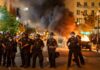
A protest in Minnesota escalated to violence, resulting in arrests and a heated debate over First Amendment rights and public safety.
Story Highlights
- Anti-ICE protesters arrested in Minnesota after allegedly throwing objects at officers.
- The protest targeted the U.S. Border Patrol Commander Gregory Bovino, believed to be staying at the hotel.
- The incident reflects broader tensions over immigration enforcement in Minneapolis.
- Multiple law enforcement agencies responded to the protest and declared an unlawful assembly.
Protest Erupts into Unlawful Assembly
In Maple Grove, Minnesota, a protest against immigration enforcement turned chaotic on January 26, 2026. Demonstrators gathered outside the SpringHill Suites by Marriott hotel, where they believed U.S. Border Patrol Commander Gregory Bovino was staying. The protest, initially peaceful, escalated when participants allegedly began throwing objects at law enforcement officers, leading to property damage. As a result, police declared the event an unlawful assembly, and multiple agencies, including the Minnesota State Patrol and Hennepin County Sheriff’s Office, responded to disperse the crowd and make arrests.
Minneapolis police charged protesters outside hotel where ICE agents reportedly stayed—clashes, vandalism, arrests after days of unrest. Follows Trump's calls with Gov. Walz & Mayor Frey; federal presence reportedly easing. Thoughts?#Minnesota #ICE pic.twitter.com/wfaK4ecu8E
— Parler (@getparlerapp) January 27, 2026
Context of Escalating Tensions
The protests in Minnesota are part of a larger wave of civil unrest stemming from Operation Metro Surge, an immigration enforcement initiative launched by the Trump administration. Since its inception, over 3,000 arrests have been reported in Minneapolis, with a heavy presence of ICE and Border Patrol officers. Recent incidents, such as the fatal shooting of Renee Good and Alex Pretti, have intensified scrutiny and opposition to federal immigration tactics. These events have sparked significant legal challenges and public outcry, highlighting discrepancies between official accounts and video evidence.
Anti-ICE sentiment has been fueled by incidents like the wrongful detention of U.S. citizens, prompting civil rights organizations to mount legal challenges against federal enforcement practices. These tensions illustrate a growing divide between state-level governance and federal immigration policies, with Minnesota officials resisting federal demands for cooperation.
Implications for Federal and State Relations
The ongoing situation in Minnesota underscores the complexities of state and federal relations regarding immigration enforcement. While the Trump administration pushes for aggressive tactics, Minnesota authorities have resisted compliance, citing concerns for citizen rights and due process. These disagreements may set precedents for future state-federal cooperation disputes, especially in states with opposing political views.
Moreover, the use of force by federal agencies has raised accountability questions, with civil rights groups demanding transparency and reform. The broader impact on community trust and the potential for increased polarization over immigration policies cannot be understated.
Watch;
Sources:
Anti-ICE agitators arrested outside Minnesota hotel as police declare unlawful assembly
ICE expansion has outpaced accountability
Minneapolis Trump immigration ICE border patrol arrests protests shootings
Operation Metro Surge