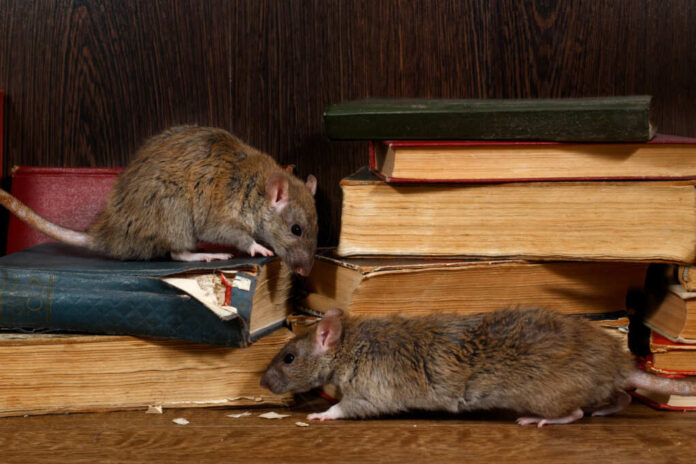
NYC’s liberal establishment spent millions on a “Rat Czar” while scientists now claim rats have developed a secret communication system.
Story Overview
- NYC’s rat population exceeds 3 million, a 50% increase since 2010 despite costly government interventions
- City appointed a “Rat Czar” in 2023 and established Rat Mitigation Zones with mixed results
- New scientific research suggests rats use complex vocalizations and scent marking as sophisticated communication
- Rat complaints dropped 25% in 2024, but infestations persist in low-income neighborhoods
Liberal Mismanagement Creates Urban Nightmare
New York City’s rat infestation exemplifies decades of progressive policy failures that prioritize bureaucratic solutions over common-sense approaches. The city’s rat population has exploded to over 3 million rodents, representing a staggering 50% increase since 2010. Rather than addressing root causes like inadequate sanitation and overflowing garbage, city officials created another taxpayer-funded position: the “Rat Czar,” appointed in 2023 to coordinate what should be basic municipal services.
The COVID-19 pandemic, driven by lockdown policies that devastated local businesses, exacerbated the crisis as restaurant closures altered waste patterns and forced rats into more aggressive food-seeking behavior. This demonstrates how government overreach during the pandemic created cascading problems that hardworking taxpayers now must fund to resolve.
Watch: NYC’s Rodent Reign: Rats Have a Secret Language? | Vantage with Palki Sharma
Expensive Government Programs Yield Minimal Results
Despite establishing Rat Mitigation Zones and launching costly public education campaigns, the results remain disappointingly modest. While officials tout a 25% drop in rat complaints during 2024, this decrease primarily occurred in affluent neighborhoods like Manhattan’s Chinatown, leaving working-class areas in the Bronx and Brooklyn to continue suffering from persistent infestations. The uneven success reveals how progressive policies often benefit wealthy districts while neglecting the communities that need help most.
The Department of Health and Mental Hygiene has trained thousands of residents and building managers, essentially shifting responsibility to citizens while expanding government oversight. This approach epitomizes liberal governance: create expensive bureaucracies that regulate property owners while failing to deliver effective solutions. High-tech mapping and sterilization programs sound impressive but represent costly experiments with taxpayer money rather than proven pest control methods.
Scientific Discovery Complicates Urban Crisis
Recent scientific research suggests rats may communicate through ultrasonic sounds and scent marking, creating sophisticated warning systems and social hierarchies. Studies in journals like Science Advances and Current Biology document rat “laughter,” distress calls, and social learning behaviors that indicate complex communication networks. This discovery could explain why traditional extermination methods have failed and why rat populations continue thriving despite municipal efforts.
Understanding rat communication might revolutionize pest control approaches, but it also underscores how government agencies have been fighting this battle without comprehending their enemy. While researchers debate whether rat communication constitutes true “language,” the practical implications remain clear: these rodents adapt and organize more effectively than many city departments tasked with controlling them.
Sources:
Top 10 Most Rodent-Infested Cities in America
New York Declares Total War on Prolific Rats
NYC Department of Health Rat Mitigation Zone Report
Science Advances: Rat Communication Research