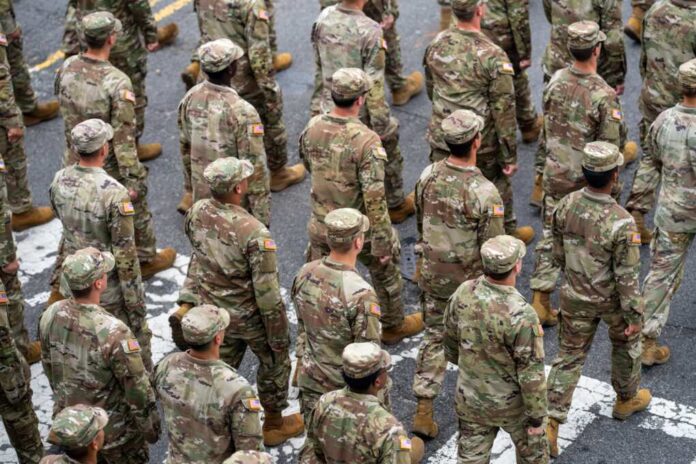
In a significant shift, the Pentagon’s new body fat measurement policy emphasizes performance, sparking debate over military readiness.
Story Highlights
- The new policy focuses on single-site abdominal measurements for body fat.
- Army Fitness Test (AFT) scores can exempt soldiers from body fat assessments.
- Reforms aim to address accuracy issues and enhance readiness.
- Policy influences other branches, with Navy and Marines adopting similar standards.
Modernizing Military Fitness Standards
In 2025, the Pentagon unveiled a new approach to measuring troops’ body fat, prioritizing performance-based assessments. Soldiers scoring 465 or more on the Army Fitness Test (AFT) are now exempt from traditional body fat assessments. This policy shift represents a significant move away from multi-site circumference measurements, opting for a single-site abdominal measurement instead. The change, part of a broader effort to enhance readiness, has been met with both praise and criticism.
The new measurement method, validated on over 1,900 soldiers, is designed to be more accurate and less cumbersome than previous methods. The Army’s decision to focus on performance, rather than arbitrary measurement standards, reflects an effort to maintain operational readiness amid rising obesity rates in the U.S. With the optional use of advanced scans like DXA and BIA, the Army aims to provide a fair assessment of soldiers’ fitness levels.
Impact on Military Readiness and Recruitment
The reform is expected to have both immediate and long-term impacts on military recruitment and readiness. In the short term, the policy reduces administrative burdens and boosts morale by exempting high-performing soldiers from body fat assessments. In the long term, it aligns military fitness standards with health metrics, potentially improving recruitment and retention amid an obesity crisis. However, concerns persist about fairness for diverse body types and the reliance on performance metrics.
The Navy and Marine Corps are also updating their standards, with the Navy implementing a waist-to-height ratio (WHtR) as the primary metric. The Marines will follow suit in 2026, signaling a broader shift toward performance-based evaluations across all military branches. Such changes aim to standardize fitness assessments and address previous inaccuracies in measurement methods.
Expert Opinions on Policy Changes
Experts have expressed mixed opinions about the new policy. Army researchers have endorsed the single-site measurement as an efficient and effective means of assessing body composition, recognizing the importance of strength alongside composition. Military analysts view the policy as a step in the right direction but advocate for broader exemptions and a phase-out of traditional tape measures in favor of modern scanning technology. Fitness critics argue that while the WHtR aligns better with modern health metrics, concerns about fairness and implementation remain.
The Pentagon’s new body fat measurement policies represent a significant shift in military fitness standards. By emphasizing performance and health-based metrics, the military aims to enhance readiness and recruitment. While the changes have been met with mixed reactions, they mark a critical step toward modernizing how the armed forces assess the fitness of their personnel.
Sources:
Modernizing the U.S. Army’s Body Composition Policy
The New Army Body-Fat Standard: A Step In The Right Direction?
Waist-to-Height Ratio Now Central to Military Body Composition Standards
Army Height and Weight Standards