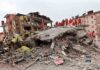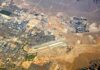

Iranian civilian aircraft lie destroyed on the tarmac after Israeli airstrikes targeted airports dangerously close to nuclear facilities, escalating a conflict that now threatens regional aviation safety and risks catastrophic radiation disasters.
Story Highlights
- Iran Air passenger jet destroyed at Bushehr Airport during coordinated U.S.-Israeli strikes on March 3, 2026, marking dangerous expansion into civilian aviation infrastructure
- Strikes hit airport adjacent to Iran’s only operating nuclear power plant, prompting Russian contractor Rosatom to evacuate staff and suspend construction amid safety concerns
- Operation Roaring Lion continues degrading Iranian military and leadership sites, with President Trump claiming Iranian defenses “completely decimated” and leaders eliminated
- IAEA confirms no nuclear reactor damage or radiation increases, but regional aviation networks face disruptions and oil shipments remain chaotic through closed Strait of Hormuz
Civilian Aviation Becomes Collateral Damage
Israeli Defense Forces struck Bushehr Airport on March 3, 2026, destroying an Iran Air passenger aircraft on the ground and leaving thick smoke billowing across runways, according to Iranian media reports cited by Reuters. The strike targeted a facility handling domestic and regional flights in a Persian Gulf port city, raising alarm about civilian infrastructure becoming entangled in military operations. Tehran’s Mehrabad Airport also sustained damage during the same wave of attacks. No casualties have been confirmed, and operational details about the destroyed aircraft remain unclear, reflecting the fog of war surrounding Operation Roaring Lion’s escalating tempo.
Nuclear Plant Proximity Raises Stakes
Bushehr hosts Iran’s only functioning nuclear power plant, positioning the airport strike within dangerous proximity to sensitive nuclear infrastructure that could trigger regional catastrophe if hit. Russian state contractor Rosatom immediately suspended work on nuclear units two and three, evacuating families while 639 Russian staff remain onsite amid disrupted communications with Iranian nuclear leadership. The International Atomic Energy Agency confirmed no radiation increases or evidence of nuclear facility damage, but the strikes underscore risks when military targets overlap civilian and nuclear sites. Earlier U.S.-Israeli operations had already prompted evacuation of approximately 100 workers from Bushehr nuclear facilities, demonstrating ongoing volatility around Iran’s most strategically vital energy asset.
Trump Claims Iranian Leadership Eliminated
President Donald Trump declared most Iranian leaders killed and the nation’s defenses “completely decimated” as Operation Roaring Lion expands beyond military installations to leadership hubs. The Israel Defense Forces confirmed strikes against Tehran’s Presidential Office, Supreme National Security Council headquarters, and officer training facilities, executing precision attacks coordinated with U.S. forces since February 28. Iran’s own Foreign Minister admitted partial military control loss, validating claims of significant degradation to command structures. This represents a dramatic shift from previous administrations’ reluctance to directly target regime leadership, reflecting Trump’s commitment to eliminating threats to American interests and Israeli security through decisive military action rather than diplomatic dithering that characterized past approaches.
Regional Escalation Spirals Across Middle East
Iran retaliated by launching missiles against U.S. bases across the Gulf region, striking facilities in Bahrain, Kuwait, and the United Arab Emirates while hitting civilian areas in Dubai and Doha with Shahed drones. The attacks injured four people in Dubai and caused fires at Kuwait Airport, prompting diplomatic summons of Iran’s ambassador. Iran’s closure of the Strait of Hormuz disrupted global oil shipments, while Houthi proxies resumed Red Sea attacks, extending Tehran’s reach despite degraded conventional capabilities. A strike on a school in Minab injured 148 people, and Saudi refineries and airbases sustained damage. Israel mobilized an additional 20,000 reservists, bringing total forces to 70,000, signaling preparation for prolonged operations that prioritize American and Israeli security over globalist concerns about regional stability.
Civil aviation networks face unprecedented strain as route suspensions multiply and regional airspace becomes contested, while energy markets remain volatile from Gulf strikes threatening global oil supply chains. The conflict demonstrates consequences of years of failed diplomatic engagement with Tehran, vindicating Trump’s maximum pressure approach that rejects appeasing regimes hostile to Western values. Limited data on casualties and operational impacts reflects the chaotic nature of active conflict, but the strategic degradation of Iranian military and leadership infrastructure serves core American interests in Middle East stability and countering nuclear proliferation threats that endanger allies and homeland security.
Sources:
Iran’s Passenger Aircraft Destroyed as Israeli Strikes Target Bushehr Airport – India TV News
Iran Media Reports Damage at Bushehr Airport After Strikes – LBC Group
Daily Report: The Second Iran War March 3, 2026 – ALMA Research