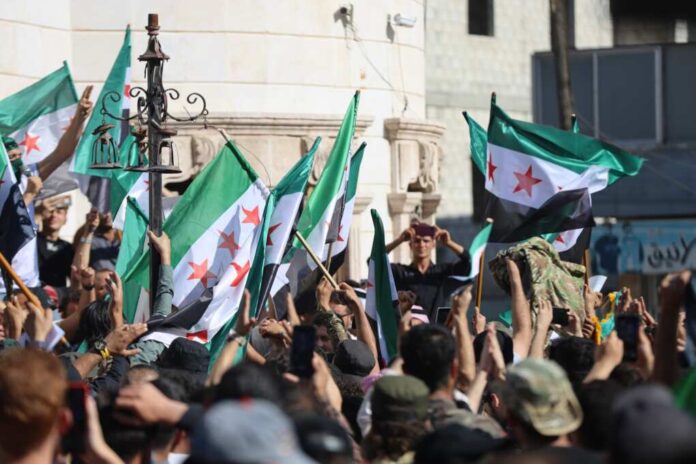
The Biden-era designation of Syria’s president as a “global terrorist” has been abruptly lifted ahead of a Trump White House meeting, leaving conservative Americans questioning the real motives behind Washington’s shifting Middle East strategy.
Story Snapshot
- The US State Department removed Syrian President Ahmed al-Sharaa from its “global terrorist” list just before a high-profile meeting with President Trump.
- Al-Sharaa, a former al Qaeda affiliate and rebel leader, now stands to reshape US-Syria relations at a critical moment.
- Trump’s administration is reversing controversial Biden foreign policy moves, raising alarms about national security and America’s global stance.
- Conservatives are wary that this pivot risks emboldening adversaries while undermining longstanding principles and security.
Biden Era Foreign Policy Reversed on Syria
On the eve of a pivotal White House meeting, the State Department announced the removal of Syrian President Ahmed al-Sharaa from the “global terrorist” list, a label he carried due to his past affiliation with al Qaeda and his leadership of rebel forces that ousted Bashar al-Assad. This dramatic reversal marks a clear break from Biden-era policy, which heavily sanctioned Syria and isolated its leadership. For many conservatives, who watched years of leftist foreign policy embolden adversaries and weaken America’s global standing, this development signals Trump’s intent to restore American leverage and demand accountability from foreign actors.
🤝 𝐔𝐍 𝐑𝐞𝐯𝐨𝐤𝐞𝐬 𝐒𝐚𝐧𝐜𝐭𝐢𝐨𝐧𝐬 𝐨𝐧 𝐒𝐲𝐫𝐢𝐚𝐧 𝐋𝐞𝐚𝐝𝐞𝐫𝐬 𝐀𝐡𝐞𝐚𝐝 𝐨𝐟 𝐓𝐫𝐮𝐦𝐩 𝐌𝐞𝐞𝐭𝐢𝐧𝐠
Syrian President Ahmed al-Sharaa and Interior Minister Anas Khattab no longer face asset freezes and travel bans.
Read more:https://t.co/Fx06KyH4gJ pic.twitter.com/s1upIbjRrn
— The Epoch Times (@EpochTimes) November 7, 2025
National Security and Constitutional Concerns
President Trump’s decision to host al-Sharaa at the White House is set against a backdrop of growing conservative frustration over past administration choices that, in their view, compromised national security. The Obama and Biden administrations repeatedly engaged with questionable actors, often under the banner of “diplomacy,” while ignoring threats to American sovereignty and interests. By lifting sanctions and openly welcoming al-Sharaa, Trump is sending a message of strength—but not without risk. Critics warn that empowering a former terrorist leader could undermine constitutional protections, embolden adversaries, and erode the hard-won security gains of recent years.
Impact on America’s Global Standing and Traditional Values
Restoring relations with Syria’s new president presents both opportunities and challenges for the Trump administration. Supporters argue this move allows the US to reassert its influence in the Middle East, check Iranian and Russian expansion, and protect American interests. However, there are deep concerns among constitutional conservatives that such engagement might compromise traditional values and set dangerous precedents. With al-Sharaa’s record—including ties to extremist groups—many fear that prioritizing short-term diplomatic gains could ultimately chip away at America’s commitment to liberty, justice, and the rule of law.
Conservative Response: Defending the Constitution and Security
For Trump-supporting conservatives, the episode underscores the need to remain vigilant against any policy that undermines the US Constitution, Second Amendment rights, or national security. The lifting of the terrorist designation is seen by some as a pragmatic move, yet it raises vital questions about the administration’s strategy for defending American values at home and abroad. As the country watches this new chapter in US-Syria relations unfold, conservatives are demanding transparency, accountability, and a renewed commitment to protecting the nation from threats—foreign and domestic.
Ultimately, the decision to welcome Ahmed al-Sharaa into the diplomatic fold is a high-stakes test for the Trump administration. The conservative base expects their leaders to uphold the principles of limited government, individual liberty, and a strong national defense. Whether this policy shift delivers security and prosperity, or introduces new vulnerabilities, will be closely scrutinized in the months ahead.
Sources:
https://www.axios.com/2025/07/08/us-syria-hts-terrorist-designation-revoked?utm