Unregulated toxic chemicals, cousins to infamous “forever chemicals,” now float undetected in American farmland air, threatening food supplies and health.
Story Snapshot
- University of Colorado Boulder researchers detected Medium Chain Chlorinated Paraffins (MCCPs) in Oklahoma air for the first time in the Western Hemisphere.
- Concentrations reached 3 nanograms per cubic meter near agricultural sites, linked to biosolids used as fertilizer.
- MCCPs persist like PFAS, bioaccumulate in food chains, and pose liver, kidney, and neurological risks.
- Local farming practices appear as primary sources, challenging prior assumptions of negligible U.S. levels.
First Detection in American Skies
University of Colorado Boulder researchers identified MCCPs during a one-month field campaign at an agricultural site in Lamont, Oklahoma. Using nitrate chemical ionization mass spectrometry, they measured concentrations up to 3 nanograms per cubic meter. Diurnal patterns showed daytime peaks and nighttime drops, indicating local ground-level emissions rather than long-range transport. This marks the first atmospheric detection in North America, with levels thousands of times higher than remote backgrounds. The finding in ACS Environmental Au, upends models assuming negligible U.S. presence.
Origins and Persistence Like Forever Chemicals
MCCPs belong to the chlorinated paraffin family, used in metalworking fluids, PVC plastics, flame-retardant coatings, and textiles. They share PFAS traits: extreme persistence in the environment and bioaccumulation in fat tissues and food webs. Short-chain variants (SCCPs) drew EPA regulation in 2009 and global Stockholm Convention listing due to toxicity and atmospheric longevity. Regulations likely shifted industry to MCCPs, boosting their spread. Prior detections occurred only in Asia and Antarctica, leaving the Western Hemisphere a perceived blank spot until now.
Agricultural Sources Under Scrutiny
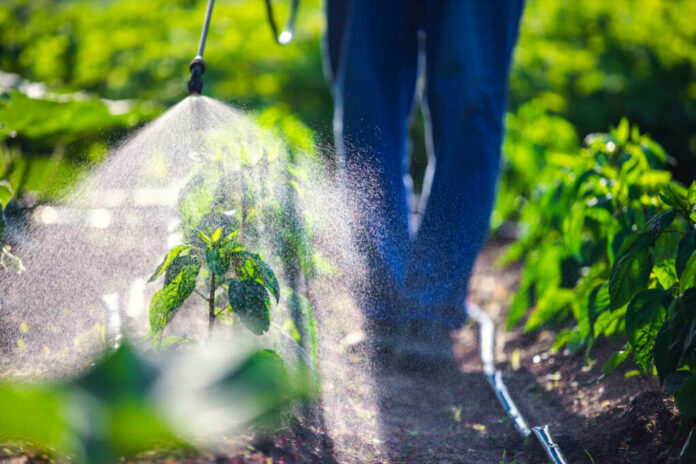
The Lamont site, in a feedlot and farming region, points to biosolids—treated sewage sludge applied as fertilizer—as a key culprit. Temperature-driven volatilization from soil releases these toxins into the air, with patterns matching nearby applications. Researchers hypothesize this common practice contaminates rural communities and enters food chains. No direct causation proven yet, but evidence challenges reliance on wastewater byproducts for soil enhancement. Farmers and regulators face pressure to reassess these methods amid health concerns.
Lead author Daniel Katz, a CU Boulder PhD student, spotted unique isotopic signatures during data cataloging. He calls the discovery exciting but stresses unknowns in MCCPs’ atmospheric fate and health effects. Katz urges capable agencies like the EPA to investigate and regulate, echoing SCCP precedents.
Unusual airborne toxin detected in the U.S. for the first time https://t.co/SWCEtQdpKw
— Climate Alliance for Justice (CAJ)🌱 (@Climate_Allies) April 12, 2026
Health and Economic Risks for Americans
MCCPs threaten liver and kidney toxicity, thyroid disruption, and neurological harm through bioaccumulation. Oklahoma farm communities bear immediate exposure risks, with broader U.S. implications via persistent food web travel. Short-term, scientists must update contaminant transport models. Long-term, regulation could restrict PVC production, flame retardants, and biosolid use, hitting manufacturing and agriculture. In 2026, with President Trump’s America First agenda prioritizing energy independence and rural strength, this hidden pollution underscores federal oversight failures.
Both conservatives frustrated by elite mismanagement and liberals wary of corporate toxins share alarm over unregulated chemicals invading heartland air. This departs from founding principles of protecting citizens from unseen government-enabled hazards, fueling bipartisan distrust in agencies more focused on self-preservation than public welfare. Local sourcing demands practical scrutiny of farming incentives over hasty global mandates.
Sources:
Forever chemicals’ toxic cousin: MCCPs detected in U.S. air for first time
First-ever detection of a toxic chemical pollutant in the atmosphere: MCCPs
Scientists Found an Unexpected Toxin Floating in the Atmosphere Over Oklahoma
First-ever airborne toxin detected in Western Hemisphere