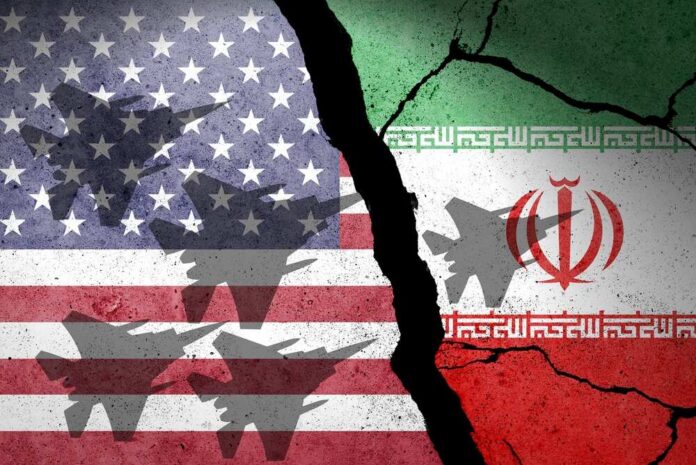
Iranian media now claims a secret draft deal with Washington could end the wider war — even in Lebanon — while the White House calls that story a “fabrication,” leaving Americans to wonder who is really steering U.S. policy in the Middle East.
Story Snapshot
- Iranian outlets say a 14‑point draft with the United States would end fighting on all fronts, including Lebanon, and reopen the Strait of Hormuz.
- Western and regional reports confirm a draft memorandum exists, with a 60‑day ceasefire extension and a halt to military operations on every front, but stress it is not final.[1]
- Iranian and regional sources also describe huge economic pieces, from sanctions relief to talk of a post‑war reconstruction or investment fund that could reach hundreds of billions of dollars.[1][6]
- The White House has publicly rejected the version aired by Iranian state media as a “complete fabrication,” deepening distrust on both sides of the aisle over secrecy and mixed messages.[4]
What Iran’s media says the draft deal would do
Iranian reports describe a sweeping, 14‑point draft memorandum of understanding that they claim was circulated to U.S. negotiators and regional partners.[3] According to those accounts, the draft would order a permanent end to fighting on all fronts, including Lebanon, where attacks between Iran‑backed groups and Israel have kept the region on edge.[1] Iranian outlets also say the memo demands the United States lift its naval blockade, reopen Iranian ports, and unfreeze blocked assets within weeks.[4][2] For many Americans, this sounds like major policy made in secret.
Iranian state television and semi‑official outlets go even further on money and control.[2][6] One Iranian lawmaker claimed the United States would back or allow a reconstruction plan worth about $300 billion if a final agreement is signed, though other officials could not confirm that number.[1][6] State media also described a “redefinition” of navigation rules in the Strait of Hormuz that would give Iran broad authority over shipping routes, fees, and security conditions in one of the world’s most important oil chokepoints.[2] These claims raise alarms for both conservatives and liberals who already fear unelected “elites” cutting huge checks abroad while American communities struggle.
What U.S. and regional sources confirm — and what they dispute
Reporting from American and regional outlets paints a more cautious, but still serious, picture of the same talks.[1][3] A draft memorandum seen by regional officials includes a 60‑day extension of the current ceasefire and a commitment to end military operations on all fronts, specifically including Lebanon.[1] The document also says Iran would immediately reopen the Strait of Hormuz and work to restore traffic to pre‑war levels within about 30 days, while the United States and Iran pledge not to start a new war or threaten each other.[1][5] That is a classic “interim deal” structure: pause the shooting now, argue over the hard parts later.
The same draft, according to these sources, asks Iran to reaffirm that it will never develop nuclear weapons and to dispose of its stockpile of enriched uranium under a mechanism both sides still have to design.[1] On the economic side, issues like frozen assets and sanctions relief would be “dealt with” only if Iran complies with the security steps, suggesting phased benefits rather than a blank check.[1] Analysts at the Soufan Center describe this as part of a longer pattern, where Washington and Tehran use short memorandums to buy time for bigger nuclear and sanctions talks. For citizens on both the right and left, the repeated use of temporary fixes instead of clear long‑term policy feeds the sense of a permanent, unaccountable crisis‑management treadmill.
Competing stories, deep distrust, and the Lebanon question
The sharpest clash is over how real these terms are — especially the claim that the deal would “end the war” in Lebanon.[1] Iranian media and some commentators present the 14‑point document as almost a done deal, suggesting only signatures are missing.[4] But American coverage stresses that Iran has not agreed to all terms, and that leaders in both countries still need to approve any memorandum.[5][3] The White House has gone even further, calling the detailed Iranian state television version a “complete fabrication,” according to a major news transcript.[4] That public denial undercuts trust, even if some framework text is actually on the table behind closed doors.
New details of the 14-point draft memorandum of understanding between Iran and the U.S.:
— Permanent and immediate cessation of war on all fronts, including Lebanon
— The U.S. commitment to non-interference in Iran's internal affairs and respect for the sovereignty of the… pic.twitter.com/WW8hDuVwPN
— OSINT News (@OSINTNewsqrb) June 12, 2026
For many Americans, the real problem is not whether the memo has 10, 14, or 20 points, but how little say the public has while war and peace are bargained in secret.[6] Conservatives see another potential “globalist” side deal that might trade away U.S. leverage, pour money into a regime they distrust, and do little to fix high energy prices at home. Liberals see the risk of Washington blessing regional arrangements that leave average people in Lebanon, Iran, and Israel still trapped between missiles and poverty. Both sides see a political class — in Washington, Tehran, and other capitals — that leaks just enough to manage headlines while hiding the full costs. Whether this draft ever gets signed or not, the episode confirms a broader fear: decisions that could end a war, or drag America deeper into it, are being shaped by a small circle of officials and power brokers, far from any real oversight by the people who will live with the consequences.
Sources:
[1] Web – Iran media says draft deal with US would end war including in Lebanon
[2] Web – Here’s what draft proposal of US-Iran deal entails – Firstpost
[3] Web – Exclusive: What’s inside the Iran deal Trump is close to signing – …
[4] Web – New Details Negotiations: $300 Billion Fund For Iran And A ‘halt To …
[5] YouTube – Iran leaks peace draft details: What would US get for ending …
[6] Web – A draft agreement being discussed between the United … – Instagram