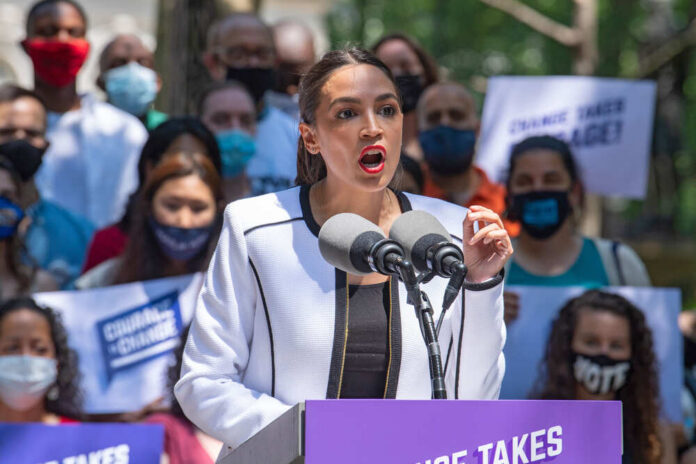
AOC’s latest warning about “wiping out” Black representation collides with a messier reality: in Tennessee, the seat at the center of the fight is held by a white Democrat, and the real battle is over power, not slogans.
Story Snapshot
- AOC blasted GOP-led redistricting moves in states like Tennessee, Alabama, and Louisiana, arguing they aim to erase Black representation.
- Tennessee’s Memphis-based 9th District is majority-Black but has been represented for about 20 years by Rep. Steve Cohen, a white Democrat.
- A 2025 Supreme Court ruling, Louisiana v. Callais, narrowed states’ ability to use race-conscious districting to remedy discrimination, reshaping the legal terrain.
- Republican leaders are using special sessions to redraw maps ahead of the 2026 midterms, triggering lawsuits and organized protests.
AOC’s claim goes viral as redistricting returns to the center stage
Rep. Alexandria Ocasio-Cortez (D-NY) drew national attention after saying states like Tennessee want to “wipe out every black representative” and suggesting Democratic strategist David Axelrod “just nods along.” The Axelrod reference is not substantiated by direct quotes in the provided reporting, making that portion difficult to verify. The broader dispute is real, though: Republican-run legislatures are pursuing mid-decade map changes in multiple states ahead of 2026.
Republicans and conservative commentators argue AOC’s framing blurs key facts. In Tennessee, the district most commonly cited—Memphis’s 9th—has a Black majority yet currently elects Rep. Steve Cohen, who is white. That doesn’t settle whether voters’ influence is being diluted, but it does show why “wiping out Black representatives” is an imprecise shorthand for what’s happening. The practical effect depends on how new lines change coalitions and outcomes.
Why Tennessee’s Memphis map fight is about more than identity politics
Tennessee Gov. Bill Lee called a special legislative session with proposals that could split Memphis across multiple districts or otherwise dismantle the current configuration that reliably sends a Democrat to Congress. That’s a classic gerrymandering objective—locking in partisan advantage—yet it intersects with race because Memphis’s Democratic strength is heavily rooted in Black voters. Critics warn that splitting the city could weaken those voters’ ability to elect their preferred candidate.
Civil-rights and local leaders describe the effort as “misrepresentation” rather than a neutral redraw. Rev. Earle Fisher argued the fight is about whether Black voices are “heard or hidden,” and state Sen. Charlane Oliver called the effort “calculated and intentional,” also alleging it violates Tennessee rules against redrawing maps between apportionments.
The Supreme Court decision that changed incentives for both parties
The spark for the current wave is the Supreme Court’s 2025 decision in Louisiana v. Callais, described as restricting states’ ability to draw majority-Black districts as a remedial tool because race-conscious redistricting can conflict with equal-protection principles. That shift matters to conservatives who oppose race-based government decision-making, and it also matters to minority communities that relied on such districts to maintain influence after decades of discrimination.
In practice, the ruling appears to have opened room for more aggressive experimentation—especially in states where one party controls the legislature and governor’s office. Republicans can argue they are moving away from racial sorting and toward race-neutral districting, while Democrats and allied groups argue the timing and targets show the intent is to reduce Black voters’ effective power. Because both racial and partisan incentives can exist simultaneously, the cleanest conclusions will likely come from litigation records and final maps.
Alabama and Louisiana show how the same playbook spreads fast
Alabama and Louisiana are also moving quickly. In Alabama, an effort to seek court approval to revert to a 2023 map that would substantially alter a district associated with Rep. Shomari Figures, a Black Democrat, after prior court involvement aimed at preserving minority representation. In Louisiana, lawmakers are already in session and civil-rights groups warn the post-Callais legal landscape invites rollbacks of prior majority-minority configurations.
AOC Says States Like TN Want to 'Wipe Out Every Black Representative' While 'Axelrod Just Nods Along' https://t.co/I4ymz85rQ5
— bobt225 (@bobt225) May 11, 2026
The near-term stakes are straightforward: congressional seats and control margins heading into the 2026 midterms. The longer-term stakes are more foundational: whether election rules will trend toward colorblind standards that limit government use of race, or toward protections that explicitly preserve minority voters’ ability to elect candidates of choice. Voters frustrated with “elite” institutions have reason to watch closely, because rapid, mid-decade redistricting fuels the perception that politicians pick voters—rather than voters picking politicians.
Sources:
Alabama and Tennessee rush to eliminate Black representation in Congress