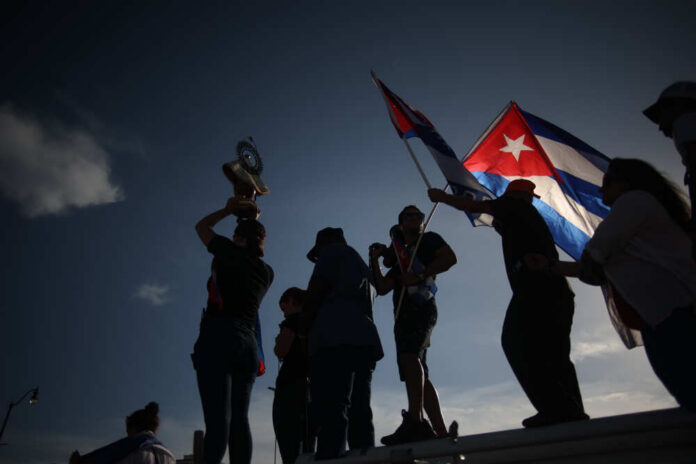
Cuba’s one-party regime just approved market-opening reforms that could reshape the island—and test Washington’s resolve on freedom and security.
Story Snapshot
- Havana advanced reforms that expand private activity and court investment during a deep energy crisis [1][6].
- Analysts warn the ruling party aims to keep political control even as it opens parts of the economy [2][15].
- United States law still ties ending the embargo to real democratic change, not cosmetic policy shifts [11].
- Rights monitors say Cuba remains a one‑party state that jails dissent and muzzles the press [7].
What Havana Approved, and Why It Matters Now
Cuban leaders backed a reform slate that broadens legal space for private business and seeks fresh investment. President Miguel Díaz‑Canel said the government will cut the list of banned private activities and allow local firms to invest, while keeping “clear rules” in place [1]. A French outlet reported party approval for opening more sectors to private capital [6]. These moves come amid fuel shortages and rolling blackouts that are squeezing families and shuttering services across the island [3].
State messaging casts the changes as crisis management, not an end to socialism. Officials highlight about ten thousand private firms and recent steps like allowing private fuel imports that once were a state monopoly [1]. The pitch is simple: open just enough to keep the lights on and goods moving. But the timing tells the story. A collapsing energy system, lost oil lifelines, and rising public anger forced the regime to act under pressure [3].
Control First: The Pattern Behind “Opening Up”
Independent assessments document a stop‑go pattern. After legalizing small and medium firms in 2021, Havana tightened controls, set price caps, and limited wholesale trade by 2024. The state’s stated priority became “control” of the private sector, not its growth [2]. That fits a known playbook in one‑party systems: permit limited markets to ease pain, but keep political power untouched and guard state giants from real competition [2][15].
This “controlled opening” is not unique to Cuba. Research on past socialist reforms shows party leadership often uses market steps to stabilize the system while preserving authority [15]. Cuba’s latest path—more private activity under strict rules—tracks that model. It offers space for entrepreneurs but keeps the state’s hand on prices, licenses, and sectors. That means any “boom” can be reversed the moment it threatens the ruling party’s grip [2].
The U.S. Lens: Pressure, Principles, and the Law
Washington’s Cuba policy rests on human rights and national security. The Federal Register details the regime’s ties to hostile actors, which sustain sanctions and related measures [14]. United States law states that a transition or democratically elected government is required before suspending or ending the embargo. The President may suspend only after formal findings to Congress, and must end the embargo only when a democratic government is in power [11]. Economic tweaks in Havana do not meet that bar.
Rights conditions remain grim. Freedom House reports Cuba bans political pluralism, censors independent media, and crushes dissent [7]. Even as Havana announces reforms, it controls courts, police, and speech. That matters for American policy. Free markets without free people create crony deals, not liberty. Any U.S. relief should go straight to the Cuban people—especially the private sector—while keeping pressure on the regime until it releases prisoners, legalizes opposition parties, and holds real elections [7][11].
What This Means for Americans, Exiles, and Energy
South Florida families watch closely. Many fled property seizures and repression. They want change backed by law and results, not slogans. The current crisis began with Cuba’s energy shortfall. The island ran out of fuel and diesel this spring, worsening blackouts and daily hardship [3]. Targeted U.S. licenses allowed companies to sell certain Venezuelan oil to Cuba’s private sector to support the people, not the regime’s coffers [3]. That narrow channel shows how Washington can help citizens while denying lifelines to the state.
🇨🇺 Cuba begins its largest economic reform since the 1959 revolution
The country's parliament unanimously approved radical reforms that provide for the privatization of a significant part of the economy.
The plan provides for private real estate development, the creation of… pic.twitter.com/m2eEd1F2Bs
— Visegrád 24 (@visegrad24) June 19, 2026
Here is the bottom line. Havana’s reforms are real enough to matter in markets and daily life. But they are designed to keep the party in charge. The United States should stay the course: tighten sanctions on abusers, route help to families and private workers, and demand measurable steps—freeing political prisoners, ending censorship, and scheduling competitive elections. That approach honors American values and keeps faith with the Cuban people seeking freedom over managed “opening” [7][11][14].
Sources:
[1] YouTube – Cuban lawmakers approve sweeping reforms to socialist model
[2] YouTube – Cuba: Díaz-Canel announces economic reforms to attract investment
[3] Web – Cuba Country Report 2026 – BTI Transformation Index
[6] Web – Cuba’s alternative development despite US regime change
[7] Web – Cuba rolls out reforms to further open local economy to private sector
[11] Web – Cuba govt. approves economic and social program for 2026
[14] Web – Executive Order: Imposing Sanctions on Those Responsible for …
[15] Web – Addressing Threats to the United States by the Government of Cuba