
America’s latest “narco-terror” boat strike killed one man and left two drifting survivors, but once again Washington is asking the public to take its word on why deadly force was needed.
Story Snapshot
- U.S. forces hit another alleged drug boat in the eastern Pacific, killing 1 and leaving 2 survivors.
- The strike is part of Operation Southern Spear, which has killed at least 200 people with little public proof of drug cargo.
- Officials insist the boat was on a known smuggling route; critics say Americans are being asked to trust secret evidence.
- Both left and right now question whether an unaccountable security state is making life-and-death calls far from any battlefield.
What Happened in the Eastern Pacific Strike
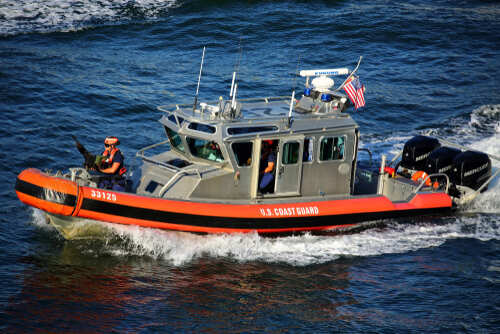
On Tuesday, the United States military launched a lethal strike on a small boat in the eastern Pacific Ocean, saying the vessel was suspected of smuggling drugs toward the United States.[3] One man was killed and two people survived the blast, making this one of the few recent attacks where anyone lived.[3] United States Southern Command said it quickly notified the United States Coast Guard to begin search and rescue for the survivors, and released video showing the boat speeding across the water before it exploded in flames.[1]
Officials framed the target as part of an ongoing campaign against what they call “narcoterrorists” using the sea to ship narcotics from Latin America.[3] Southern Command said the boat was moving along a known smuggling corridor, using the same wording it has used in earlier statements about alleged drug vessels in both the Caribbean Sea and the eastern Pacific.[3] Yet, as with those earlier strikes, the command did not release any photos of seized drugs, cargo records, radio intercepts, or other hard proof that this particular vessel carried illegal substances.[5]
A Deadly Campaign With Little Public Evidence
The strike is only one episode in Operation Southern Spear, the Trump administration’s ongoing campaign of air and missile attacks on small boats in Latin American waters.[4] Since early September, at least 208 people have been killed in these maritime strikes, many of them in the eastern Pacific, with others in the Caribbean Sea.[5] News reports and public statements from the Pentagon acknowledge that, up to now, the United States military has not presented public evidence that any of the destroyed boats were actually transporting drugs when they were hit.[1]
Supporters in Washington say the campaign is saving American lives by destroying vessels they claim are tied to cartels and groups labeled as terrorists.[4] They argue that the people on board are not simple fishermen but violent criminals who fund chaos in American communities. Yet major outlets report that governments and families in the region insist many of the dead were civilian fishers, not cartel gunmen.[4] That clash leaves ordinary Americans in an uneasy place: told they are safer, but given very little they can see or judge for themselves.
Survivors, “Double Tap” Strikes, and War-Crime Fears
This latest incident stands out because two people survived the initial blast and, according to Southern Command, U.S. forces called in rescue help instead of hitting the wreckage a second time.[3] That detail matters because an earlier strike in this same campaign drew global outrage when two men who survived an initial blast were reportedly killed while clinging to debris during a follow-up strike.[3] The White House defended that second strike as “self-defense,” saying commanders had to ensure the boat was destroyed and the threat removed.[5]
Latest US strike on alleged drug boat kills 1 – Search
— I am somebody. (@therealjordinfn) June 17, 2026
Those earlier reports raised sharp questions about basic rules of war and human decency. If survivors are visible and no longer pose an immediate threat, many legal experts say targeting them can cross the line into an unlawful killing. International coverage notes that some scholars and human-rights groups now describe parts of this campaign as possible extrajudicial killings that do not fit cleanly under either traditional law enforcement or wartime rules.[4] That debate is no longer just about policy; it is about what kind of country the United States wants to be when no one is watching.
Why This Matters to Ordinary Americans on Left and Right
For many conservatives, the story hits a nerve that has been raw for years. They see a federal government that often fails to secure the border, stop illegal immigration, or keep deadly fentanyl out of American towns. Now, the same government says it must bomb boats in distant waters to fix a drug crisis it helped create through weak enforcement and bad trade and border policies.[2] It feels like another case where the political class reaches for dramatic force overseas instead of cleaning up broken systems at home.
For many liberals, the concern is different but related. They worry about a growing pattern of “war on” language—war on terror, war on drugs—used to justify lethal force far from declared battlefields, with almost no democratic oversight.[4] They see a government quick to spend billions on weapons while cutting back on social support, addiction treatment, and job programs in communities hit hardest by drugs and crime. To them, secret strikes in international waters look less like justice and more like an unaccountable security state acting on its own.
A Deeper Problem: Power Without Transparency
What unites many people across the spectrum is a sense that the federal government now expects trust it has not earned. In this campaign, officials use powerful language—“designated terrorist organizations,” “narcoterrorists,” “known trafficking routes”—but rarely back it up with proof that the public, Congress, or courts can openly examine.[7] The message feels familiar: “We have classified intelligence, believe us.” After years of shifting stories on wars, surveillance, and domestic scandals, many Americans simply do not.
This strike on a single boat would matter less if it were not part of a wider pattern. A long list of quiet decisions—trade deals that hollowed out factories, energy rules that drove up bills, bailouts for big banks, and now lethal maritime strikes with scant oversight—feeds the belief that a small set of elites runs policy in its own interest.[4] Whether you blame globalists, the deep state, or corporate donors, the result looks the same: life gets harder for regular citizens while powerful people make choices far from public view and rarely pay a price when those choices go wrong.
What to Watch Next
Looking ahead, the key questions are simple, even if the answers are not. Will Congress, which has the power to declare war and oversee the military, demand to see the actual targeting files and legal memos behind these strikes? Will courts hearing lawsuits from families of the dead force the administration to release more than talking points?[11] And will either party in Washington push for clear limits on when and how the United States can use deadly force in international waters against non-state actors?
For citizens, the question is even more basic: Do we accept a future where the federal government can kill people far from any battlefield, based on secret evidence, in our name? Or do we insist that even in the fight against drugs and crime, our leaders honor the old American idea that power must answer to the people? This boat in the Pacific is now part of that larger test of whether self-government still means anything when the cameras are off and the missiles are armed.
Sources:
[1] Web – US Strike on an Alleged Drug Boat Kills 1, Leaves 2 Survivors in the …
[2] Web – Two killed in US strike on alleged drug boat in Pacific Ocean … – …
[3] Web – US military strikes alleged drug boat in eastern Pacific, killing 2
[4] Web – US military strikes alleged drug boat in eastern Pacific, killing 2 – …
[5] Web – US strike on an alleged drug boat kills 3 | AP News
[11] Web – The United States Southern Command said an airstrike targeted an …