A deadly double earthquake just turned Caracas into a disaster zone, while confused death tolls and shaky government data show once again how hard it is for regular people to get the truth when catastrophe strikes.
Story Snapshot
- Two massive earthquakes, magnitude 7.2 and 7.5, hit Venezuela near Caracas, collapsing buildings and crippling key infrastructure.[4][9]
- Early United States Geological Survey (USGS) models warned that deaths could reach between 10,000 and 100,000, but those numbers are projections, not confirmed bodies.[4][19]
- Acting President Delcy Rodríguez now says at least 32 are dead and about 700 are injured, with rescue work still underway and the toll expected to rise.[2][3]
- Broken communications, slow official reporting, and chaotic social media make it hard for families—and the world—to know what is really happening on the ground.[4][15]
Quakes Hit a Country Already on the Edge
Two powerful earthquakes struck northern Venezuela on Wednesday evening, just after 6 p.m. local time, slamming areas west of Caracas where millions live and work.[4][9] The first quake measured magnitude 7.2 and the second 7.5, hitting less than one minute apart, which seismologists call a “doublet.”[4][19] Videos from Caracas show buildings swaying, walls cracking, and people running into the streets as debris falls.[5][15] Simón Bolívar International Airport near the capital reported serious damage, and operations were halted.[4][15] For a country already dealing with deep economic crisis and political turmoil, this disaster landed like a body blow.[3]
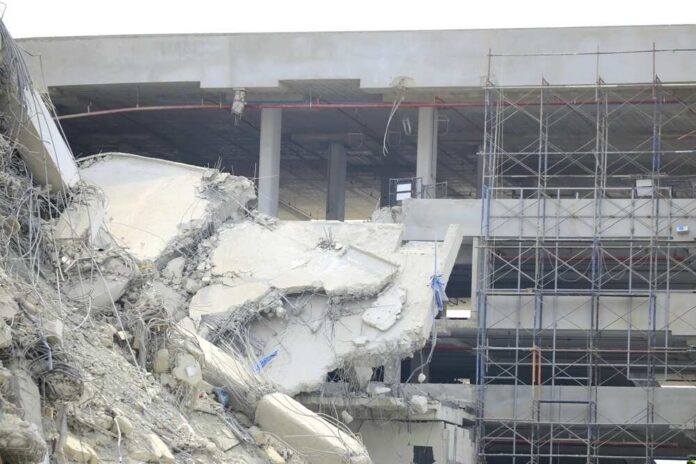
Officials and witnesses report collapsed buildings in several Caracas neighborhoods, including Los Palos Grandes, Altamira, Caricuao, and San Bernardino.[15] Interior Minister Diosdado Cabello went on state television and confirmed that “several buildings have collapsed” and homes have fallen, urging people to stay in open areas and report damage to civil protection and fire services.[1][15] Emergency workers are seen digging through rubble and working at the sites of fallen structures as night turns to day.[8][17] This is the strongest earthquake series to hit Venezuela in more than a century, with the 7.5 shock described as the largest since 1900.[3][4]
Model Death Tolls vs. Confirmed Casualties
Right after the quakes, the United States Geological Survey issued a rare “red alert” for potential fatalities, warning that high casualties and widespread damage were likely.[6][19] Its early computer models suggested deaths could range from 10,000 to as many as 100,000, based on building types, shaking strength, and the size of the population in the impact zone.[1][19] Many headlines quickly repeated the “up to 100,000” figure, even though no one on the ground had counted that many bodies and authorities had shared no hard numbers.[1][3][4] This confusion between worst-case models and confirmed deaths added fear for families and frustration for people already skeptical of big institutions.
By late Wednesday and into Thursday, the picture began to shift as actual reports came in. Acting President Delcy Rodríguez announced a state of emergency and, in her first statements, confirmed that people had died but refused to give a number.[2][4] Later, she told local media that at least 32 people were confirmed dead and about 700 were injured, and she warned those figures could rise as rescuers reach more collapsed sites.[2][3] International outlets, including the New York Times and Al Jazeera, now repeat those official numbers, while stressing that the full toll is still unknown.[3][6] This gap between “up to 100,000 could die” and “32 confirmed dead so far” shows how disaster math can outrun reality, at least in the early hours.
Information Breakdowns and Deep Distrust
Cellphone signals and internet service went down for millions of users across Venezuela soon after the quakes, making it hard for families to check on loved ones or share accurate updates.[15] In that vacuum, social media flooded with clips of cracked ceilings, sparks, and panicked crowds, mixed in with real footage of collapsed buildings and serious damage.[3][5] Some posts showed minor problems framed as proof of mass death, while others underplayed the destruction entirely, adding to a sense of chaos and doubt. Tsunami warnings for Puerto Rico and the United States Virgin Islands were briefly issued and then pulled back within about an hour, further confusing people who were already afraid.[4][15]
The Day the Earth Roared Venezuela 2026
Imagine sitting at home with your family. Children are watching TV, parents are talking, people are returning from work, restaurants are full, and the city is alive.
Then suddenly, the ground beneath your feet starts shaking.
On 24 June… pic.twitter.com/rUwJGcncWs
— First Witness X (@FirstWitnessX) June 25, 2026
For many Americans watching from afar, this feels familiar. They see a natural disaster strike a struggling country. Government leaders give limited, slow, or vague information. Global experts push out model-based estimates that sound terrifying. Big media repeats those numbers but then later talks about “uncertainty,” “lack of official figures,” and “disrupted communications.”[1][4][6] Ordinary people are left trying to sort truth from rumor while elites control the data and the narrative. That pattern fits broader worries here at home: that large systems, whether foreign governments, international agencies, or our own media, seem more focused on managing perception than giving clear facts.
Why This Matters Beyond Venezuela
This tragedy in Venezuela is first and foremost about human lives: families crushed in homes, workers trapped in offices, and neighbors digging with their bare hands to find survivors.[3][15] But it also highlights a larger problem that both conservatives and liberals in the United States increasingly agree on. When disaster strikes—whether it is an earthquake abroad or a storm, pandemic, or economic crash at home—the people with power often speak in models, ranges, and talking points, while those on the ground get little straight information.[1][4] The early “up to 100,000 deaths” headline shows how fear can spread faster than facts, yet the low confirmed count so far does not mean the danger is over or that authorities are being fully honest.[2][3]
History shows that final death tolls in major quakes often end up far below the highest model numbers but still heartbreakingly high.[13] In Caracas and other hit regions, the real test now will be rescue speed, hospital care, and whether the government allows full outside review of damage, hospital records, and satellite images.[1][13][15] For American readers already worried about a distant, self‑protecting “deep state,” the Venezuela earthquakes are a reminder of why transparency, basic competence, and honest communication matter so much. When the ground moves under people’s feet, they need truth more than spin—no matter which flag is flying over the ruined city.[4][15]
Sources:
[1] Web – Caracas in Ruins: Up to 100,000 Feared Dead As Massive Earthquakes …
[2] Web – Buildings collapse as quakes rock Venezuela, ‘high casualties’ likely
[3] Web – Live updates: Venezuela twin earthquakes, damage in … – CNN
[4] Web – Venezuela rocked by strongest earthquakes in over a century, as …
[5] Web – Venezuela Live Updates: 2 Major Earthquakes Hit Country’s Center
[6] Web – Video captures strong shaking in Caracas, Venezuela … – Facebook
[8] Web – Caracas, June 24, 2026 (AFP) – USGS reports second quake of 7.5 …
[9] Web – LOOK: Emergency services work at the site of a collapsed building …
[13] Web – Venezuela was just rocked by back-to-back earthquakes … – CNN
[15] Web – U.S. Embassy Caracas is closely monitoring the aftermath of a …
[17] Web – The complete Venezuela earthquake report (up-to-date 2026).
[19] Web – Earthquake in Venezuela: What We Know – Caracas Chronicles