

California Governor Gavin Newsom claims President Trump’s policies could “cancel” the 2028 election, stoking fears and fueling partisan outrage over the future of American democracy.
Story Snapshot
- Governor Gavin Newsom stated publicly that he fears the 2028 presidential election may not take place, attributing his concern to President Trump’s executive actions.
- Newsom’s claims focus on the Trump administration’s immigration and redistricting policies as potential threats to democratic norms.
- Legal analysts emphasize that constitutional safeguards against suspending elections remain robust, though the rhetoric intensifies political polarization.
- The debate remains centered on the limits of executive power versus established legal processes.
Newsom’s Alarming Remarks Stir National Debate
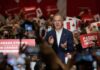
On August 27, 2025, Governor Gavin Newsom publicly expressed his concern regarding the future of American democracy, stating that he fears the United States may not hold a presidential election in 2028. Newsom, a Democrat, repeated this concern during a high-profile interview on “The Late Show with Stephen Colbert.” His claims are centered on what he characterizes as aggressive policy moves and rhetoric by the Trump administration that he argues could undermine established constitutional and democratic procedures.
Newsom Fears We Will Not Have a Presidential Election in 2028 'Unless We Wake Up'https://t.co/Us9VAYRaZS
— PJ Media (@PJMedia_com) September 25, 2025
Major news organizations reported on Newsom’s statements, which quickly became a significant point of discussion in national political discourse. The governor cited the Trump administration’s actions on immigration enforcement and involvement in redistricting disputes as evidence for his warnings, reflecting the heightened polarization surrounding election integrity and the use of executive authority.
Immigration and Executive Power: Policy at the Center of Controversy
President Trump’s second term has been defined by rapid changes to immigration policy implemented through executive action. On January 20, 2025, the administration declared a national emergency at the southern border and issued multiple orders to restrict asylum access, mandate the detention of apprehended migrants (ending “catch and release”), and suspend most refugee admissions. The administration also moved to issue an executive order intending to redefine birthright citizenship for children born in the U.S. to non-permanent residents, an action that is currently blocked by multiple federal court injunctions and remains subject to legal challenge.
The administration has expanded the scope of enforcement by eliminating restrictions on Immigration and Customs Enforcement (ICE) operations in “sensitive locations” such as schools and churches. Additionally, Attorney General Pam Bondi issued directives in February 2025 focusing on the aggressive enforcement of criminal laws related to immigration violations, a policy that critics argue could lead to government overreach, including the controversial use of law enforcement to enter migrant homes without prior judicial warrants. While the administration asserts these measures are essential to uphold the rule of law, opponents argue they challenge constitutional due process protections.
Redistricting and Institutional Battles: The Fight for Future Power
Newsom’s warnings also referenced ongoing partisan disputes over redistricting. California has advanced a redistricting initiative in response to Republican-led efforts in other states, reflecting both parties’ attempts to influence future electoral outcomes through institutional mechanisms.
Despite the claims of a potential canceled election, legal experts emphasize that constitutional safeguards remain robust. The U.S. Constitution and federal law establish clear frameworks for holding congressional and presidential elections, and there is no confirmed evidence or actionable legal path for the executive branch to unilaterally suspend a national election. The debate, while rhetorical, contributes to the current climate of political uncertainty.
Political Fallout and Public Response: Trust and Polarization at Stake
Newsom’s statements have intensified national polarization. Supporters of the governor argue his warnings are a necessary call for vigilance against potential democratic backsliding. Conversely, critics dismiss the claims as political alarmism designed to mobilize Democratic voters. Political scientists generally caution against suggestions that the 2028 election is at risk of cancellation, but they acknowledge that aggressive executive actions and rhetoric contribute to a degradation of political norms. The ongoing public conversation reflects a national moment of tension regarding constitutional stability and the future of democratic governance.
Sources:
Trump third term: Gavin Newsom 2028 warning
Gavin Newsom fears there will be no 2028 presidential election
Fox News Video: Newsom’s warning