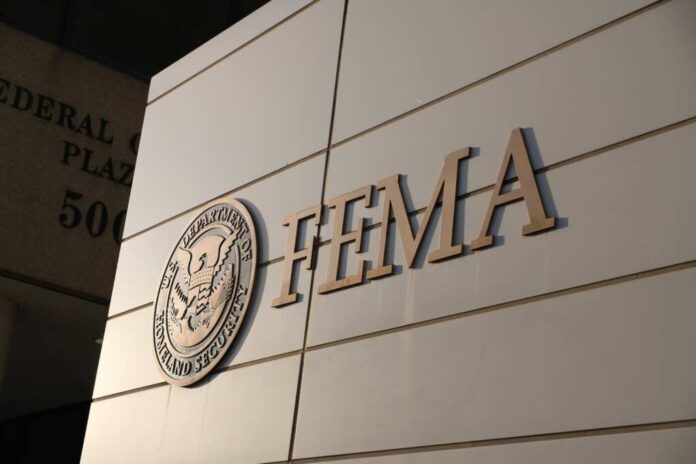
FEMA’s new $608 million initiative to fund state-run migrant detention centers marks a turning point in immigration enforcement, raising debates over constitutional authority, fiscal responsibility, and the division of roles between federal and state governments.
Story Snapshot
- FEMA is distributing $608 million to states for temporary migrant detention centers, shifting responsibility from federal to state control.
- Florida’s “Alligator Alcatraz” sets a national precedent as the first large-scale, state-run facility, already operational in the Everglades.
- Congress’s July 2025 budget delivers historic increases for immigration enforcement, sparking concerns over fiscal burden, legal challenges, and humanitarian impact.
- Critics and experts warn of long-term risks to taxpayers, detainee rights, and local communities, while supporters hail the move as essential for border security.
Historic Federal Funding Fuels State-Led Immigration Crackdown
On July 29, 2025, FEMA announced a $608 million Detention Support Grant Program, inviting states to build and operate temporary migrant detention centers—a dramatic break from the decades-long precedent of federal-only control. This shift comes after Congress’s July budget reconciliation, which injected $45 billion into detention and border enforcement, reflecting the Trump administration’s push for stricter immigration controls and direct state involvement. For states like Florida, led by Governor Ron DeSantis, the new funding offers reimbursement for facilities such as the newly opened “Alligator Alcatraz,” escalating the state’s role in national immigration policy.
This rapid federal-to-state transition is designed to address persistent overcrowding in federal detention centers, which have long been plagued by legal challenges and capacity crises. By empowering states as operational partners, and offering unprecedented fiscal incentives, the Trump administration aims to multiply enforcement capacity and decentralize responsibility. However, this approach raises critical constitutional and fiscal questions: Does such broad state involvement enhance border security, or does it expose states and taxpayers to lasting legal and financial risk?
Florida’s “Alligator Alcatraz” Sets a New National Template
Florida’s “Alligator Alcatraz,” a $450 million-per-year detention facility in the Everglades, is the clearest example of this new model. Opened in summer 2025, it can hold up to 5,000 detainees and has already received over $200 million in state contracts for construction and management. Governor DeSantis has positioned the facility as a model for other conservative states eager to assert control over immigration enforcement and claim their share of federal funding. Supporters argue that state-run centers will relieve federal overcrowding and restore order at the border, aligning with demands for stronger sovereignty and public safety.
Yet, the scale and cost of these facilities have drawn sharp scrutiny. Fiscal experts question whether long-term reimbursement from FEMA will keep pace with mounting operational expenses, potentially saddling state taxpayers with runaway costs. Environmental advocates are also sounding alarm bells over the facility’s Everglades location, warning of ecological disruption and community backlash. The new funding structure means that private contractors, rather than nonprofits, will increasingly manage these sites, shifting both accountability and profit motives.
Legal, Fiscal, and Humanitarian Implications Spark National Debate
Legal experts, such as César Cuauhtémoc García Hernández, a professor at Ohio State University who studies immigration law, caution that normalizing state-run detention could trigger lawsuits over detainee rights and facility conditions, especially given that the new federal law allows for indefinite family detention, raising questions about compliance with prior court rulings. Humanitarian organizations highlight the risk of trauma for children and families held in such centers, a concern amplified by the exclusion of nonprofits from the new grant program. Meanwhile, political polarization is intensifying: supporters see the shift as a victory for conservative governance and national security, while critics argue it undermines due process and diverts resources from critical social programs.
Implementation remains fluid. FEMA has not clarified how funds will be allocated across states or how these new detention grants differ from prior shelter programs, adding to uncertainty. As the August 8 application deadline approaches, states are racing to submit proposals, with Florida ahead of the curve and other states likely to follow its example. This moment marks a historic test of federalism in immigration policy, one with profound consequences for constitutional authority, local communities, and America’s global reputation.
Experts agree that while the Trump administration’s aggressive expansion of detention capacity may deliver short-term relief to federal facilities, the long-term implications—fiscal, legal, and humanitarian—are complex and far-reaching. The concentration of authority in state hands, the sidelining of traditional oversight mechanisms, and the scale of government spending are already prompting lawsuits and public outcry. Policy analysts, including Jessica Vaughan of the Center for Immigration Studies and Marielena Hincapié of the National Immigration Law Center, note that while the program offers states greater control over enforcement, it also risks entangling them in costly and legally complex detention systems.
Sources:
FEMA Will Give $608 Million to States for Migrant Detention Facilities
Congress Approves Unprecedented Funding for Mass Detention and Deportation in 2025